

Iron Age - Sold antiquities
Archive of sold antiquities
All artefacts sold in our gallery are fully documented in our online archive and database. Being a specialist ancient art dealer, preserving also the more recent history of each and every piece sold in our shop is at our heart. That is particularly useful for artefacts that changed owners in the meantime. Information that may have been lost in the process can be easily restored from our archives. Please do not hesitate to contact us if you need further information about ancient items that have been sold in our gallery. We can help you with reconstructing the history of ownership for those items. All information about our customers will be kept confidential, of course.-
 Decorative pin from Luristan
The pin head is shaped like an open basket with a decorative knob. Bronze with attractive patina.
Price: on request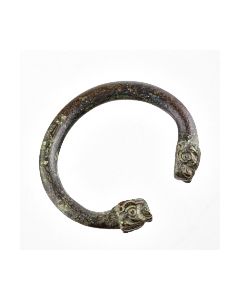 Bracelet from Luristan with lion terminals
Bronze braclet in perfect condition with beautiful dark patina. The terminals are stylized lion heads.
Price: on request Bracelet from Luristan with triangular terminals
The bronze braclet is band shaped and has linear engravings on the outer side. Late Iron Age.
Price: on request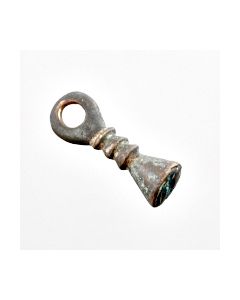 Western Iranian bronze stamp seal
Interesting bronze seal showing a bird and glyphs. From a collection of Iranian ancient artefacts.
Price: on request Cup of the Urnfield culture
Ceramic vessel dating to the transition period between Bronze Age and Iron Age in Central Europe. 1200 to 800 BC. Found in an urnfield in Austria.
Price: on request Big Cup of the Urnfield culture
Ceramic vessel dating to the transition period between Bronze Age and Iron Age in Central Europe. 1200 to 800 BC. Found in an urnfield in Austria.
Price: on request Egyptian Scarab
The Egyptian scarab has a central cross on the stamp side. The piece dates to the 21st dynasty of Ancient Egypt. It is described in the catalogue of Gautier-Vodoz.
Price: on request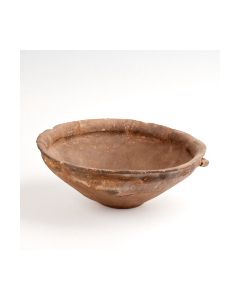 Big bowl from the Urnfield period
Ceramic vessel dating to the transition period between Bronze Age and Iron Age in Central Europe. 1200 to 800 BC. Found in an urnfield in Lower Austria.
Price: on request Juglet from the Urnfield period
Small juglet dating to the transition period between Bronze Age and Iron Age in Central Europe. 1200 to 800 BC. Found in an urnfield in Lower Austria.
Price: on request Cup of the Urnfield culture
Ceramic vessel dating to the transition period between Bronze Age and Iron Age in Central Europe. 1200 to 800 BC. Found in an urnfield in Austria.
Price: on request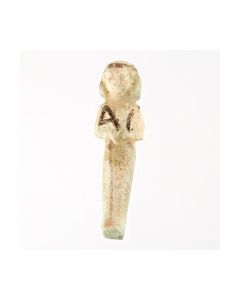 Egyptian ushabti
Funerary statuette of faience. The opposed hands might indicate Tanis as origin. Third Intermediate Period of Ancient Egypt.
Price: on request Egyptian ushabti from the Third Intermediate Period
Funerary statuette of faience with black paint. The opposed hands might indicate Tanis as origin. Third Intermediate Period of Ancient Egypt.
Price: on request Cylinder seal of red stone
The cylinder seal is made of beautiful red limestone. A figurative scene is engraved.
Price: on request Scarab with two cartouches of Thutmose III.
Interesting amulet from the New Kingdom or a later period made in archaic style. This scarab is described in the catalogue of Irène Gautier-Vodoz.
Price: on request Luristan ceremonial pick
The elaborate decorations are contrary to the actual use as a pick. The object is from the class of pseudo tools common in Iran at the end of the 2nd millenium BC. It probably served a ritualistic purpose.
Price: on request Egyptian protective amulet and seal with Pataikos
Dwarf god with knifes in his hands and Eye of Horus on his belly. The bottom side is made as a stamp seal with hieroglyphic inscription. Work of highest quality with fine details. Dating to the Third Intermediate Period.
Price: on request Applique of the Horus son Duamutef
Bright turquise fayence. Duamutef is one of the four sons of Horus, well-known from the Canopic jars. He had an important protective function for the dead. Egypt, 8th to 4th cent. BC.
Price: on request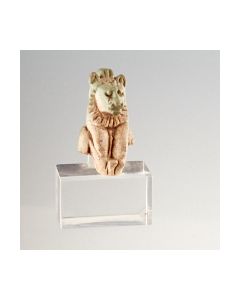 Egyptian amulet of a lion headed goddess
Attributed to Sekhmet, goddess of war and protection from illness. Very nice and detailed fayence work. Dating to the Third Intermediate Period to Late Period of Ancient Egypt.
Price: on request 2 Skythische bis römische 3-flüglige Pfeilspitzen aus Bronze
Dreiflüglig, Bronze, ohne Schaft. Typisch für Skythen ab ca. 700 v.Chr. Vermutlich jünger und von Söldnern im römischen Reich. 41mm, 17mm.
Price: on request Kanaanitische Öllampe (E)
Terracotta, Levante, Kanaanitisch. 800 v.Chr. bis 500 v.Chr. Schöne originale Fundpatina. Rußspuren an Dochtmulde. 120mm lang, 120mm breit, 25mm hoch.
Price: on request 2 Skythische 3-flüglige Pfeilspitzen aus Bronze (AB)
Dreiflüglig, Bronze, ohne Schaft. Typisch für Skythen ab ca. 700 v.Chr. Vermutlich jünger und von Söldnern im römischen Reich. Ca. 15mm bis 25mm.
Price: on request Kanaanitische Öllampe (G)
Terracotta, Levante, Kanaanitisch. 800 v.Chr. bis 500 v.Chr. Späte Eisenzeit. Schöne originale Fundpatina. Rußspuren an Dochtmulde. 140mm lang, 140mm breit, 40mm hoch.
Price: on request Perlen, assyrisch
Etwa 800 v.Chr. bis 200 n.Chr. Damit vom Ende der dark ages bis in die Zeit römischer Herrschaft reichend. Fundort ist Syrien, einstiger Rand des assyrischen Reiches, später römische Provinz Syria.
Price: on request Kanaanitische Öllampe (F)
Terracotta, Levante, Kanaanitisch. 1200 v.Chr. bis 800 v.Chr. Frühe Eisenzeit. Schöne originale Fundpatina. Rußspuren an Dochtmulde. 150mm lang, 145mm breit, 50mm hoch.
Price: on request Dreiecksfibel, Bronze (G)
Levante, römisch oder älter, 600 v.Chr. Bis 300 n.Chr. 3,5cm lang.
Price: on request Kanaanitische Öllampe (I)
Terracotta, Levante, Kanaanitisch. 800 v.Chr. bis 500 v.Chr. Späte Eisenzeit. Originale Fundpatina, Rußspuren an Dochtmulde. 125mm lang, 125mm breit, 30mm hoch.
Price: on request Gruppe: 3 Skythische Pfeilspitzen (A-C)
Dreiflüglig, Bronze, ohne Schaft. Typisch für Skythen ab ca. 700 v.Chr. Vermutlich jünger und von Söldnern im römischen Reich. Ca. 15mm bis 25mm.
Price: on request Dreiecksfibel, Bronze (D)
Levante, römisch oder älter, 600 v.Chr. Bis 300 n.Chr. 4,2cm lang.
Price: on request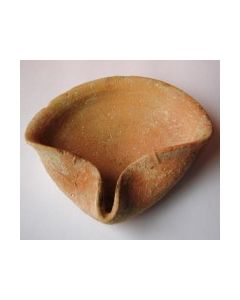 Kanaanitische Öllampe (C)
Terracotta, Levante, Kanaanitisch. 1200 v.Chr. bis 500 v.Chr. Schöne originale Fundpatina. Rußspuren an Dochtmulde. 116mm lang, 113mm breit, 20mm hoch.
Price: on request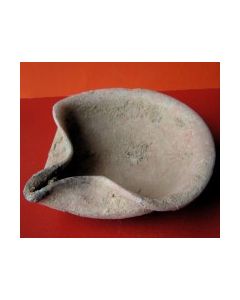 Kanaanitische Öllampe (B)
Terracotta, Levante, Kanaanitisch. 1200 v.Chr. bis 500 v.Chr. Schöne originale Fundpatina. Rußspuren an Dochtmulde. 130mm lang, 130mm breit, 40mm hoch.
Price: on request Gruppe: 5 Skythische Pfeilspitzen (F-J)
Dreiflüglig, Bronze, ohne Schaft. Typisch für Skythen ab ca. 700 v.Chr. Vermutlich jünger und von Söldnern im römischen Reich. Ca. 15mm bis 25mm.
Price: on request Gruppe: 5 Skythische Pfeilspitzen (A-E)
Dreiflüglig, Bronze, ohne Schaft. Typisch für Skythen ab ca. 700 v.Chr. Vermutlich jünger und von Söldnern im römischen Reich. Ca. 15mm bis 25mm.
Price: on request Dreiecksfibel, Bronze (B)
Levante, römisch oder älter, 600 v.Chr. Bis 300 n.Chr. 7,1cm lang.
Price: on request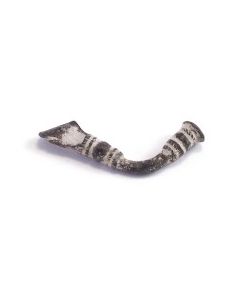 Dreiecksfibel, Bronze (F)
Levante, römisch oder älter, 600 v.Chr. Bis 300 n.Chr. 4,5cm lang. 7,5g.
Price: on request Dreiecksfibel mit restaurierem Pin, Bronze
800 v.Chr. bis 600 v.Chr. , Eisenzeit. Dreiecksfibel, Nadelhalterung in Form einer Hand.
Price: on request Dreiecksfibel mit restaurierem Pin, Bronze
800 v.Chr. bis 600 v.Chr. , Eisenzeit. Dreiecksfibel, Nadelhalterung in Form einer Hand.
Price: on request