

Stone Age Peoples - Fotogalerie - Sold antiquities
Archive of sold antiquities
All artefacts sold in our gallery are fully documented in our online archive and database. Being a specialist ancient art dealer, preserving also the more recent history of each and every piece sold in our shop is at our heart. That is particularly useful for artefacts that changed owners in the meantime. Information that may have been lost in the process can be easily restored from our archives. Please do not hesitate to contact us if you need further information about ancient items that have been sold in our gallery. We can help you with reconstructing the history of ownership for those items. All information about our customers will be kept confidential, of course.-
 Large storage vessel of the Linear Pottery culture
The imposing vessel was made by the earliest peasants of Central Europe, the Neolithic Linear Band Ware settlers. A find from Southern Germany in great condition.
Price: on request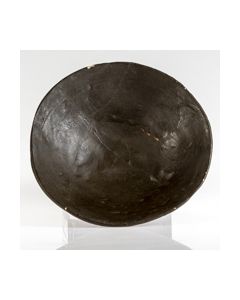 Bowl of the Linear Pottery culture
Large flat bowl or deep plate from the earliest peasants of Central Europe, the Neolithic Linear Band Ware settlers. A well preserved piece found in Riekofen in Southern Germany.
Price: on request Vessel of the Linear Pottery culture
The beautifully decorated tableware or cookware was made by the earliest peasants of Central Europe, the Late Stone Age Linear Band Ware settlers. A find from Southern Germany in great condition.
Price: on request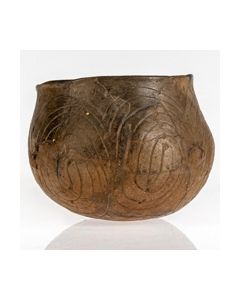 Vessel of the Linear Pottery culture
The beautifully decorated tableware or cookware was made by the earliest peasants of Central Europe, the Neolithic Linear Band Ware settlers. A find from Southern Germany in great condition.
Price: on request Vessel of the Linear Pottery culture in Mintraching
The beautifully decorated tableware or cookware was made by the earliest peasants of Central Europe, the Neolithic Linear Band Ware settlers. A find from Mintraching in Southern Germany.
Price: on request Vessel of the Linear Pottery culture
The beautifully decorated tableware or cookware was made by the earliest peasants of Central Europe, the Neolithic Linear Band Ware settlers. A find from Southern Germany in great condition.
Price: on request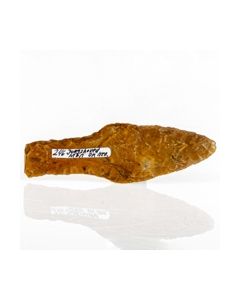 Scandinavian flint dagger
Nicely worked flint dagger from the transitional period between Late Neolithic and Early Bronze Age. Jungshoved on the Danish Island of Moen was the find spot.
Price: on request Neolithic dagger
Nicely worked flint dagger of type III. Sprove on the Danish Island of Moen was the find spot. 1700 to 1500 BC.
Price: on request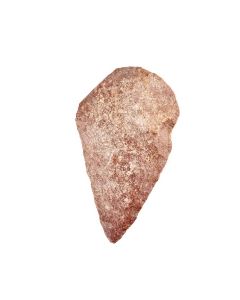 Paleolithic hand axe
The universal tool of the older Stone age. It could be used as a borer or a cutter. Approx. 500,000 to 200,000 BC.
Price: on request Axe head from neolithic Northern Europe
The object is a trapezoid thick-butted thin bladed axe head dating to the Passage Grave Period to Dagger Period. 3200 to 1950 BC.
Price: on request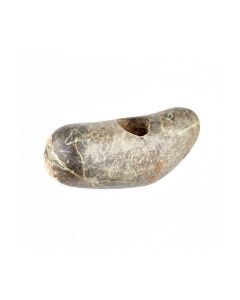 Finely polished hammer axe
The compact axe head is made of beautiful and polished green-black stone with white veins. Late Neolithic to Copper Age.
Price: on request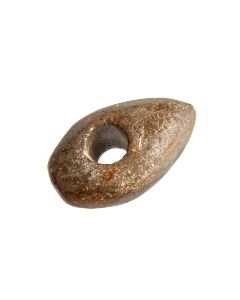 Small battle axe of the Single Grave culture
The axe head from the younger Stone Age has a compact shape. Axes that have clearly been used as weapons are rare. Most axe types have probably served peaceful purposes.
Price: on request Polished stone age axe head
The small tool from the younger Stone Age has a nicely polished surface revealing the beautiful black stone it is made of. Approx. 4200 to 2400 BC.
Price: on request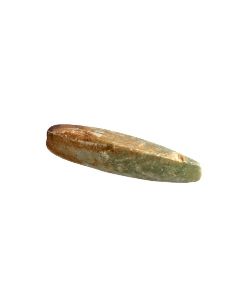 Neolithic chisel of green stone
The stone age tool of the younger Funnel beaker culture or Single Grave culture is exceptional because if its material. It is made of beautiful finely polished green stone.
Price: on request Neolithic flint sickle
Halfmoon shaped blade with fine edges. Nice and typical example for this neolithic type of tool.
Price: on request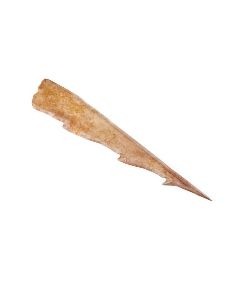 Harpoon of the Maglemosian culture
Fine craftsmanship hunting weapon. Important evidence of the beginnings of fishing in Northern Europe. Mesolithic, 9000 to 6500 BC.
Price: on request Hand axe from Galilee
Big paleolithic hand axe. The universal stone age tool could be use as a borer or cutting tool. Around 500,000 to 200,000 BC.
Price: on request Beil / Hammer, Trichterbecherkultur
Ursprüngliches Beil, das als Schlagstein wiederverwendet wurde. Neolithikum, 4200 bis 2800 v.Chr. Interessantes Zeugnis für den Wert von Feuerstein als Rohstoff. 100mm x 40mm x 40mm.
Price: on request Kleiner Axtkopf
Neolithisches kleines Beil. Sehr schöne polierte Oberfläche und feine Bearbeitung. 42mm x 33mm x 12mm. Fundort: Osteuropa.
Price: on request Mesolithische Axt
Ertebølle-Ellerbek-Kultur. 85mm lang, Salzwasserpatina. Fundort Fyns Hoved, Dänemark. Etwa 5000 v. Chr.
Price: on request Bohrer aus dem Mesolithikum
Bohrer aus Feuerstein, Kongemose Kultur. Fundort Hindsholm, Fünen, Dänemark.
Price: on request Dick-Nacken-Hohl-Beil
Neolithisches Beil aus Feuerstein. Dechsel Typ Horneby. 118mm lang. Fundort: Boltinge, Fünen, Dänemark.
Price: on request Schaber, Homo Neanderthalensis
Schaber, mittleres Paläolithikum. Bearbeitung durch Neandertaler, 60000 v. Chr. bis 40000 v. Chr.
Price: on request Messer, Homo Neanderthalensis
Messer, mittleres Paläolithikum. Bearbeitung durch Neandertaler, 60000 v. Chr. bis 40000 v. Chr.
Price: on request Messer, Homo Neanderthalensis
Messer, mittleres Paläolithikum. Bearbeitung durch Neandertaler, 60000 v. Chr. bis 40000 v. Chr.
Price: on request Kleiner Faustkeil, Homo Neanderthalensis
Kleiner Faustkeil oder Hammer, mittleres Paläolithikum. Bearbeitung durch Neandertaler, 60000 v. Chr. bis 40000 v. Chr.
Price: on request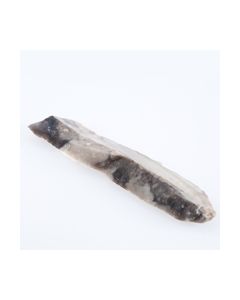 Seltene steinzeitliche Klingensichel
Früher Sicheltyp aus dem neolithischen Nordeuropa, vermutlich als Erntesichel verwendet. 4000 v. Chr. bis 2800 v. Chr., Trichterbecher-Kultur.
Price: on request Stichel mit Salzwasserpatina
Seltenes Werkzeug zur Bearbeitung von Knochen. Fund aus einer wassernahen Siedlung der mesolithischen Maglemosekultur. 8900 v. Chr. bis 6400 v. Chr.
Price: on request Steinzeitlicher Bohrer
Typischer steinzeitlicher Bohrer, Spätmesolithikum. Gefunden auf Seeland. Toller weißer Stein, 76mm lang.
Price: on request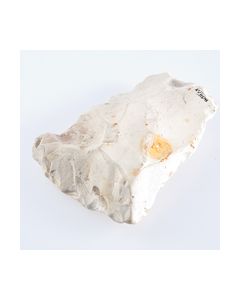 Flachgeschlagenes Scheibenbeil
Frühester Beiltyp der nordeuropäischen Steinzeit, symmetrisch, kantenbearbeitete Ausführung. 5400 v. Chr. bis 4000 v. Chr., Spätmesolithikum, Ertebølle-Ellerbek-Kultur.
Price: on request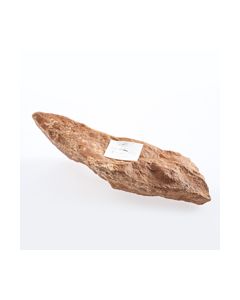 Bohrer oder Stichel des Homo heidelbergensis
Extrem seltenes Artefakt dieses mitteleuropäischen Frühmenschen. Aus einer erforschten Ausgrabung bei Battenberg, auf 600.000 v. Chr. zu datieren.
Price: on request Paläolithische Handaxt des Homo Erectus
Altsteinzeit, um 200.000 v. Chr. Deutliche Spuren grober Werkzeugbearbeitung durch Homo Erectus. Schweres Objekt mit dunkler Patina.
Price: on request Pfeilspitze, Paläolithikum
35.000 bis 30.000 v.Chr., Jungpaläolithikum. Letzte Phase der Altsteinzeit, Homo sapiens.
Price: on request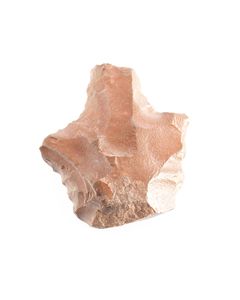 Pfeilspitze, Paläolithikum
35.000 bis 30.000 v.Chr., Jungpaläolithikum. Letzte Phase der Altsteinzeit, Homo sapiens.
Price: on request Messerklinge aus Stein, Mesolithikum
5100 - 4100 v.Chr., Flintwerkzeug der Ertebölle-Ellerbek-Kultur. Die Kultur ist ein wichtiges Bindeglied zwischen Mesolithikum und Neolithikum.
Price: on request Messerklinge aus Stein, Mesolithikum
5100 - 4100 v.Chr., Flintwerkzeug der Ertebölle-Ellerbek-Kultur. Die Kultur ist ein wichtiges Bindeglied zwischen Mesolithikum und Neolithikum.
Price: on request