
Glass - Sold antiquities
Archive of sold antiquities
All artefacts sold in our gallery are fully documented in our online archive and database. Being a specialist ancient art dealer, preserving also the more recent history of each and every piece sold in our shop is at our heart. That is particularly useful for artefacts that changed owners in the meantime. Information that may have been lost in the process can be easily restored from our archives. Please do not hesitate to contact us if you need further information about ancient items that have been sold in our gallery. We can help you with reconstructing the history of ownership for those items. All information about our customers will be kept confidential, of course.-
 Roman intaglio with mythical creature
Roman jewellery insert made of beautifully shimmering blue glass paste. It shows a creature with the front part of a horse.
Price: on request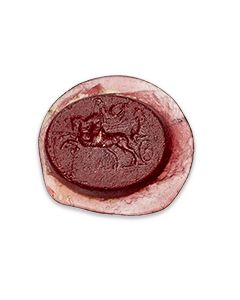 Roman intaglio with biga
The glass paste shows Nike in a biga. The goddess of victory stands in the chariot, holding the reins and her laurel wreath.
Price: on request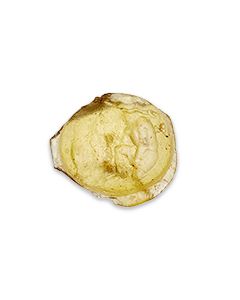 Roman intaglio with kneeling person
Nice light yellow glass paste from the Professor Brosch collection of ancient glyptics. Possibly showing a warrior.
Price: on request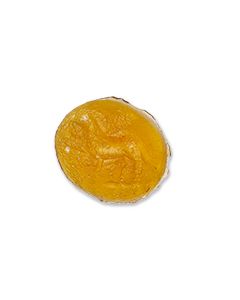 Roman intaglio with dog
The ring insert made of beautiful orange glass paste shows a standing dog that looks up with a raised paw.
Price: on request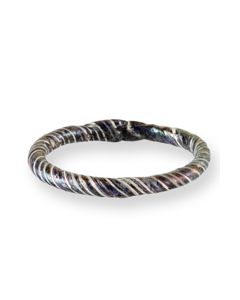 Roman glass bracelet with beautiful decoration
The small bangle from the 4th century is decorated with polychrome glass layers on the outside. Made in the Eastern Mediterranean.
Price: on request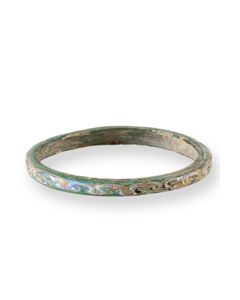 Decorated ancient glass bracelet
The bangle is made of turquoise glass and beautifully decorated in white and blue. A product from the eastern Mediterranean coast.
Price: on request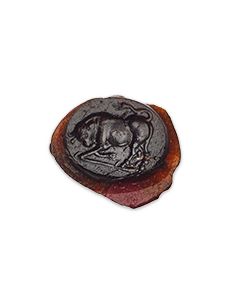 Roman intaglio with bull
Prime example of Roman glass pastes with a perfectly sharp depiction of a bull ready to fight.
Price: on request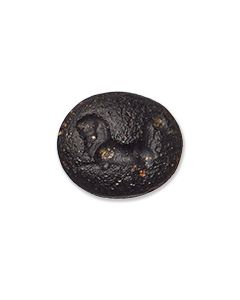 Roman intaglio with fantastic beast
The dark glass paste depicts an animal composed of two front parts. From the Professor Brosch collection of ancient glass pastes.
Price: on request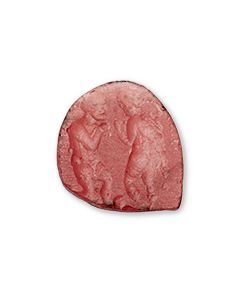 Roman intaglio with two men
An ancient intaglio from Roman times made of nice violet glass paste and shows a scene between two persons.
Price: on request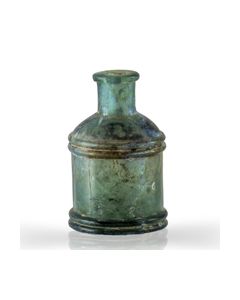 Victorian ink bottle
The vessel is made of beautiful, turquoise glass. From the collection of Moshe Dayan.
Price: on request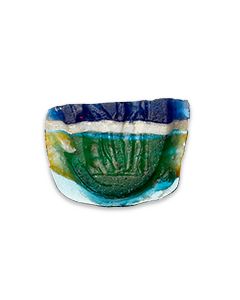 Roman intaglio with Heracles
The glass paste is of wonderful blue and green colour with a white band. It shows the young Heracles with his club.
Price: on request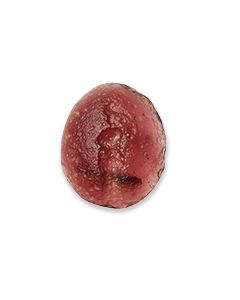 Roman intaglio made of beautiful glass paste
The piece from the Professor Brosch collection shows a standing woman. Wonderful violet colour.
Price: on request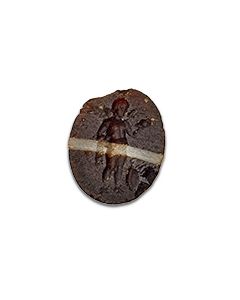 Roman intaglio with Eros as child god
The Roman intaglio is made of banded glass paste. It show the god standing with a bowl in one hand. From the Professor Brosch collection of engraved gems.
Price: on request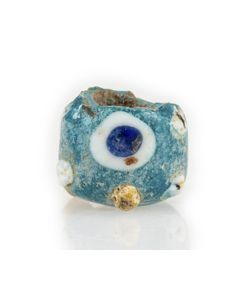 Phoenician eye bead
Polychrome glass bead with stylized elements of a face as protection against the evil eye. Produced in Carthage or the Phoenician homeland, 4th to 3rd century BC.
Price: on request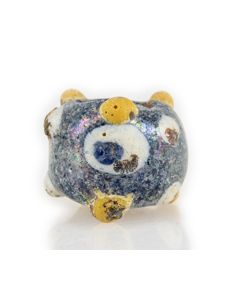 Phoenician eye bead
Polychrome glass bead with stylized elements of a face as protection against the evil eye. Produced in Carthage or the Phoenician homeland, 4th to 3rd century BC.
Price: on request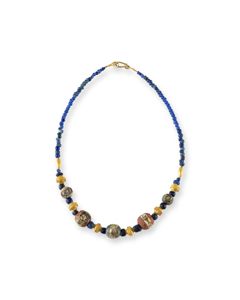 Necklace of Egyptian mosaic glass beads
Modernly threaded necklace of ancient beads made of beautiful mosaic glass and sheet gold. The mosaic originated in a workshop in Roman Egypt. Ex Christie's.
Price: on request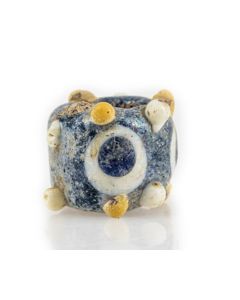 Phoenician eye bead
Polychrome glass bead with stylized elements of a face as protection against the evil eye. Produced in Carthage or the Phoenician homeland, 4th to 3rd century BC.
Price: on request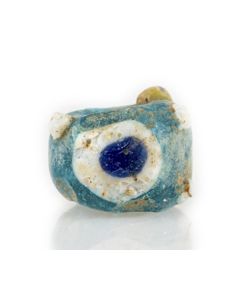 Phoenician eye bead
Polychrome glass bead with stylized elements of a face as protection against the evil eye. Produced in Carthage or the Phoenician homeland, 4th to 3rd century BC.
Price: on request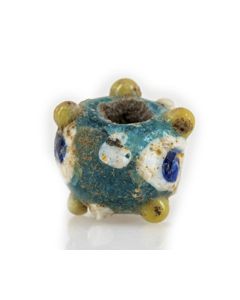 Phoenician eye bead
Polychrome glass bead with stylized elements of a face as protection against the evil eye. Produced in Carthage or the Phoenician homeland, 4th to 3rd century BC.
Price: on request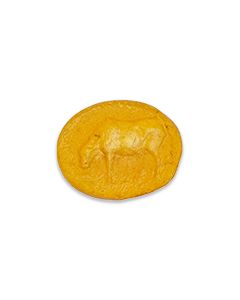 Roman glass paste with bull
The intaglio of yellow orange glass shows a standing bull or ox. From the Professor Brosch collection.
Price: on request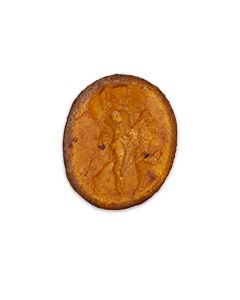 Roman glass paste with young satyr
The ring insert shows a hybrid being standing on tiptoe, pouring from a shouldered amphora. A prime example of Roman glass pastes in almost perfect condition.
Price: on request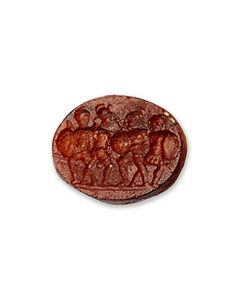 Roman intaglio with warriors battling
The glass paste shows four warriors in full military gear. They face each other in battle. A nice piece from the Professor Brosch collection of ancient glyptics.
Price: on request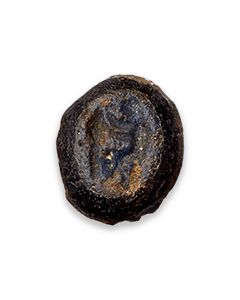 Roman intaglio with standing person
The small ring insert is made of dark, opaque glass paste. It shows a standing person.
Price: on request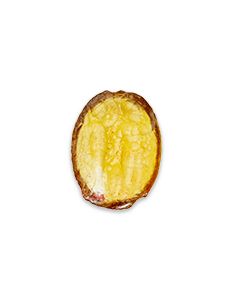 Roman intaglio with two persons
Roman yellow glass paste from the Professor Brosch collection of ancient glyptics.
Price: on request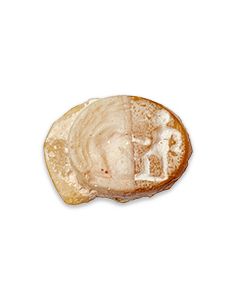 Roman intaglio with Calydonian boar hunt
Nice ring insert made of composite glass. Its imprint shows the moment of the mythological boar hunt in which Meleager slays the beast.
Price: on request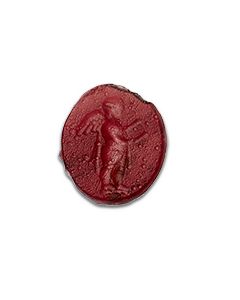 Roman intaglio with child Eros
Roman glass paste with nice depiction of the Greek god of love as a child, probably a lyre in his hands.
Price: on request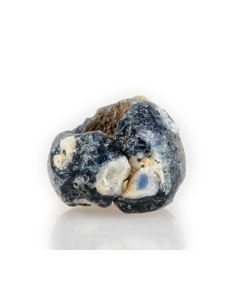 Phoenician eye bead
Polychrome glass bead with stylized elements of a face as protection against the evil eye. Produced in Carthage or the Phoenician homeland, 4th to 3rd century BC.
Price: on request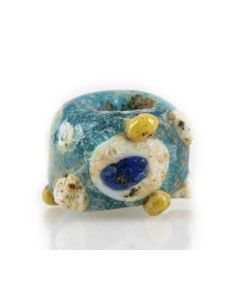 Phoenician eye bead
Polychrome glass bead with stylized elements of a face as protection against the evil eye. Produced in Carthage or the Phoenician homeland, 4th to 3rd century BC.
Price: on request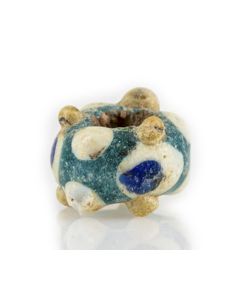 Phoenician eye bead
Polychrome glass bead with stylized elements of a face as protection against the evil eye. Produced in Carthage or the Phoenician homeland, 4th to 3rd century BC.
Price: on request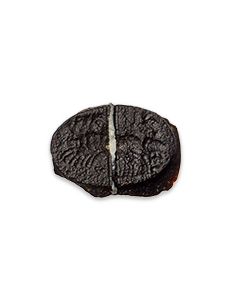 Roman intaglio with quadriga
Nice depiction on the dark glass paste. It shows the horses of the chariot at full gallop.
Price: on request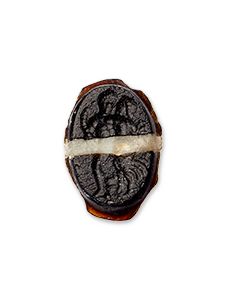 Roman intaglio with nymph and satyr
The white banded glass paste and shows a scene with nymph or maenad putting her arm around a satyr's neck.
Price: on request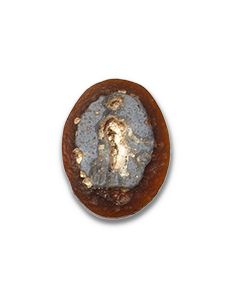 Roman glass paste with god
The roman intaglio shows a standing god. From the Professor Brosch collection of engraved gems.
Price: on request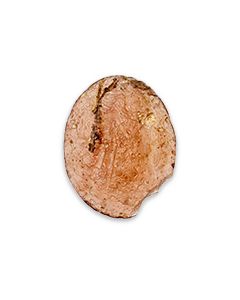 Roman intaglio with two persons
Roman light red glass paste from the Professor Brosch collection of ancient glyptics. Possibly showing Heracles and Apollon.
Price: on request Roman intaglio with goddess Nike
Attractive white banded orange glass paste. From the Professor Brosch collection of engraved gems.
Price: on request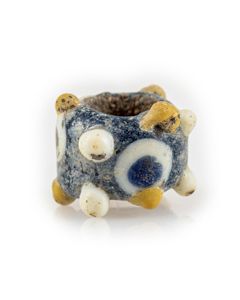 Phoenician eye bead
Polychrome glass bead with stylized elements of a face as protection against the evil eye. Produced in Carthage or the Phoenician homeland, 4th to 3rd century BC.
Price: on request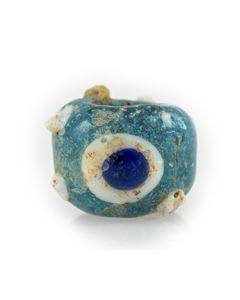 Phoenician eye bead
Polychrome glass bead with stylized elements of a face as protection against the evil eye. Produced in Carthage or the Phoenician homeland, 4th to 3rd century BC.
Price: on request