
Jewellery - Fotogalerie - Sold antiquities
Archive of sold antiquities
All artefacts sold in our gallery are fully documented in our online archive and database. Being a specialist ancient art dealer, preserving also the more recent history of each and every piece sold in our shop is at our heart. That is particularly useful for artefacts that changed owners in the meantime. Information that may have been lost in the process can be easily restored from our archives. Please do not hesitate to contact us if you need further information about ancient items that have been sold in our gallery. We can help you with reconstructing the history of ownership for those items. All information about our customers will be kept confidential, of course.-
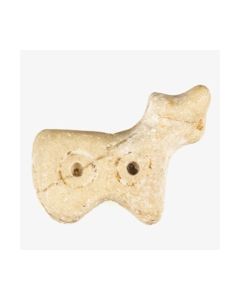 Sumerian ram amulet
Nice small stone amulet in the stylized shape of a ram. From the 3rd Millenium BC.
Price: on request Etruscan "a baule" type earrings
Skilfully made pair of gold earrings with filigree. The ancient jewellery is from the Golden Age of the Etruscans around the 6th century BC.
Price: on request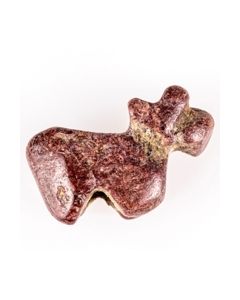 Sumerian miniature ram amulet
Nice small stone amulet in the stylized shape of a ram. From the 3rd Millenium BC.
Price: on request Roman gold ring with intaglio
Nice fingerring with a glass paste showing a standing figure. Characteristic type for the 1st century CE, early Roman Imperial period.
Price: on request Late Roman votive mirror
Exceedingly rare in this state of preservation, including remains of the original glass and reflective lead foil.
Price: on request Roman mirror from Baalbek
The bronze disc is the base plate of a bronze mirror, that was once attached to a handle and coated with a reflective metal layer. Typical for upper class Roman households during Imperial times.
Price: on request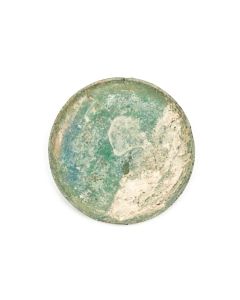 Roman mirror from Baalbek
The bronze disc is the base plate of a bronze mirror, that was once attached to a handle and coated with a reflective metal layer. Typical for upper class Roman households during Imperial times.
Price: on request Egyptian predynastic cosmetic palette
High quality palette with two stylized bird heads. Characteristic for the Naqada II period. Circa 3500 to 3200 BC.
Price: on request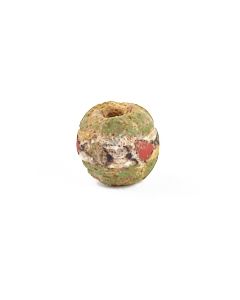 Mosaic face bead with female bust
This small work of art was made around the beginning of the Common Era. The mosaic glass workshop it came from was probably located in Roman Ptolemaic Egypt.
Price: on request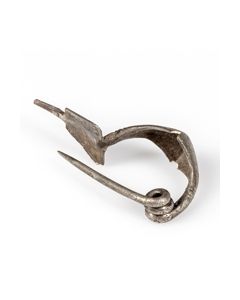 Greek fibula from the colonies in Southern Italy
Silver brooch and piece of jewellery. Late classical to early hellenistic period.
Price: on request Greek fibula from the colonies in Southern Italy
Silver brooch in near perfect condition. Late classical to early hellenistic period.
Price: on request Early fibula from Magna Graecia
Greek silver brooch and piece of jewellery from the South Italian colonies. Geometric period.
Price: on request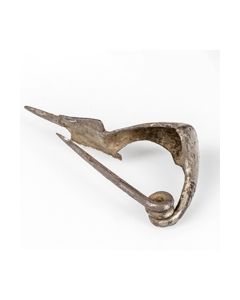 Greek fibula from colonies in Southern Italy
Nice silver brooch from the colonies in Southern Italy. Late classical to early hellenistic period.
Price: on request Greek fibula from colonies in Southern Italy
Nice silver brooch and piece of jewellery. Late classical to early hellenistic period.
Price: on request Nile tilapia made of dark stone
This Egyptian fish symbolizes fertility and rebirth. A nice cultic item from the New Kingdom of Ancient Egypt.
Price: on request Egyptian lion amulet
The small amulet dates to the Late Period and should give its owner strength or protection. From the famous Matouk collection.
Price: on request Golden fingerring in the shape of a snake
Beautiful gold ring from Egypt in Roman Imperial times. Published in the exhibition catalogue of the Basel Museum of Ancient Art.
Price: on request Golden fingerring in the shape of a snake
Beautiful gold ring from Egypt in Roman Imperial times. Published in the exhibition catalogue of the Basel Museum of Ancient Art.
Price: on request Large decorated violin bow fibula
Impressive piece of jewellery because of its size and decoration. From Central Europe, made during Late Bronze Age or Early Iron Age.
Price: on request Celtic neck ring
Open ring made of solid bronze. The torc is from Gaul or Central Europe and dates to the 4th or 3rd century BC.
Price: on request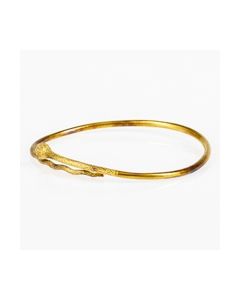 Golden circlet in the shape of a snake
Beautiful piece of gold jewellery from Egypt in Roman Imperial times. Published in the exhibition catalogue of the Basel Museum of Ancient Art.
Price: on request Egyptian lioness amulet
Fantastic example of Egyptian miniature art in stone. The amulet dates to the Late Period and should give its owner strength or protection.
Price: on request Ancient gold ring with mask
The fingerring is of peculiar workmanship and displays a central grotesque mask. A piece of jewellery from the Roman era.
Price: on request Egyptian heart amulet from a museum collection
One of the most popular Egyptian amulet types. From the collection of the Boston Museum of Fine Arts. Late Period of Ancient Egypt.
Price: on request Small Eye of Horus from ptolemaic period
Small amulet in form of the Eye of Horus. Popular type of protective amulet from Ancient Egypt.
Price: on request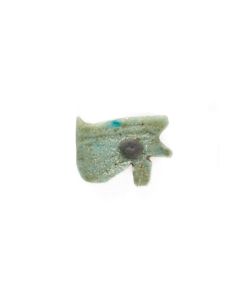 Egyptian Eye of Horus
Small amulet in form of the Eye of Horus. Popular type of protective amulet from Ancient Egypt.
Price: on request Egyptian Eye of Horus
Small amulet in form of the Eye of Horus. Popular type of protective amulet from Ancient Egypt.
Price: on request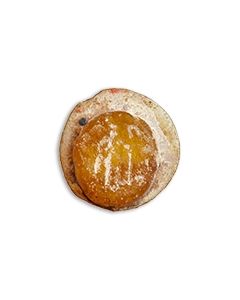 Roman intaglio with Eros child
Slightly oval gemstone made of orange brown glasspaste imitating Carnelian. Dating to Roman times.
Price: on request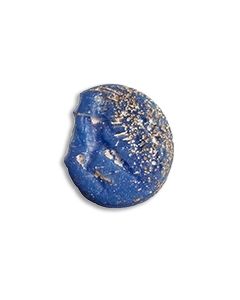 Roman intaglio
Intaglio made of vibrant blue glass paste. Dates to Roman Republic until Roman Imperial times.
Price: on request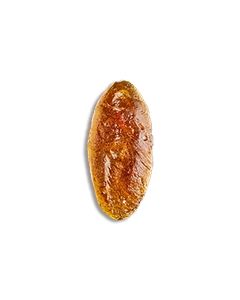 Roman intaglio
Nice orange glowing glass paste imitating carnelian. Gemstone from Roman times.
Price: on request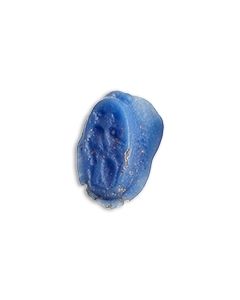 Roman intaglio with two warriors
Extremely nice sparkling blue glass paste. The scene is similar to a Roman interpretation of the Homeric epics.
Price: on request Bow fibula of the Urnfield culture
Excessively rare brooch type from Late Bronze Age in Bavaria. It is known from the Urnfield period hoard of Reisen near Munich in Germany. This piece has been found near Regensburg, Germany.
Price: on request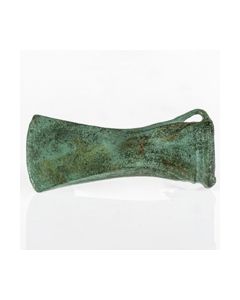 Socketed axe head from Southern Germany
A typical bronze tool of the late Urnfield culture or early Hallstatt culture. It was found near Regensburg in Southern Germany by a voluntary archaeologist.
Price: on request Neck ring of the Urnfield culture
This bronze ring is an early variant of a torc. The piece of jewellery was found in Southern Germany and dates to the Late Bronze Age.
Price: on request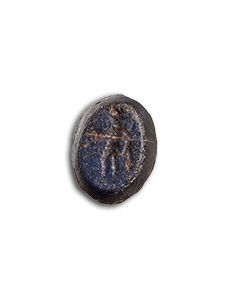 Ancient intaglio
A scene with a young man is moulded into dark blue glass. Insert stone dating to Roman Imperial times.
Price: on request Ensemble of Hellenistic gold jewellery
Group of a necklace with amphora shaped pendants, a lunula amulet and a pair of earrings with discoid rosettes and amphoras. Belonging to a burial around 300 BC. With well documented 19th century provenance.
Price: on request