
Egypt and North Africa - Sold antiquities
Archive of sold antiquities
All artefacts sold in our gallery are fully documented in our online archive and database. Being a specialist ancient art dealer, preserving also the more recent history of each and every piece sold in our shop is at our heart. That is particularly useful for artefacts that changed owners in the meantime. Information that may have been lost in the process can be easily restored from our archives. Please do not hesitate to contact us if you need further information about ancient items that have been sold in our gallery. We can help you with reconstructing the history of ownership for those items. All information about our customers will be kept confidential, of course.-
 Egyptian amulet of Bes
Protective amulet of the dwarf god Bes made of turquoise faience. Great specimen from Ptolemaic or Roman Egypt.
Price: on request Egyptian ushabti
Well-preserved funerary statuette made of mint green faience. From the Late Period of Ancient Egypt.
Price: on request Phoenician eye bead
Polychrome glass bead with stylized elements of a face as protection against the evil eye. Produced in Carthage or the Phoenician homeland, 4th to 3rd century BC.
Price: on request Phoenician eye bead
Polychrome glass bead with stylized elements of a face as protection against the evil eye. Produced in Carthage or the Phoenician homeland, 4th to 3rd century BC.
Price: on request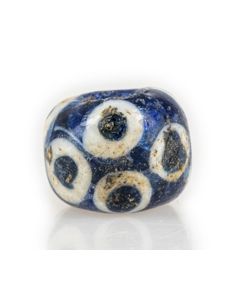 Phoenician eye bead
Polychrome glass bead with stylized elements of a face as protection against the evil eye. Produced in Carthage or the Phoenician homeland, 4th to 3rd century BC.
Price: on request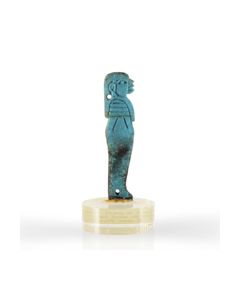 Appliqué of the Horus Son Imsety from Faiyum
Made of nice turquoise faience. Protective god responsible for the liver of a deceased. From the family of Lawrence of Arabia.
Price: on request Egyptian amulet of Bes
Protective amulet of the dwarf god Bes made of turquoise faience. Great specimen from Ptolemaic or Roman Egypt.
Price: on request Egyptian double-sided Bes amulet
Protective amulet of the dwarf Bes made of mint green faience. Very detailed example from Ancient Egypt.
Price: on request Huge Paleolithic hand axe
Prehistoric stone tool. It was the universal tool of the older Stone age and could be used as a borer or a cutter. From a Swiss museum collection. Found in Morocco, North Africa.
Price: on request Paleolithic hand axe
Prehistoric stone tool. It was the universal tool of the older Stone age and could be used as a borer or a cutter. From a Swiss museum collection. Found in Morocco, North Africa.
Price: on request Egyptian bronze figurine of Horus the Child
Amulet of a standing child god with crown, sun disc and horns.
Price: on request Appliqué of the Horus Son Imsety
Rare variety with wooden core and gilded linen. Protective god responsible for the liver of a deceased. From the family of Lawrence of Arabia.
Price: on request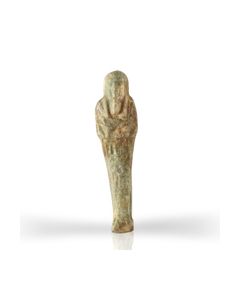 Egyptian ushabti
Well-preserved funerary statuette made of mint green faience. From the Late Period of Ancient Egypt.
Price: on request Egyptian green stone vessel
The stone vessel is made of beautiful green serpentine. From the collection of Egyptologist Professor Wiedemann. Middle Kingdom of Ancient Egypt.
Price: on request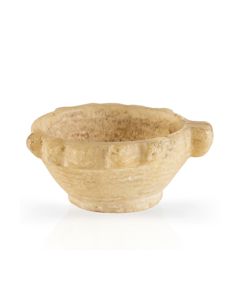 Egyptian alabaster bowl from Luxor
The small stone vessel is an offering bowl for libation. From the collection of Egyptologist Professor Wiedemann. 12th to 18th dynasty of Ancient Egypt
Price: on request Egyptian stone bowl
This wonderful and relatively large bowl of banded stone was probably used for ritual purposes. From the Early Dynastic Period or Old Kingdom of ancient Egypt.
Price: on request Egyptian ushabti
Interesting funerary statuette made of mint green faience with black painting. From the Ptolemaic era of Ancient Egypt, incorporating features of earlier periods.
Price: on request Hellenistic-Roman clay figurine of a standing woman
Very nice condition. From German private collection, acquired 1985 from Aloys Faust, Cologne.
Price: on request Large prehistoric hand axe
Massive Paleolithic stone tool. It was the universal tool of the older Stone age and could be used as a borer or a cutter. From a Swiss museum collection. Found in Algeria, North Africa.
Price: on request Paleolithic hand axe or borer
Prehistoric stone tool. It was the universal tool of the older Stone age and could be used as a borer or chisel. From a Swiss museum collection. Found in the Algerian Sahara desert.
Price: on request Stone Age bow scraper from Egypt
The Paleolithic tool is of beautiful shape and color. Thebes has been handed down as the place of origin. From an old museum collection.
Price: on request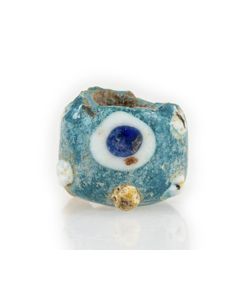 Phoenician eye bead
Polychrome glass bead with stylized elements of a face as protection against the evil eye. Produced in Carthage or the Phoenician homeland, 4th to 3rd century BC.
Price: on request Phoenician eye bead
Polychrome glass bead with stylized elements of a face as protection against the evil eye. Produced in Carthage or the Phoenician homeland, 4th to 3rd century BC.
Price: on request Three neolithic arrowheads from Egypt
The Stone Age points are finely crafted. From a 100 year old museum collection.
Price: on request Three neolithic arrowheads from Egypt
The Stone Age points are finely crafted. From a 100 year old museum collection.
Price: on request Necklace of Egyptian mosaic glass beads
Modernly threaded necklace of ancient beads of spherical and cylindrical shape made of beautiful mosaic glass. From a workshop in Roman Egypt. Ex Christie's.
Price: on request Necklace of Egyptian mosaic glass beads
Modernly threaded necklace of ancient beads made of beautiful mosaic glass and sheet gold. The mosaic originated in a workshop in Roman Egypt. Ex Christie's.
Price: on request Phoenician eye bead
Polychrome glass bead with stylized elements of a face as protection against the evil eye. Produced in Carthage or the Phoenician homeland, 4th to 3rd century BC.
Price: on request Phoenician eye bead
Polychrome glass bead with stylized elements of a face as protection against the evil eye. Produced in Carthage or the Phoenician homeland, 4th to 3rd century BC.
Price: on request Phoenician eye bead
Polychrome glass bead with stylized elements of a face as protection against the evil eye. Produced in Carthage or the Phoenician homeland, 4th to 3rd century BC.
Price: on request Paleolithic hand axe
Prehistoric stone tool. It was the universal tool of the older Stone age and could be used as a borer or a cutter. From a Swiss museum collection. Found in Erg Mehedjibat, Algeria, North Africa.
Price: on request Large Paleolithic hand axe
Prehistoric stone tool. It was the universal tool of the older Stone age and could be used as a borer or a cutter. From a Swiss museum collection. Found in Foggaret Ezzaouia, Algeria, North Africa.
Price: on request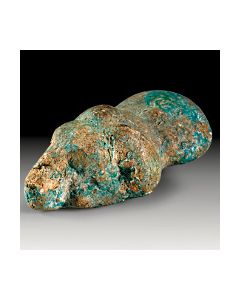 Egyptian amulet with ram head and sun disc
The rare depiction is typical of the god Khnum. From the Late Period to Ptolemaic period of Ancient Egypt.
Price: on request Flint blade and stone mould
Interesting group of two artefacts. A Neolithic flint blade from Egypt and a Bronze Age mould for casting or hammering metal.
Price: on request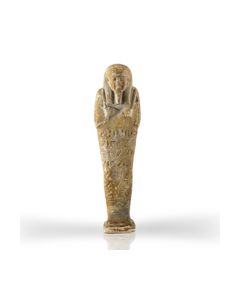 Egyptian ushabti of the Royal Scribe Hor-maa-kheru
The Egyptian funerary figurine dates to the reign of Pharaoh Amasis II, towards the end of the 26th Dynasty. Excavated in Saqqara in the mid-19th century. Shown in a 1979 Sotheby's catalogue.
Price: on request Three neolithic arrowheads from Egypt
The Stone Age points are finely crafted. From a 100 year old museum collection.
Price: on request