
Northern Europe - Sold antiquities
Archive of sold antiquities
All artefacts sold in our gallery are fully documented in our online archive and database. Being a specialist ancient art dealer, preserving also the more recent history of each and every piece sold in our shop is at our heart. That is particularly useful for artefacts that changed owners in the meantime. Information that may have been lost in the process can be easily restored from our archives. Please do not hesitate to contact us if you need further information about ancient items that have been sold in our gallery. We can help you with reconstructing the history of ownership for those items. All information about our customers will be kept confidential, of course.-
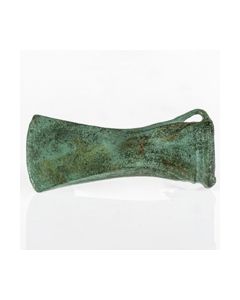 Socketed axe head from Southern Germany
A typical bronze tool of the late Urnfield culture or early Hallstatt culture. It was found near Regensburg in Southern Germany by a voluntary archaeologist.
Price: on request Neck ring of the Urnfield culture
This bronze ring is an early variant of a torc. The piece of jewellery was found in Southern Germany and dates to the Late Bronze Age.
Price: on request Roman oil lamp found in Regensburg area
With makers mark QGC. Found in Southern Germany. From the collection of Hugo Rehorik (1905-1979), a voluntary archeologist who was working in the Regensburg area in the 1960s and 1970s.
Price: on request Titus Livius - Historiarum Libri - 1633 edition
History of Rome from it's foundation and until the death of Drusus in 9 B.C. Contemporary leather binding
Price: on request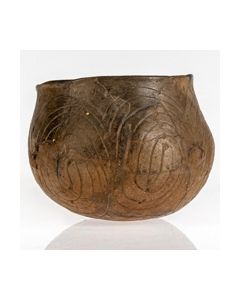 Vessel of the Linear Pottery culture
The beautifully decorated tableware or cookware was made by the earliest peasants of Central Europe, the Neolithic Linear Band Ware settlers. A find from Southern Germany in great condition.
Price: on request Vessel of the Linear Pottery culture in Mintraching
The beautifully decorated tableware or cookware was made by the earliest peasants of Central Europe, the Neolithic Linear Band Ware settlers. A find from Mintraching in Southern Germany.
Price: on request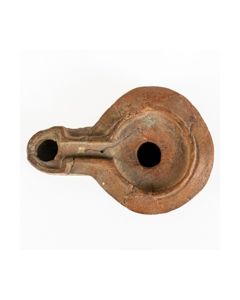 Roman oil lamp found in Regensburg area
With makers mark FESTI A. Found in Southern Germany. From the collection of Hugo Rehorik (1905-1979), a voluntary archeologist who was working in the Regensburg area in the 1960s and 1970s.
Price: on request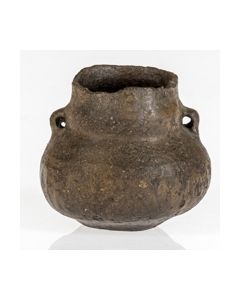 Vessel of the Urnfield culture
Nicely preserved pottery dating to the Urnfield period, the transition between Bronze Age and Iron Age in Central Europe. Found in Southern Germany. 1200 to 800 BC.
Price: on request Vessel of the Linear Pottery culture
The beautifully decorated tableware or cookware was made by the earliest peasants of Central Europe, the Neolithic Linear Band Ware settlers. A find from Southern Germany in great condition.
Price: on request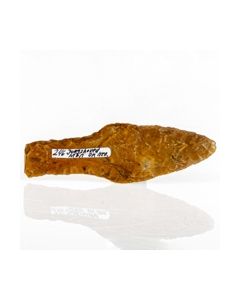 Scandinavian flint dagger
Nicely worked flint dagger from the transitional period between Late Neolithic and Early Bronze Age. Jungshoved on the Danish Island of Moen was the find spot.
Price: on request M. Cicero - rare Paris 1572 edition incl. Catiline Orations
First edition, volume II (of three) of Cicero's Orations, among which are the famous In Catilina and Pro L. Murena. Printed in Paris by Jacob Dupuys, 1572. Text in Latin with commentary by the famous scholar Denys Lambin. Very nice contemporary leather binding with golden front and back cover vignettes.
Price: on request Celtic bracelet of the La Tène culture
Impressive and solid bronze jewellery from the Early La Tène period, 450 to 250 BC. Found in Southern Germany.
Price: on request Palstave axehead with triangle decoration
Extremely well preserved piece from a Bronze Age hoard found in Manston, UK. 1400 to 1150 BC. This axe belongs to a very rare type.
Price: on request Palstave axehead with decoration
Extremely well preserved piece from a Bronze Age hoard found in Manston, UK. 1400 to 1150 BC.
Price: on request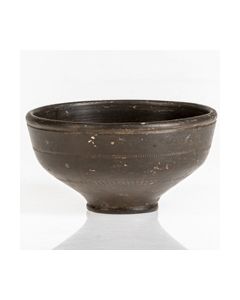 Roman bowl found in Cologne
A very similar piece found in Trier which possibly originates from the same workshop is published in Gose, Gefäßtypen der Römischen Keramik im Rheinland. Acquired 1971 from Axel G. Weber Gallery, Cologne, Germany. Said to have been found in Cologne.
Price: on request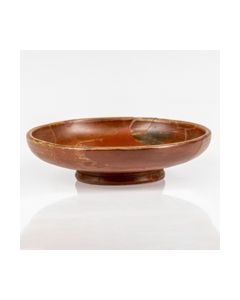 Roman Terra Sigillata bowl
Found in Southern Germany. From the well documented Hugo Rehorik collection.
Price: on request Roman Terra Sigillata bowl
Found in Southern Germany. From the well documented Hugo Rehorik collection.
Price: on request Roman factory lamp
Found in Southern Germany. From the well documented Hugo Rehorik collection.
Price: on request Large decorated bowl
Found in Southern Germany. From the well documented Hugo Rehorik collection.
Price: on request Decorated vessel
Found in Southern Germany. From the well documented Hugo Rehorik collection.
Price: on request Neolithic dagger
Nicely worked flint dagger of type III. Sprove on the Danish Island of Moen was the find spot. 1700 to 1500 BC.
Price: on request Palstave axehead with triangle decoration
Extremely well preserved piece from a Bronze Age hoard found in Manston, UK. 1400 to 1150 BC. This axe belongs to a very rare type.
Price: on request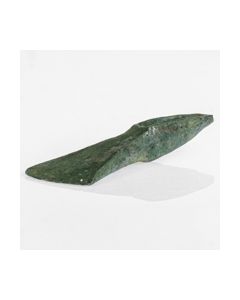 Palstave axehead with decoration
Extremely well preserved piece from a Bronze Age hoard found in Manston, UK. 1400 to 1150 BC.
Price: on request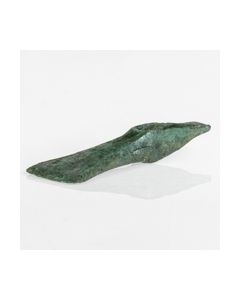 Palstave axehead with decoration
Extremely well preserved piece from a Bronze Age hoard found in Manston, UK. 1400 to 1150 BC.
Price: on request Melon bracelet from the Hallstatt period
The massive bronze bracelet was found in Mintraching, Germany. The piece is published in an archeological report. Around 600 BC.
Price: on request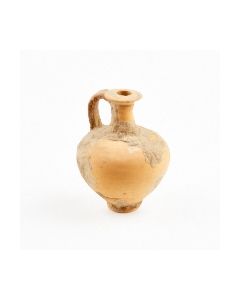 Roman terracotta jar
Found between 1978 and 1984 in the area of the limes forts Pförring, Eining, Pfünz, Kösching and Weißenburg. Perfectly preserved.
Price: on request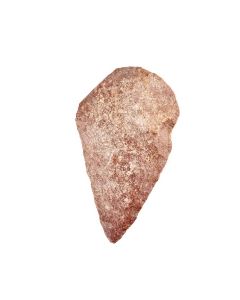 Paleolithic hand axe
The universal tool of the older Stone age. It could be used as a borer or a cutter. Approx. 500,000 to 200,000 BC.
Price: on request Axe head from neolithic Northern Europe
The object is a trapezoid thick-butted thin bladed axe head dating to the Passage Grave Period to Dagger Period. 3200 to 1950 BC.
Price: on request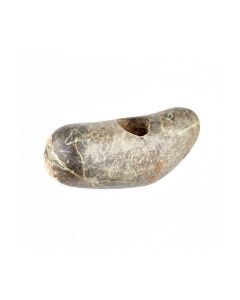 Finely polished hammer axe
The compact axe head is made of beautiful and polished green-black stone with white veins. Late Neolithic to Copper Age.
Price: on request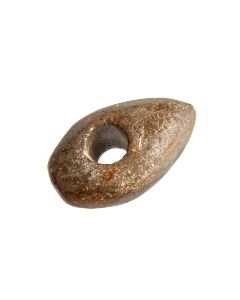 Small battle axe of the Single Grave culture
The axe head from the younger Stone Age has a compact shape. Axes that have clearly been used as weapons are rare. Most axe types have probably served peaceful purposes.
Price: on request Polished stone age axe head
The small tool from the younger Stone Age has a nicely polished surface revealing the beautiful black stone it is made of. Approx. 4200 to 2400 BC.
Price: on request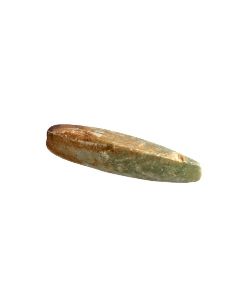 Neolithic chisel of green stone
The stone age tool of the younger Funnel beaker culture or Single Grave culture is exceptional because if its material. It is made of beautiful finely polished green stone.
Price: on request Neolithic flint sickle
Halfmoon shaped blade with fine edges. Nice and typical example for this neolithic type of tool.
Price: on request Massive Bronze Age spear head, possibly celtic
Perfectly preserved, large piece with beautiful patina. From an old German collection.
Price: on request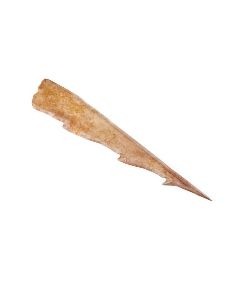 Harpoon of the Maglemosian culture
Fine craftsmanship hunting weapon. Important evidence of the beginnings of fishing in Northern Europe. Mesolithic, 9000 to 6500 BC.
Price: on request Bronze Age axe head
Very well preserved axe head. Late Bronze Age, 10th to 9th cent. BC.
Price: on request