
Search results for: 'mit'
-
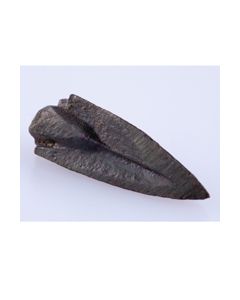 Römisch-Skythische Pfeilspize
Dreiflüglige Pfeilspitze in perfekter Erhaltung. Fundort: Niedergermanien.
Price: on request Septimius Severus, seltener Denar
AV: L SEPT SEV PERT AVG IMP III, RV: P M TR P II COS II PP, Jupiter thront n.l., geprägt 194 n. Chr.
Price: on request Clay tablet with cuneiform script
Small tablet with well preserved cuneiform engravings. Interesting Bronze Age document from Mesopotamia.
Price: on request Denar des Nero - RIC RARE
Revers: IVPPITER CVSTOS. RIC 53 (rare). Kabinettstück, vorzügliche Erhaltung, eindrucksvolles Portrait.
Price: on request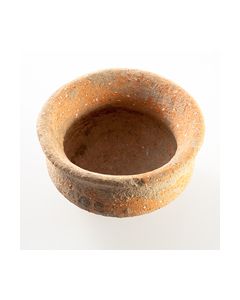 Römische Schale
Horizontal eingeschnürte Wand, die nach Außen geneigte Lippe ist ein wenig verdickt und gerundet. Grober Standfuß, flaches Gefäß.
Price: on request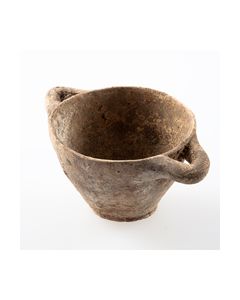 Miniaturskyphos
Zwei horizontale Henkel. Unterhalb der Henkel umlaufendes rotes Band, darüber horizontale Strahlen zur Lippe hinweisend.
Price: on request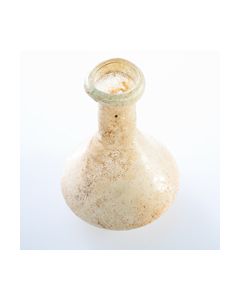 Antikes Glasfläschen
Römisches Unguentarium aus farblosem Glas. Interessant geformte Lippe. Gefäß 83mm hoch, 1. bis 3. Jh. n. Chr.
Price: on request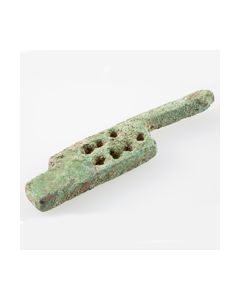 Römischer Schlossriegel
Antiker Bolzen für das Schloss einer Tür oder Truhe. Bronze, 1. bis 4. Jh.n.Chr.
Price: on request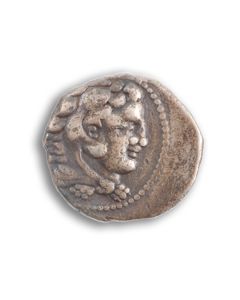 Tetradrachme Alexanders des Großen - Lebzeitprägung
Münzstätte Ake, 323 v. Chr. Prägung aus dem letzten Lebensjahr Alexanders, auf dem Revers Datierung in Aramäisch.
Price: on request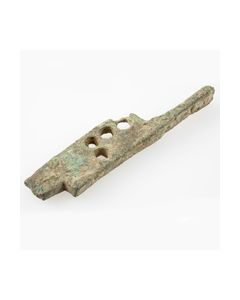 Römischer Schlossriegel
Antiker Bolzen für das Schloss einer Tür oder Truhe. Bronze, 1. bis 4. Jh.n.Chr.
Price: on request Römischer Schlossriegel
Antiker Bolzen für das Schloss einer Tür oder Truhe. Bronze, 1. bis 4. Jh.n.Chr.
Price: on request Römisches Bleigewicht
Antikes Scheibengewicht aus Blei. Ritzungen auf einer der Seiten. Vermutlich ein Fund aus dem Rheinland.
Price: on request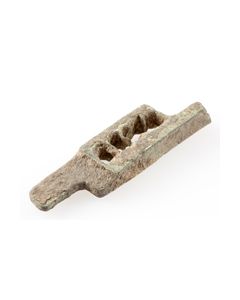 Römischer Schlossriegel
Antiker Bolzen für das Schloss einer Tür oder Truhe. Bronze, 1. bis 4. Jh.n.Chr.
Price: on request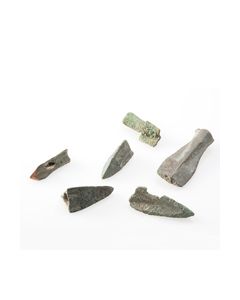 Gruppe skythischer Pfeilspitzen
6 antike Bronzepfeilspitzen. Meist dreiflüglig in guter Erhaltung. Typisch für skythische Völker ab ca. 700 v.Chr. Aus dem danubischen Raum.
Price: on request Roman glass paste with depiction of a warrior in armor
The piece is based in a high quality gem stone and has been molded with all details. Oval shape and nice colour sparkling in red and purple.
Price: on request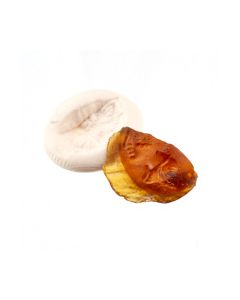 Roman intaglio of good workmanship
Quality ring stone from orange-brown glass. Showing a draped bust. Roman period. From the Professor Brosch collection of ancient gems.
Price: on request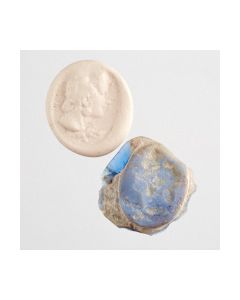 Roman intaglio with a young woman
Miniature work in a colourful glass paste changing from bright blue to an opaque light blue. The intaglio from Roman times exhibits the portrait head of a young woman.
Price: on request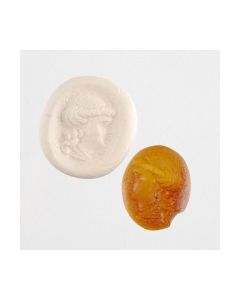 Roman intaglio with portrait of a lady
Finely worked Roman ring stone from bright orange glass. An artwork in great detail from Roman times.
Price: on request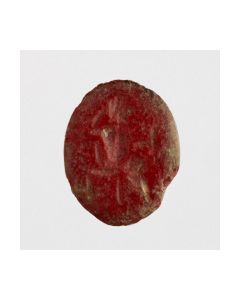 Roman intaglio with Jupiter depiction
An ancient intaglio from Roman times with the god Jupiter in a typical enthroned style. Beautiful dark red jasper.
Price: on request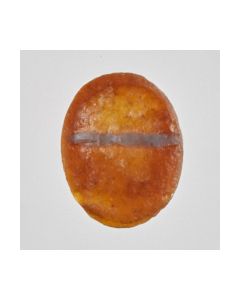 Roman intaglio with bust of a young man
The ancient intaglio from Roman times shows a young man from the side. He wears his hair in short curls. The piece is rich in details and the work of a skilled craftsman.
Price: on request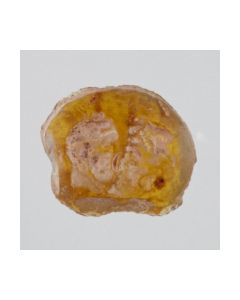 Roman intaglio with two facing heads
This special motive for Roman engraved gems often featured two Roman citizens or man and wife. It is an interesting example of its kind made from beautiful orange glass.
Price: on request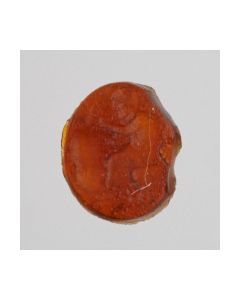 Roman intaglio with craftsman
The ancient intaglio from Roman times shows an elderly man who is working an oval shield with a hammer. It is an interesting representation of a craftsman at work.
Price: on request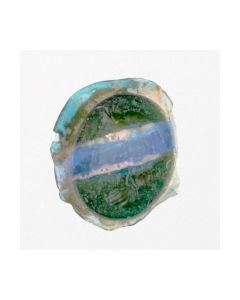 Roman intaglio made of multi coloured glass
The intaglio is engraved with the portrait head of a woman. The piece exhibits a stunning play of colours.
Price: on request Keltische Fibel der Latènezeit
Antike Gewandnadel aus Bronze. Variante der Jezerine-Typ-Fibeln, vermutlich aus Süddeutschland, 1. Jh. v. Chr.
Price: on request Römische Silberfibel aus Pannonien
Gewandnadel vom Typ der kräftig profilierten Fibeln bzw. der Trompetenfibeln. Spezifische Variante der Jahre 200 bis 250 n. Chr. aus den pannonischen Provinzen.
Price: on request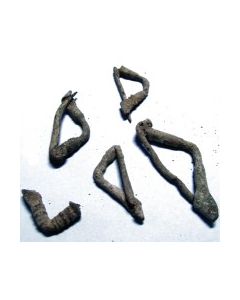 Gruppe von 5 Bronzefibeln
800 v.Chr. bis 300 n.Chr. , Eisenzeit. Diverse Typen einschließlich hellenistischer und römischer Fibeln. Nadeln fehlend oder restauriert. Eine Fibel als Fragment erhalten, anderen intakt.
Price: on request Pair of earrings from Luristan
The earrings date to the early Iron Age of Luristan. The type of jewellery is rare for this region.
Price: on request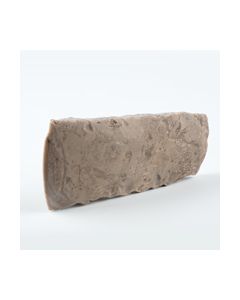 Nicely worked rectangular axe head
Dünnnackiger Beilkopf der Trichterbecherkultur, Dolmenzeit bis Ganggrabzeit. Beeindruckend durch die herausragend gute Erhaltung und den schönen, grauen Flint.
Price: on request Late neolithic axe head
Klinge eines dünnblattigen Dicknackenbeils. Trapezförmiger Körper aus feinem grauen Flint. Ganggrabzeit bis Dolchzeit.
Price: on request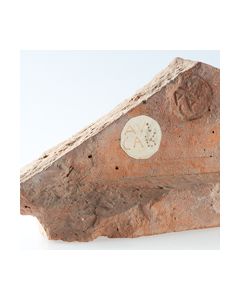 Fragment of a stamped Roman tile
The stamp AV CA is not discussed in the literature at hand and thus may be rare.
Price: on request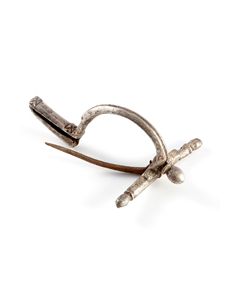 Römische Zwiebelknopf-Fibel aus Silber
Beliebter Fibeltyp des 3. und 4. Jh. n. Chr. Typischerweise von römischen Männern getragen. Der Träger dieser Fibel aus Silber hatte sicher eine gehobene soziale Stellung.
Price: on request Western Asiatic button seal with hares
Interesting button shaped seal from the time of the ancient Assyrian trade settlements in Syria and Anatolia. 19th to 18th cent. BC. From the Dr. Langenkamp collection, with a scientific note from Prof. Mayer-Opificius.
Price: on request AR DENAR - CARACALLA - MARS
AV: ANTONINVS PIVS AVG. Belorbeerter Kopf nach rechts. RV: PONTIF TR P VIIII COS II. Mars steht in Kriegsrüstung nach links, in der Linken Lanze (Spitze zum Boden), lehnt sich mit der Rechten auf Schild.
Price: on request Scarab with magic formula
The stamp shows the anra formula in a cartouche. The amulet should thus serve a magic or ritual purpose for its owner.
Price: on request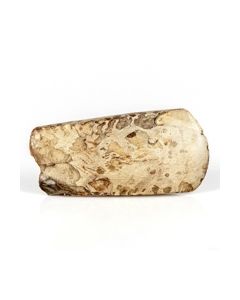 Neolithic thin butted axe head
Axe from the Early Neolithic is made of beautiful reddish brown flint with inclusions. Found in Northern Germany.
Price: on request Streitaxt der Schnurkeramischen Kultur
Seltene polyedrisch facettierte Streitaxt aus Hornblendeschiefer. Statussymbol in der endneolithischen Phase, 2900 bis 2350 v. Chr. Museumswürdiges Exemplar.
Price: on request