
Search results for: 'Mittelalter'
-
 Large ceremonial knife of the Sican culture
The so-called Tumi was a weapon to cut the throats of humans and animals in ritual sacrifices. The knife certainly fulfilled an additional representative function in the afterlife. From the period of the Sican's cultural florescence during the 10th to 12th centuries AD.
Price: on request Bowl of the Chancay culture
Thin-walled pottery bowl with abstract painting. The pre-Columbian art of the Chancay seems simple at first, but radiates an elegance that still seems modern today.
Price: on request Ceremonial knife of the Sican culture
The so-called Tumi was a weapon to cut the throats of humans and animals in ritual sacrifices. The knife certainly fulfilled an additional representative function in the afterlife. From the period of the Sican's cultural florescence during the 10th to 12th centuries AD.
Price: on request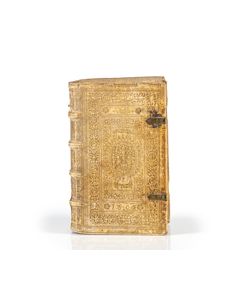 Rare Seneca first edition - Lyon 1604
Rare first edition by Andreas Schott and the only 1604 edition currently available on the market known to us. Dry-embossed pigskin leather over wooden plates. Very good condition, appropriate for the age of the volume.
Price: on request Bowl of the Chancay culture
Thin-walled pottery bowl with abstract painting and plastic animal head handles. The pre-Columbian art of the Chancay seems simple at first, but radiates an elegance that still seems modern today.
Price: on request Small ceremonial knife of the Sican culture
The so-called Tumi was a weapon to cut the throats of humans and animals in ritual sacrifices. The knife certainly fulfilled an additional representative function in the afterlife. From the period of the Sican's cultural florescence during the 10th to 12th centuries AD.
Price: on request Bowl of the Chancay culture
Flat pottery bowl with abstract painting. The pre-Columbian art of the Chancay seems simple at first, but radiates an elegance that still seems modern today.
Price: on request Huge ceremonial knife of the Sican culture
The so-called Tumi was a weapon to cut the throats of humans and animals in ritual sacrifices. The knife certainly fulfilled an additional representative function in the afterlife. From the period of the Sican's cultural florescence during the 10th to 12th centuries AD.
€515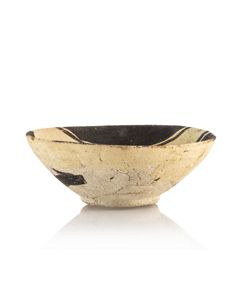 Bowl of the Chancay culture
Flat pottery bowl with abstract painting on the inside. The pre-Columbian art of the Chancay seems simple at first, but radiates an elegance that still seems modern today.
Price: on request Gewicht aus früher islamischer Zeit
Antikes Gewicht aus der Zeit der arabischen Expansion und der anschließenden, islamisch geprägten Zeit. 10,3g, entsprechend ca. 1/3 Uqiyyah (Waqiyyah).
Price: on request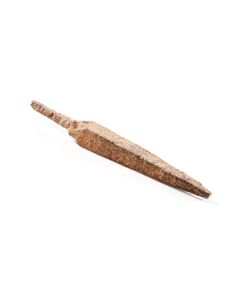 Massive antike Pfeilspitze aus Eisen
Quadratischer Querschnitt, massive Ausführung. Für Alter und Material sehr schwache Korrosion. 9. - 13. Jh. n. Chr.
Price: on request Antike Pfeilspitze aus Eisen
Kleine Pfeilspitze mit quadratischem Querschnitt, sich stark zur Spitze hin verjüngend. 9. - 13. Jh. n. Chr.
Price: on request Islamic oil lamp
Impressive large speciman, shoulder decorated with dots and rims.
Price: on request Elegantes Fläschchen, Tang-Dynastie
Hellgraue Keramik mit hellbraunem Überzug. 618 n. Chr. bis 907 n. Chr. Vermutlich in die turbulente, späte Tang-Zeit datierend. Ex Bonhams.
Price: on request Kleinasiatische Öllampe aus alter Sammlung
Doppelkonische Öllampe mit Zapfengriff. Musealer Zustand. Aus alter deutscher Sammlung.
Price: on request Elegantes Fläschchen, Tang-Dynastie
Hellgraue Keramik mit hellbraunem Überzug. 618 n. Chr. bis 907 n. Chr. Vermutlich in die turbulente, späte Tang-Zeit datierend. Ex Bonhams.
Price: on request Antike Pfeilspitze aus Eisen
Kleine Pfeilspitze mit quadratischem Querschnitt, sich stark zur Spitze hin verjüngend. 9. - 13. Jh. n. Chr.
Price: on request Massive antike Pfeilspitze aus Eisen
Quadratischer Querschnitt, verjüngt sich zur Spitze hin. Massiv. Für Alter und Material sehr schwache Korrosion. 9. - 13. Jh. n. Chr.
Price: on request Islamische Öllampe
Schulter mit erhabenen Linien dekoriert, welche radial vom äußeren Wulstring ausgehen. Museal erhalten.
Price: on request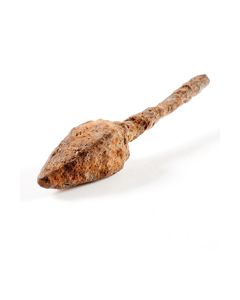 Antike Pfeilspitze aus Eisen
Kleine Pfeilspitze mit quadratischem Querschnitt, sich stark zur Spitze hin verjüngend. 9. - 13. Jh. n. Chr.
Price: on request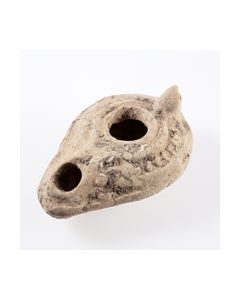 Islamische Öllampe
Ovale Lampe mit doppelkonischem Körper. Radialer Riefendekor auf der abfallenden Schulter. Museal erhalten, starke Sandpatina.
Price: on request Seltene islamische Öllampe mit Tierdekor
Schulter mit zwei gegenüberstehenden Pfauen sowie mit zwei auf einem Seil balancierenden Tieren verziert. Mit Standfläche, darin Rosette.
Price: on request Islamische Öllampe
Ovale Lampe mit doppelkonischem Körper. Radialer Riefendekor auf der abfallenden Schulter. Museal erhalten, starke Sandpatina.
Price: on request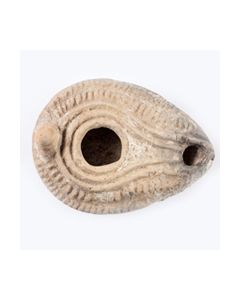 Islamische Öllampe
Ovale Lampe mit doppelkonischem Körper. Radialer Riefendekor auf der abfallenden Schulter. Museal erhalten, starke Sandpatina.
Price: on request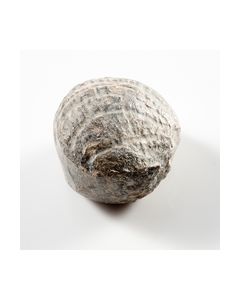 Verziertes Gewicht aus früher islamischer Zeit
Antikes Gewicht aus der Zeit der arabischen Expansion und der anschließenden, islamisch geprägten Zeit. 20,3g, entsprechend ca. 6 1/2 Dirhem/Dirham.
Price: on request Christliche Öllampe aus islamischer Zeit
Zwischen dem Einfüll- und Brennloch ein Kreuz. Auf der Schulter Zweig mit Blättern.
Price: on request Manabí-Perle aus dem präkolonialen Südamerika - Jaguar
Präinkazeit und Präkolonialzeit, 500 n. Chr. bis 1500 n. Chr. Darstellung eines Jaguars in Ritztechnik. Eindrucksvolle Bearbeitung.
Price: on request Manabí-Perle aus dem präkolonialen Südamerika - Seevogel
Präinkazeit und Präkolonialzeit, 500 n. Chr. bis 1500 n. Chr. Darstellung eines Seevogels in Ritztechnik. Eindrucksvolle Bearbeitung.
Price: on request Indische Silber-Damma aus der Sindh-Provinz
Islamische Prägung aus Indien. Die Sindh-Provinz war die Geburtsstätte einer der ältesten Zivilisationen der Welt, der Industalkultur. Vorzüglich, schöne Patina.
Price: on request Große indische Silbermünze
Mit Darstellung einer stilisierten Reiterfigur und eines stilisierten Stiers. Exzellent erhalten, 17 mm, 3.37 Gramm.
Price: on request Bronze-Stater aus Kashmir
AV: Sitzende Gottheit, wahrscheinlich Ardoxsho, en face, Nagari-Inschrift. RV: Stehender Herrscher. Sehr hohe Detailtiefe, absolut vorzüglich erhalten.
Price: on request Gewicht aus früher islamischer Zeit
Antikes Gewicht aus der Zeit der arabischen Expansion und der anschließenden, islamisch geprägten Zeit. 16,2g, entsprechend ca. 1/2 Uqiyyah (Waqiyyah).
Price: on request Islamisches Gewicht aus Bronze
Antikes Scheibengewicht. Typisch für die ausgehende byzantinische und frühe islamische Zeit. 6. bis 8. Jh. n. Chr. Entsprechend ca. 1/2 Mithqal oder 1/2 Numisma.
Price: on request Islamisches Gewicht mit Verzierungen
Antikes Scheibengewicht. Typisch für die ausgehende byzantinische und frühe islamische Zeit. 6. bis 8. Jh. n. Chr. Entsprechend ca. 1/2 Mithqal oder 1/2 Numisma.
Price: on request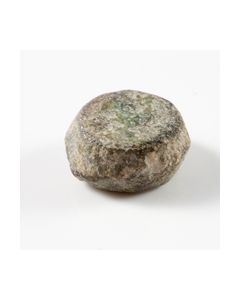 Islamisches Gewicht aus Bronze
Antikes Scheibengewicht. Typisch für die ausgehende byzantinische und frühe islamische Zeit. 6. bis 8. Jh. n. Chr. Entsprechend ca. 1/2 Mithqal. Schöne Patina.
Price: on request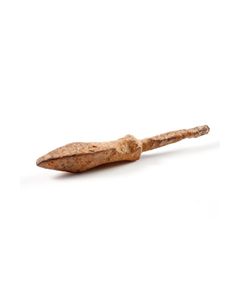 Antike Pfeilspitze aus Eisen
Kleine Pfeilspitze mit quadratischem Querschnitt, am Ansatz Einschnürung. 9. - 13. Jh. n. Chr.
Price: on request