
Search results for: 'bei'
-
 Disc-headed pin from Luristan
Important and unique pin type of Luristan. This specimen is decorated by bumps forming a seven-pointed star.
Price: on request Scarab with wishes
Nice scarab made of dark steatite. The hieroglyphs could be read as New Year's wishes.
Price: on request Amulett des Bes aus der 18. Dynastie
Plastisches Relief des stehenden Gottes für Musik und Tanz. Bes war darüber hinaus auch Beschützer der Kinder und Schwangeren. Dieser Funktion diente vermutlich auch das Amulett.
Price: on request Isis-Amulett mit Horus
ägyptisches Amulett der sitzenden Isis mit Sohn Horus auf dem Schoß,blaugrüne Fayence, Kopf des Horus fehlt, ansonsten vollständig intakt. 24mm hoch.
Price: on request Large etruscan oinochoe with big cats
Very interesting and rare decoration, showing 3 large cats of prey chasing each other. Impressively preserved, from an old German private collection, acquired in the 1950s. Coming with an ArtLoss certificate
Price: on request Keltische Fibel der Latènezeit
Antike Gewandnadel aus Bronze. Variante der Jezerine-Typ-Fibeln, vermutlich aus Süddeutschland, 1. Jh. v. Chr.
Price: on request Riesige kanaanitische Öllampe
1200 v.Chr. bis 560 v.Chr., Eisenzeit. Typische Lampe für die Levante, intensiv-rotes Terracotta. Perfekt erhalten. 175 mm lang, 160 mm breit.
Price: on request
Kanaanitische Öllampe1200 v.Chr. bis 1000 v.Chr., Eisenzeit I, israelischer Typ mit Rundboden, 13cm lang, 13cm breit, rotes Terracotta.
Price: on request
kleine kanaanitische Öllampe1200 v.Chr. bis 1000 v.Chr., Eisenzeit I, israelischer Typ mit Rundboden, 12cm lang, 12cm breit, rötliches Terracotta.
Price: on request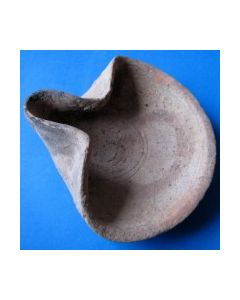 Kanaanitische Öllampe
1400 v.Chr. bis 1000 v.Chr., Späte Bronzezeit bis Eisenzeit I. Typische Lampe für die Levante, Terra cotta. Kleine Restauration, sonst perfekt erhalten. 150 mm lang, 160 mm breit.
Price: on request Celtic fibula
Rare fibula from the La Tène culture with beautiful enamel inlays. The main material is well preserved for an iron fibula.
Price: on request Luristan bronze base of a finial
Flaschenförmiger Sockel für eine Standarte. Luristan, Anfang 1. Jt. v. Chr. Aus der berühmten Sammlung Arthur M. Sackler.
Price: on request
ungewöhnlich geformte kanaanitische Öllampe1500 v.Chr. bis 1000 v.Chr., vereint Merkmale der späten Bronzezeit und der Eisenzeit I, sehr flach mit hoher Dochtmulde, runder Boden, kein Randkranz.
Price: on request Ägyptisches Amulett der Isis
Amulett aus Fayence mit Darstellung der Isis. Die Göttin trägt ein Gewand und eine dreigeteilte Perrücke, auf dem Kopf den Thronsitz. Spätzeit des Alten Ägyptens.
Price: on request
Kanaanitische Öllampe mit schönem AblagerungsmusterFrühe Eisenzeit, 1200 - 1000 v. Chr., abgeflachter Boden, kein Randkranz, optisch sehr ansprechend.
Price: on request
Kanaanitische Öllampe1500 v.Chr. bis 1000 v.Chr., Späte Bronzezeit bis Eisenzeit I. Typische Lampe für die Levante, Terracotta. Kleine Restauration, sonst perfekt erhalten. 150 mm lang, 130 mm breit.
Price: on request Bronze statuette of nursing Isis
Isis is shown in a very typical depiction as a mother, the archetype of the later Christian Nursing Madonna. The bronze figurine dates to the 22nd to 31st dynasty of Ancient Egypt.
Price: on request Neo-Assyrian cylinder seal
The seal made of blue frit shows mythological creatures. 7th cent. BC.
Price: on request Eisenzeitliche, europäische Fibel
Hervorragend erhaltene, keltische Bronzefibel aus der Eisenzeit, 6. bis 3. Jh. v. Chr. Früher Fibeltyp in schöner Erhaltung.
Price: on request Frühe, europäische Fibel
Hervorragend erhaltene, keltische Bronzefibel aus der Eisenzeit, 6. bis 3. Jh. v. Chr. Großartiges Beispiel für einen der frühesten Fibeltypen.
Price: on request Frühe, europäische Fibel
Vollständig erhaltene, keltische Bronzefibel aus der Eisenzeit, 6. bis 3. Jh. v. Chr. Großartiges Beispiel für einen der frühesten Fibeltypen.
Price: on request
Kanaanitische Öllampe1200 v.Chr. bis 560 v.Chr., Eisenzeit, sydisraelischer Typ mit stark angehobenem Diskusboden, 13cm lang, 13cm breit, rotes Terracotta mit starker Patina
Price: on request
Sehr seltene kanaanitische Öllampe1200 v.Chr. bis 560 v.Chr., Eisenzeit, abgeflachter Boden, 2cm starker Randkranz. Dochtmulde sehr klein, wie Typ der mittleren Bronzezeit, sehr ungewöhnlich.
Price: on request Kanaanitische Öllampe
800 v.Chr. bis 500 v.Chr., späte Eisenzeit. Typische Lampe für die Levante, Terra cotta. Vollständig, nicht restauriert. Originale Fundpatina. Rußspuren an Dochtmulde. 155 mm lang, 135 mm breit.
Price: on request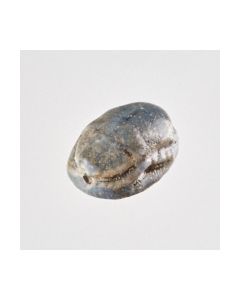 Scarab with blue fayence glaze
The piece is from the Third Intermediate Period or the Late Period of ancient Egypt. The inscription refers to Amun-Re, the main god of Theben. The glaze is shining in vivid blue colour.
Price: on request Zoomorphic vessel in the shape of a zebu
The Western Asiatic vessel amazes by its size and state of preservation. Including TL analysis. Around 1000 BC.
Price: on request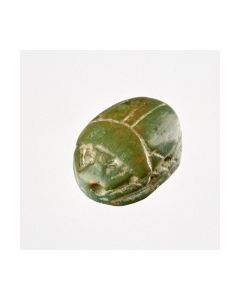 Scarab with Amun inscription
Bearing the hieroglyphs "the god Amun of Theben is lord". From the Late Period of ancient Egypt. Beautiful green stone.
Price: on request Luristan bronze base of a finial including pin
Flaschenförmiger Sockel inklusive Haltestift für eine Standarte. Luristan, Anfang 1. Jt. v. Chr. Aus der berühmten Sammlung Arthur M. Sackler.
Price: on request Very large cypriot bowl
Dating to the early cypro-archaic period, so-called black-on-red ware II. From an old German private collection. Coming with an ArtLoss certificate.
Price: on request Large published Cypriot amphora
Very large, impressively preserved object. From an old German private collection, acquired at London art gallery or auction around 1970. Coming with an ArtLoss certificate.
Price: on request Applique of the Horus son Duamutef
Bright turquise fayence. Duamutef is one of the four sons of Horus, well-known from the Canopic jars. He had an important protective function for the dead. Egypt, 8th to 4th cent. BC.
Price: on request Scarab with two cartouches of Thutmose III.
Interesting amulet from the New Kingdom or a later period made in archaic style. This scarab is described in the catalogue of Irène Gautier-Vodoz.
Price: on request Cypriot bowl from the famous Severis collection
Perfectly preserved piece with very vivid bichrome decoration. Ex Christie's.
Price: on request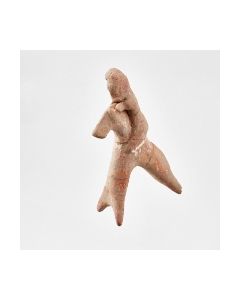 Published Parthian clay horse and rider
The clay figurine probably originates in Syria. It dates to achaemenide to parthian times. 6. cent. BC to 2nd cent. AD.
Price: on request Scarab with pharao on throne
The piece dates to the Third Intermediate Period and was probably produced in Tanis. It shows a pharao with a subordinate.
Price: on request Kleine ägyptische Bronzefigur des Nefertem
Wunderbare Erhaltung mit schöner, braun-grün patinierter Oberfläche. Ca. 664 v. Chr. bis 332 v. Chr., Spätzeit des Alten Ägypten.
Price: on request