
Search results for: 'mit'
-
 Two Greek leaden sling bullets
Almond shaped lead bullets of a slinger. They were part of the equipment of a Greek army from the late 5th to the 2nd century BC.
Price: on request Two Greek leaden sling bullets
Almond shaped lead bullets of a slinger. They were part of the equipment of a Greek army from the late 5th to the 2nd century BC.
Price: on request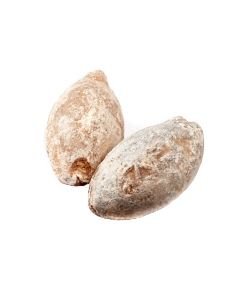 Two Greek leaden sling bullets
Almond shaped lead bullets of a slinger. They were part of the equipment of a Greek army from the late 5th to the 2nd century BC.
Price: on request Two Greek leaden sling bullets
Almond shaped lead bullets of a slinger. They were part of the equipment of a Greek army from the late 5th to the 2nd century BC.
Price: on request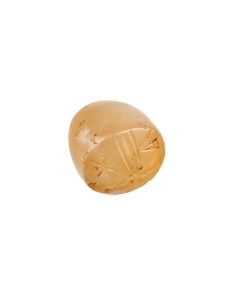 Neo-Babylonian stamp seal with religious scene
Conical seal made of snowy chalcedony. The scene shows a praying man in front of an altar or symbols for the gods Ishtar and Shamash. Canonical piece for an educational collection.
Price: on request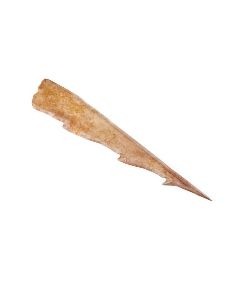 Harpoon of the Maglemosian culture
Fine craftsmanship hunting weapon. Important evidence of the beginnings of fishing in Northern Europe. Mesolithic, 9000 to 6500 BC.
Price: on request Roman transport amphora found at Cabrera island
Perfectly preserved, large amphora from the Mediterranean sea. Attractive marine patina.
Price: on request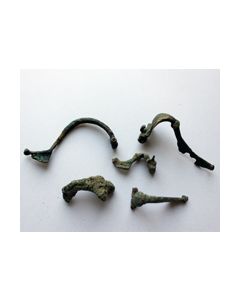 Restbestand - 5 römische Fibeln aus Pannonien
Diverse Typen. Bronze, gute Erhaltung, Nadeln fehlen. Ca. 3. - 4. Jh. n. Chr. Letzte 5 Fibeln aus dem beliebten Lot.
Price: on request Großes römisches Unguentarium, Provinz Judäa
Museales Exemplar. 2. Jh. n.Chr., Levante, Zeit römischer Herrschaft. Vollständig intaktes, fein gearbeitetes Fläschchen. 137mm hoch.
Price: on request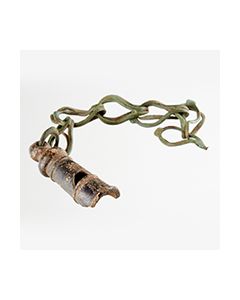 Roman military whistle
Historically interesting example of Roman military equipment. Whistles of this type have been used in the 1st to 2nd cent. AD. Their function is not fully understood, yet.
Price: on request Roman military whistle
Historically interesting example of Roman military equipment. Whistles of this type have been used in the 1st to 2nd cent. AD. Their function is not fully understood, yet.
Price: on request Cowroid with magical anra formula
The bottom side hieroglyphs of the anra type are to be interpreted as magical formula. The amulet dates to the Second Intermediate Period of ancient Egpyt.
Price: on request Egyptian faience ring showing Bes and Taweret
The finger ring with its scene on the plate must have served a protective function for an expectant mother. New Kingdom, approx. 1550 to 1070 BC.
Price: on request Egyptian amulet of Anubis
The amulet from the Late Period of Ancient Egypt was supposed to protect the dead on their way to the afterlife. From a British private museum.
Price: on request Ancient brooch of a fabulous creature
Rare Hippocampus brooch with elaborate inlays of multi-coloured glass paste and metal. Great example of the brooch manufacturing of Roman Gaul during the mid 1st cent. AD.
Price: on request Egyptian amulet of Anubis
The amulet from the Late Period of Ancient Egypt was supposed to protect the dead on their way to the afterlife. From a British private museum.
Price: on request Roman jar with flat handle from Lopodunum
Nicely preserved piece. Found in Ladenburg, Baden-Wuerttemberg, Germany.
Price: on request Spear head from famous Guttmann collection
Massive, perfectly preserved piece, beautiful patina. Inventory number "AG 167c" from famous Axel Guttmann collection in shaft.
Price: on request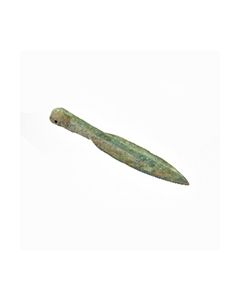 Spear head from famous Guttmann collection
Massive, perfectly preserved piece, beautiful patina. Inventory number "AG 167c" from famous Axel Guttmann collection in shaft.
Price: on request Spear head from famous Guttmann collection
Massive, perfectly preserved piece, beautiful patina. Inventory number "AG 167c" from famous Axel Guttmann collection in shaft.
Price: on request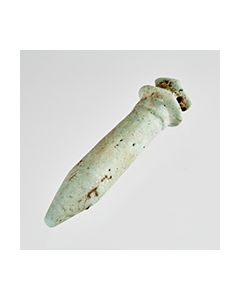 Egyptian papyrus scepter amulet
Papyrus scepter made of faience. Late Period of Ancient Egypt. It symbolizes prosperity and youth. From the stock of a british private museum.
Price: on request Neolithic axe head from the Corded Ware culture
Dicknackiger Beilkopf aus Feuerstein. Variante des Kregme-Typs. Einzelgrabkultur oder evt. Anfang der Dolchzeit, 2800 v. Chr. bis 1800 v. Chr.
Price: on request Römische Scheibenfibel in Millefiori-Technik
Kunstvolle Fibel aus der Kaiserzeit. Großartiges Beispiel für die antike Millefiori-Technik, die erst wieder in der Neuzeit aufgegriffen und von venezianischen Glaskünstlern zu einer neuen Blüte geführt wurde.
Price: on request Pin from Luristan
Iron Age bronze pin with thick head. Green patinated metal.
Price: on request Perfectly preserved corinthian stater with triton
Beautiful dark patina, ex Athena Coins Munich, acquired 1980
Price: on request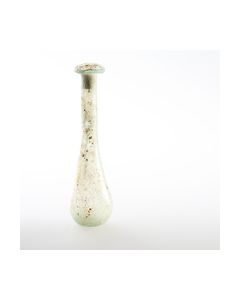 Tränenförmiges römisches Balsamarium
Filigranes Glasfläschchen aus dem 1. bis 3. Jh. n. Chr. Blass-türkisfarbes Glas. 93mm hoch.
Price: on request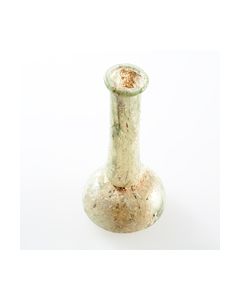 Antikes Glasfläschen
Antikes Unguentarium aus der oströmischen Provinz, 1. bis 3. Jh. n. Chr., Höhe 85mm.
Price: on request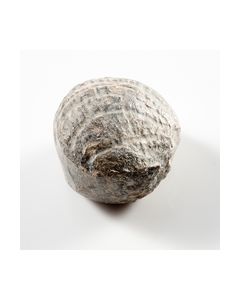 Verziertes Gewicht aus früher islamischer Zeit
Antikes Gewicht aus der Zeit der arabischen Expansion und der anschließenden, islamisch geprägten Zeit. 20,3g, entsprechend ca. 6 1/2 Dirhem/Dirham.
Price: on request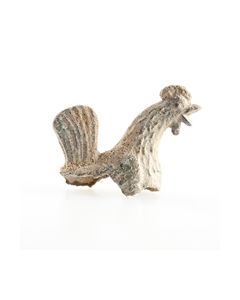 Römischer Hahn aus Blei als Votivgabe
Plastisch aus Bleiblech gearbeiteter Hahn. Möglicherweise Votivgabe eines Händlers an Merkur. 1. bis 4. Jh. n. Chr.
Price: on request Neolithisches Werkzeug aus Norddeutschland
Schaber oder Messer aus Flintstein. Beide Kanten fein bearbeitet und scharf. Fundort Gronau-Alfeld, bei Hannover. Neolithikum.
Price: on request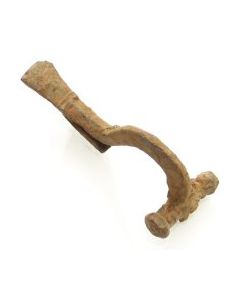 P-förmige römische Fibel aus Eisen
Antike Gewandnadel vom Typ der Armbrustfibel. Vorläufer der Zwiebelkopffibel. Nadel und Scharnier fehlen. Gute Erhaltung ohne nennenswerte Korrosion. 1. bis 3. Jh. n. Chr.
Price: on request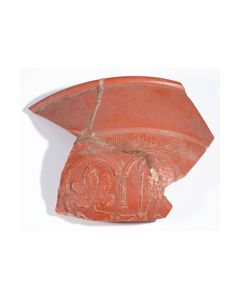 dekoriertes Terra Sigillata Fragment
Fragment einer Rundschüssel. Das Seitenrelief zeigt ein Blatt und einen auf seinen Stab gestützten Hirten.
Price: on request Sammlung interessanter Kommentare
Anmerkungen zu verschiedenen Thematiken, Leipzig 1734, einmaliges Zeugnis der Zeit.
Price: on request Roman fibula
Ancient roman fibula of the kraeftig profilierte fibula type. The piece is a beautiful example of this common type of fibulae during roman imperial times.
Price: on request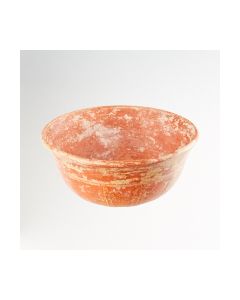 Decorated Megarian bowl from an old German collection
Interesting shape, perfect condition.
Price: on request Celtic rider figurine
Massive, very well preserved bronze with impressive details.
Price: on request