
Search results for: 'bei'
-
 Stiefelförmige byzantinische Öllampe
5. bis 7. Jh. n.Chr., einer der wenigen byzantinischen Typen von der Töpferscheibe. Henkel fehlt, Rand um Einfüllöffnung teilweise abgebrochen. Länge 80mm, Breite 60mm, Höhe 40mm.
Price: on request Großes römisches Unguentarium, Provinz Judäa
Museales Exemplar. 2. Jh. n.Chr., Levante, Zeit römischer Herrschaft. Vollständig intaktes, fein gearbeitetes Fläschchen. 137mm hoch.
Price: on request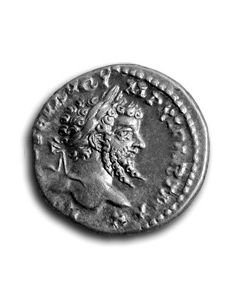 Septimius Severus Denar, Victoria
AV: L SEPT SEV AVG IMP XI PART MAX, belorbeerter Kopf nach rechts. RV: COS II P PVictoria schreitet nach links, hält Kranz und Zweig. Geprägt in Rom, 198 n.Chr. bis 200 n.Chr.
Price: on request Verziertes römisches Unguentarium
Parfümflasche mit Liniendekor, 70mm hoch, 30mm Durchmesser mit schöner beigefarbener Patina.
Price: on request Römischer Spinnwirtel von Handspindel
Wichtiges antikes Handwerkzeug vor der Erfindung des Spinnrades. 1. Jh. n.Chr. bis 2. Jh. n.Chr., römische Kaiserzeit. Aus Stein, 18mm Durchmesser. Ca. 5mm Dicke.
Price: on request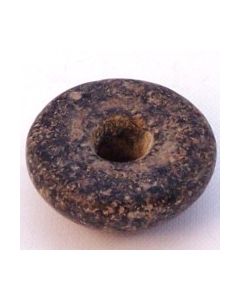 Römischer Spinnwirtel von Handspindel
Wichtiges antikes Handwerkzeug vor der Erfindung des Spinnrades. 1. Jh. n.Chr. bis 2. Jh. n.Chr., römische Kaiserzeit. Aus Stein, 15mm Durchmesser. Ca. 6mm Dicke.
Price: on request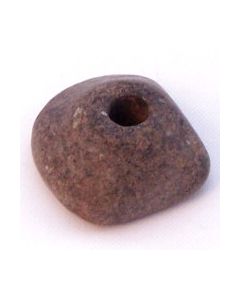 Römischer Spinnwirtel von Handspindel
Wichtiges antikes Handwerkzeug vor der Erfindung des Spinnrades. 1. Jh. n.Chr. bis 2. Jh. n.Chr., römische Kaiserzeit. Aus Stein, 19mm Durchmesser. Ca. 7mm Dicke.
Price: on request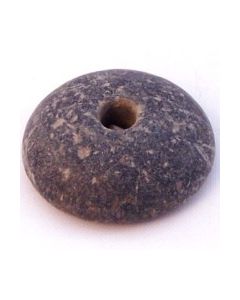 Römischer Spinnwirtel von Handspindel
Wichtiges antikes Handwerkzeug vor der Erfindung des Spinnrades. 1. Jh. n.Chr. bis 2. Jh. n.Chr., römische Kaiserzeit. Aus Stein, 21mm Durchmesser. Ca. 6mm Dicke.
Price: on request Römischer Spinnwirtel von Handspindel
Wichtiges antikes Handwerkzeug vor der Erfindung des Spinnrades. 1. Jh. n.Chr. bis 2. Jh. n.Chr., römische Kaiserzeit. Aus Stein, 20mm Durchmesser. Ca. 7mm Dicke.
Price: on request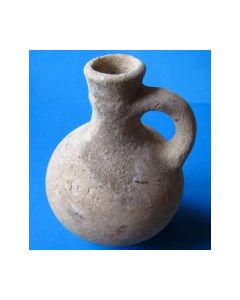 Krug für Wasser oder Wein
800 v.Chr. bis 586 v.Chr., Eisenzeit II C. Heller, ockerfarbener Ton mit Resten von bichromem Überzug. Perfekt erhaltene Keramik mit toller Sandpatina. Höhe 150mm. Breite maximal 100mm.
Price: on request Spätrömische Öllampe mit rundem Körper
3. bis 4. Jh. n.Chr., stilistischen Übergangstyp zu den Anfängen der byzantinischen Epoche. Rötliche Keramik mit Pfeilspitzendekor. Länge 95mm, Breite 75mm.
Price: on request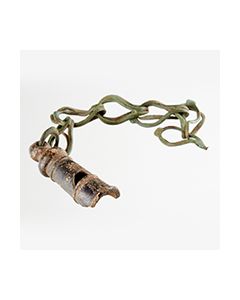 Roman military whistle
Historically interesting example of Roman military equipment. Whistles of this type have been used in the 1st to 2nd cent. AD. Their function is not fully understood, yet.
Price: on request Herodian oil lamp found in the Negev desert
Prominent oil lamp type which was used in the Holy Land during the lifetime of Jesus Christ. Found during an early Paleochristian excavation by Dr. Willi Korte in the Negev desert, Israel.
Price: on request Roman military whistle
Historically interesting example of Roman military equipment. Whistles of this type have been used in the 1st to 2nd cent. AD. Their function is not fully understood, yet.
Price: on request Glass flask in bowl
This uncommon glass object from Roman times consists of a household glass flask that has been set in a glass bowl. It is a mystery if it has been made for a practical purpose or if it is a trial piece of a glassblower.
Price: on request Cowroid with magical anra formula
The bottom side hieroglyphs of the anra type are to be interpreted as magical formula. The amulet dates to the Second Intermediate Period of ancient Egpyt.
Price: on request Egyptian faience ring showing Bes and Taweret
The finger ring with its scene on the plate must have served a protective function for an expectant mother. New Kingdom, approx. 1550 to 1070 BC.
Price: on request Egyptian amulet of Shu
God of the air and the sun. The highly stylized figurine shows the ancient Egyptian god on his knees, the arms raised towards the sun. From a British private museum.
Price: on request Ancient brooch of a fabulous creature
Rare Hippocampus brooch with elaborate inlays of multi-coloured glass paste and metal. Great example of the brooch manufacturing of Roman Gaul during the mid 1st cent. AD.
Price: on request Egyptian amulet of Taweret
It shows the goddess of childbirth in the form of a pregnant hippopotamus. The amulet from the Late Period of Ancient Egypt should exert a protective function. From a British private museum.
Price: on request Roman jar with flat handle from Lopodunum
Nicely preserved piece. Found in Ladenburg, Baden-Wuerttemberg, Germany.
Price: on request Small Roman jar from Lopodunum
Nicely preserved piece. Found in Ladenburg, Baden-Wuerttemberg, Germany.
Price: on request Egyptian amulet of Shu
God of the air and the sun. The highly stylized figurine shows the ancient Egyptian god on his knees, the arms raised towards the sun. From a British private museum.
Price: on request Cypriot amphora from the famous Severis collection
Ex Fortnum and Mason, London, UK. Impressive piece.
Price: on request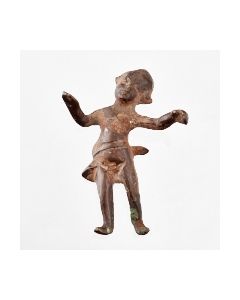 Roman bronze from famous "Museum fuer Morgenlandfahrer"
Massive bronze figurine of a dancing boy, beautiful dark patina, 1st-2nd century AD
Price: on request Graeco-Roman earrings
The pair of earrings is made of gold. The type is from Northern Africa and dates to Greek or Roman times.
Price: on request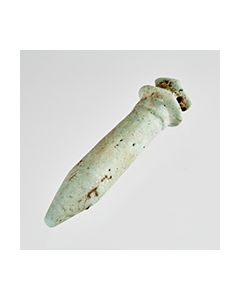 Egyptian papyrus scepter amulet
Papyrus scepter made of faience. Late Period of Ancient Egypt. It symbolizes prosperity and youth. From the stock of a british private museum.
Price: on request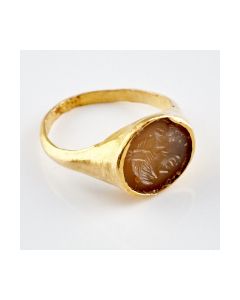 Hellenistic-Roman silver ring with intaglio showing a portrait
Der antike Goldring mit wunderschönem Intaglio entstammte einst einer wohlhabenden Familie. Das Intaglio ist zeigt einen Porträtkopf im linearen Stil und ist in perfektem Zustand.
Price: on request Impressive Roman Firmenlampe with potter's mark A TIMETI showing persona tragica
Im Spiegel plastische Darstellung einer großen theatralischen Maske (persona tragica). Im doppelten Standring Stempel A TIMETI. Sehr eindrucksvolles Stück.
Price: on request Roman oil lamp showing Victoria in biga - an identic lamp is on exhibition in the National Warsaw Museum
Eine identische Lampe ist im Nationalmuseum von Warschau ausgestellt.
Price: on request Overseer shabti from 21st dynasty Egypt
Spezielle ägyptische Totenfigur als Aufseher der Ushabti-Arbeiter in der Unterwelt. Typische Schürze und Peitsche in der rechten Hand. Statuette aus der 21. Dynastie des Alten Ägypten.
Price: on request Rare imitation of a scarab seal from Sicily
Seltene Imitation eines ägyptischen Skarabäussiegels mit eindrucksvoller kräftig-blauer Glasur. 25. bis 26. Dynastie, Übergang von der 3. Zwischenzeit zur Spätzeit. 14mm lang.
Price: on request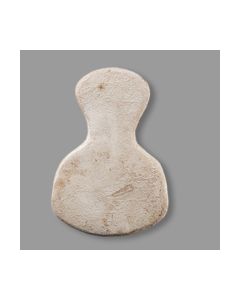 Kusura-type idol from 3rd millenium BC Anatolia examined by Prof. Lambert
Idol vom sogenannten Kusura-Typus, aus weißem, feinkristallinem Marmor. Bronzezeit Anatoliens, 3. Jt. v. Chr. Begutachtet durch Professor W. G. Lambert. Museumswürdig.
Price: on request Neolithic axe head from the Corded Ware culture
Dicknackiger Beilkopf aus Feuerstein. Variante des Kregme-Typs. Einzelgrabkultur oder evt. Anfang der Dolchzeit, 2800 v. Chr. bis 1800 v. Chr.
Price: on request Römische Scheibenfibel in Millefiori-Technik
Kunstvolle Fibel aus der Kaiserzeit. Großartiges Beispiel für die antike Millefiori-Technik, die erst wieder in der Neuzeit aufgegriffen und von venezianischen Glaskünstlern zu einer neuen Blüte geführt wurde.
Price: on request Römischer Flakon für Parfüm
Farbloses Glas mit wunderschöner Irideszenz. Vermutlich als Fläschchen für Parfüm oder sonstige Duftstoffe verwendet. Außen gereinigt, innen patiniert.
Price: on request