

Search results for: 'Roman in'
-
 Roman bronze oil lamp - found in the UK
Fund aus der Ostenglischen Grafschaft Norfolk. Dokumentiert im Rahmen der PAS (Portable Antiques Scheme). Museale Erhaltung mit edler Patina.
Price: on request Celtic penannular brooch
Possibly made by the Celtic Durotriges tribe under Roman rule in Britain. The piece is published in two books by Richard Hattatt.
Price: on request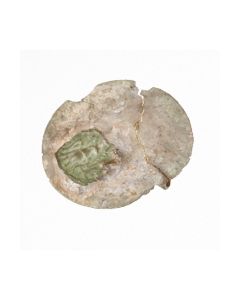 Ancient fibula from the Hattatt collection
Ancient fibula of the rare adlocutio type. Repoussé work of a scene from a Roman sestertius of Hadrian in celtic style. Find from Dorset in Roman Britain. Published in Hattatts famous book series on ancient fibulae.
Price: on request Roman Celtic seal box
Lozenge shaped body with lid in Celtic design. A piece from the 1st or 2nd century, found near the Celtic settlement and later Roman town of Lindum. Published in a standard work by Richard Hattatt.
Price: on request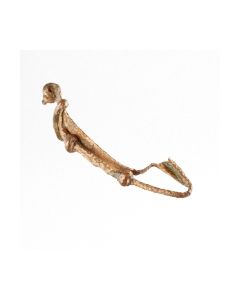 Celtic fibula from the famous Hattatt collection
Fibula from the La Tène II period. Found in Celtic Carnuntum. The piece is published in the standard work "Iron Age and Roman Brooches".
Price: on request Large ancient spindle whorl
Celtic to Roman times. Massive clay object, 100mm diameter.
Price: on request Celtic coin - Iceni tribe
East Anglia mint, reported to have been found in Stonea Grange, Cambridgeshire.
Price: on request Celtic coin - Iceni tribe
East Anglia mint, reported to have been found in Stonea Grange, Cambridgeshire.
Price: on request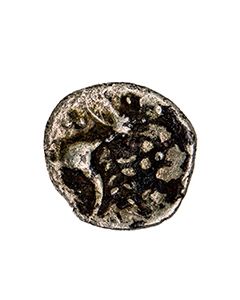 Perfectly preserved Celtic coin - Iceni tribe
East Anglia mint, reported to have been found in Stonea Grange, Cambridgeshire.
Price: on request Celtic coin - Iceni tribe
East Anglia mint, reported to have been found in Stonea Grange, Cambridgeshire.
Price: on request Celtic coin - Iceni tribe
East Anglia mint, reported to have been found in Stonea Grange, Cambridgeshire.
Price: on request Celtic coin - Iceni tribe
East Anglia mint, reported to have been found in Stonea Grange, Cambridgeshire.
Price: on request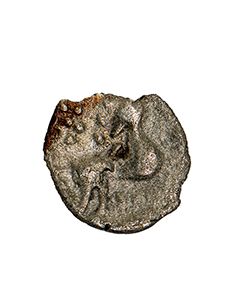 Celtic coin - Iceni tribe
East Anglia mint, reported to have been found in Stonea Grange, Cambridgeshire.
Price: on request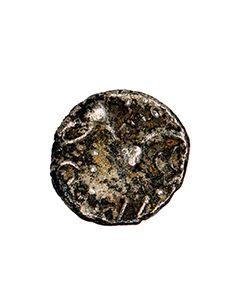 Celtic coin - Iceni tribe
East Anglia mint, reported to have been found in Stonea Grange, Cambridgeshire.
Price: on request Disc brooch from Roman Britain
Brooch with a Romano-Celtic sunburst design. Circa 2nd century. A find from Roman Britain
Price: on request Disc brooch from Roman Britain
Nicely enameled brooch with a Romano-Celtic sunburst design. From the 2nd century AD. Published in two stardard works on ancient brooches by Richard Hattatt.
Price: on request Dolphin brooch from Roman Britain
The so-called dolphin brooch is very British. This specimen was probably made by the Celtic Corieltauvi tribe, shortly after the arrival of the Romans in the middle of the 1st century. Published in two works by Richard Hattatt.
Price: on request Trumpet brooch with Celtic decorations
Unusual and rare variant of high importance, published several times. Beautiful silver inlays on the bow showing tendrils in Celtic style. From the 1st century.
Price: on request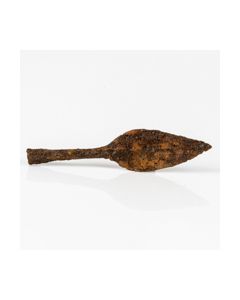 Celtic spear head - found in 1970s near Warminster, UK
Made of iron, about 1st century BC - 1st century AD. With export permit by the Arts Council of England.
Price: on request Roman sandal sole type fibula
Die Form wird in der Literatur als Schuh- oder Sandalensohle bezeichnet. Der sehr dekorative Fibeltyp war extrem beliebt und im zweiten Jahrhundert weit verbreitet. Er stammt aus den nördlichen römischen Provinzen.
Price: on request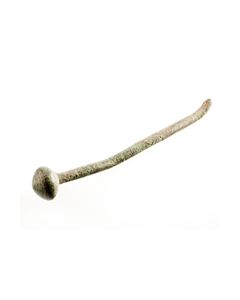 keltische - römische Gewandnadel oder Haarnadel aus Bronze
Sehr gut erhalten, leicht verbogen. Schöne Patina, kunstvoll gearbeitet.
Price: on request Celtic spear head - found in 1970s near Radstock, UK
Iron, about 2nd century BC - 1st century AD. With export permit by the Arts Council of England.
Price: on request Keltische Fibel aus der La Tene II-Zeit
Bronzefibel des 2. bis 1. Jh. v. Chr. Mit ihrer eleganten, einfachen Ausführung ein Musterbeispiel einer La Tene-Zeit-Fibel in museumswürdiger Erhaltung.
Price: on request Keltische Fibel aus Silber
Seltener Typ mit Dekor, 1. Jh. v. Chr. - 1. Jh. n. Chr. Museales Stück mit schöner Tönung.
Price: on request Keltische Bronzefigur aus Ostengland
Stark stilisierte keltische Figur aus einem alten Fund in Suffolk, England. Auf Sockel montiert. Spannendes Belegstück eisenzeitlicher Kulthandlungen aus der Zeit vor der Romanisierung.
Price: on request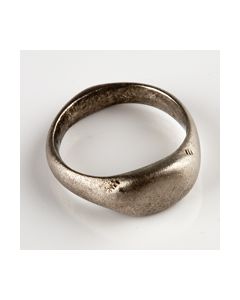 Römischer Ring aus Silber
Römische Kaiserzeit, möglicherweise aus der keltischen Provinz oder Provinznähe. Ringband geht nahtlos in die Ringplatte über. Theoretisch auch heute noch als Amulett oder Fingerring tragbar. Innendurchmesser 17mm bis 18mm.
Price: on request Enameled Galo-Roman fibula
Grundform einer rechteckigen Platte, erweitert durch Zierknopf an Kopf- und Fußende. Drei Paare von Dreiecken auf der Platte sind durch weiße Einlagen hervorgehoben. Etwa 2. Jh. n. Chr.
Price: on request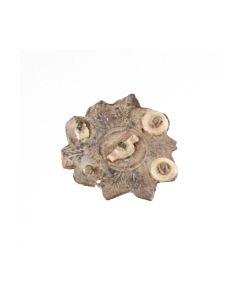 Elaborate Roman plate brooch
Ten pointed star form with leaf pattern and decorative buttons. A product of Gaul or Britain dating to the 1st century.
Price: on request Rare discus-shaped Celtic-Roman fibula
Aus der Entstehungszeit der plattenförmigen Fibeln, 1. Jh. n. Chr. Ästhetisch ansprechende Metallarbeit aus einer Fusion keltischer Handwerkstraditionen mit römischen Vorlieben.
Price: on request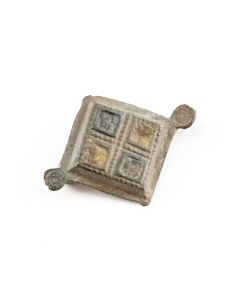 Impressively preserved enameled Roman brooch
In Britannien und Gallien produzierter Fibeltyp des zweiten Jahrhunderts. Edel patinierte Bronzeoberfläche. Besonders hervorzuheben ist die Emailauflage in selten gutem Erhaltungszustand.
Price: on request Großes römisches Fresko mit Vögeln und Blumen
Seltenes Beispiel für Wandmalerei aus dem 2. Jh. n. Chr., Fund aus einer römischen Villa in der Provinz Germania Inferior. 56cm hoch. 43cm breit.
Price: on request Celtic fibula
Rare fibula from the La Tène culture with beautiful enamel inlays. The main material is well preserved for an iron fibula.
Price: on request Keltische Fibel der Latènezeit
Antike Gewandnadel aus Bronze. Variante der Jezerine-Typ-Fibeln, vermutlich aus Süddeutschland, 1. Jh. v. Chr.
Price: on request Frühe, europäische Fibel
Hervorragend erhaltene, keltische Bronzefibel aus der Eisenzeit, 6. bis 3. Jh. v. Chr. Großartiges Beispiel für einen der frühesten Fibeltypen.
Price: on request Frühe, europäische Fibel
Vollständig erhaltene, keltische Bronzefibel aus der Eisenzeit, 6. bis 3. Jh. v. Chr. Großartiges Beispiel für einen der frühesten Fibeltypen.
Price: on request Gallo-Roman animal fibula
Zoomorphe Fibel mit Wildtier als Motiv. Schmuckstück mit religiöser Symbolik, vergleichbar einem Kreuzanhänger bei heutigen Christen. Gefertigt im 1. bis 3. Jh. n. Chr. in Gallien.
Price: on request