
Search results for: 'mit'
-
 Elamite vessel with painted frieze
Impressive ceramic jar in prime condition. The geometrical shapes and animals of the frieze are a typical stylistic feature. Found in Susa, from the time of the Ur-III dynasty, around 2000 BC.
Price: on request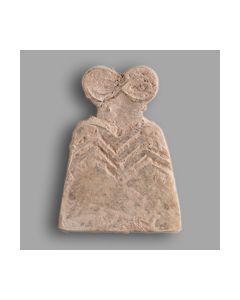 Syrisches Augenidol vom Tell Brak-Typ
Hervorragender Zustand mit schön erhaltener Oberfläche. Begutachtet durch Prof. Lambert, mit Notiz aus seiner Hand. Fund aus Tell Brak in den 1920er Jahren.
Price: on request Islamische Öllampe aus Stein
Massiver dunkler Stein, verziert mit Linien- und Punktsmuster. Sehr gute Erhaltung.
Price: on request Rollsiegel aus der Akkad-Zeit
Siegel aus Achat mit Maserung in Braun- bis Cremetönen. Abrollung zeigt mythologische Szene. Ende 3. bis Anfang 1. Jt. v. Chr., womöglich Akkad-Zeit.
Price: on request Published funerary relief of Hermes from Palmyra
Grabrelief eines bärtigen Mannes aus Palmyra mit Inschrift, diese besagt „Bildnis des Hermes. Wehe!“. Museales Stück.
Price: on request Extremely rare large Roman pottery lantern
Such lanterns are extremely rare, even in large museum collections and catalogues.
Price: on request Persisches Rollsiegel - Antilopen
Rollsiegel aus weißem Stein mit Darstellung zweier Antilopen. Exzellente Erhaltung, sehr tiefes, detailliert geschnittenes Motiv. Etwa 8. bis 4 Jh. v. Chr. Neoassyrisch bis achämenidisch.
Price: on request Neo-Assyrian cylinder seal with preserved bronze setting
Fantastic and rare example for a cylinder seal in its original setting. From the reign of Tiglath-Pileser III in the 8th cent. BC.
Price: on request Pair of pins with chain
The pair of pins dates to the early Iron Age of Luristan. It is made from Bronze and Iron. This state of preservation is extremely rare for composite objects.
Price: on request Luristan bronze dagger with grip insert
It is very rare to find a Western Asiatic bronze dagger with an intact insert inside the grip. Dating to Iron Age Luristan, 1100 to 900 BC.
Price: on request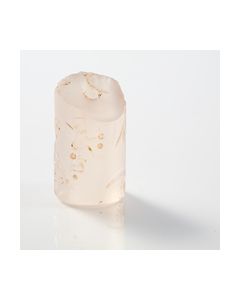 Neoassyrisches Zylindersiegel aus Bergkristall
Abrollung zeigt Ischtar und Schamasch um Spade des Marduk vor Firmament. Im Hintergrund Verehrer. Aus neoassyrischer Zeit, ca. 750 v. Chr. bis 620 v. Chr.
Price: on request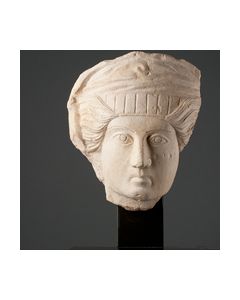 Portraitkopf einer Frau - Palmyra, 2. Jh. n. Chr.
Museal erhaltenes Stück. Vollständig, auch die Nase, welche bei antiken Portraits oft abgebrochen ist, ist unbeschädigt.
Price: on request