
Search results for: 'Mittelamerika'
-
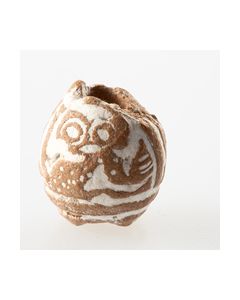 Perle der Manabí-Kultur aus der Prä-Inka-Zeit Ecuadors
500 n. Chr. bis 1500 n. Chr., Präinkazeit und Präkolonialzeit. Bichrome Tonperle mit kunstvoller Miniaturszene. Dargestellt ist ein Klammeraffe.
Price: on request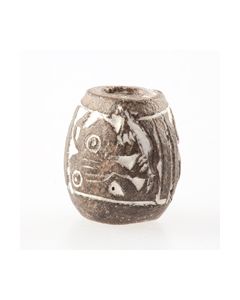 Perle der Manabí-Kultur aus der Prä-Inka-Zeit Ecuadors
500 n. Chr. bis 1500 n. Chr., Präinkazeit und Präkolonialzeit. Bichrome Tonperle mit kunstvoller Miniaturszene. Dargestellt ist ein Fuchs.
Price: on request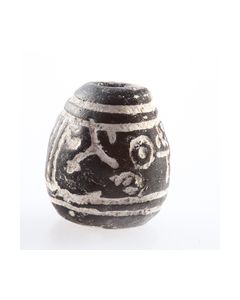 Perle der Manabí-Kultur aus Ecuador
500 n. Chr. bis 1500 n. Chr., Präinkazeit und Präkolonialzeit. Bichrome Tonperle mit kunstvoller Miniaturszene. Dargestellt ist ein Tier.
Price: on request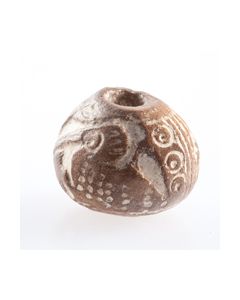 Perle der Manabí-Kultur aus Ecuador
500 n. Chr. bis 1500 n. Chr., Präinkazeit und Präkolonialzeit. Bichrome Tonperle mit kunstvoller Miniaturszene. Dargestellt ist ein Vogel.
Price: on request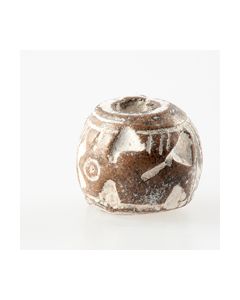 Perle der Manabí-Kultur aus der Prä-Inka-Zeit Ecuadors
500 n. Chr. bis 1500 n. Chr., Präinkazeit und Präkolonialzeit. Bichrome Tonperle mit kunstvoller Miniaturszene. Dargestellt ist ein hängendes Faultier.
Price: on request Perle der Manabí-Kultur aus Ecuador
500 n. Chr. bis 1500 n. Chr., Präinkazeit und Präkolonialzeit. Bichrome Tonperle mit kunstvoller Miniaturszene. Dargestellt ist eine Maus, ein seltenes Motiv.
Price: on request Perle der Manabí-Kultur, Ameisenbär
500 n. Chr. bis 1500 n. Chr., Präinkazeit und Präkolonialzeit. Bichrome Tonperle mit kunstvoller Darstellung eines Ameisenbären (vgl.Shaffer, Nr. 20). Durchmesser 12mm, Höhe 10mm.
Price: on request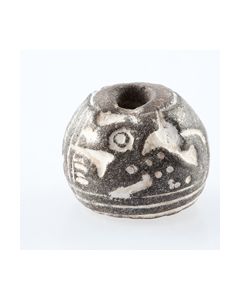 Perle der Manabí-Kultur aus Ecuador
500 n. Chr. bis 1500 n. Chr., Präinkazeit und Präkolonialzeit. Bichrome Tonperle mit kunstvoller Miniaturszene. Dargestellt ist ein sitzender Jaguar.
Price: on request Ceremonial knife of the Sican culture
The so-called Tumi was a weapon to cut the throats of humans and animals in ritual sacrifices. The Tumi certainly fulfilled an additional representative function in the afterlife. From the period of the Sican's cultural florescence during the 10th to 12th centuries AD.
Price: on request Stirrup vessel with lizzards
Beautiful vessel from the golden age of the Moche culture. It shows two lizzards on each side. 100 to 500 AD.
Price: on request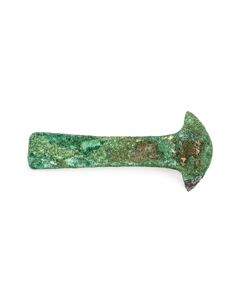 Ceremonial knife of the Sican culture
The so-called Tumi was a weapon to cut the throats of humans and animals in ritual sacrifices. The knife certainly fulfilled an additional representative function in the afterlife. From the period of the Sican's cultural florescence during the 10th to 12th centuries AD.
Price: on request Mochica stirrup vessel as a shaman
Imposing Peruvian vessel shaped like a priest on a podest with rich adornments. Circa 100 to 500 AD. With documents form the 1980ies.
Price: on request Beaker of the Nazca culture
Tall and slender vessel from the pre-Columbian Nazca culture. The polychrome painting shows abstract patterns, as well as abstracted animals and faces.
Price: on request Beaker of the Nazca culture
Elegant vessel of the pre-Columbian Nazca culture. The polychrome painting is of high artistic quality and shows a mask.
Price: on request Richly painted pottery in the Nazca style
A magnificent modern product imitating the style of the pre-Columbian Nazca culture. It depicts a deity, a hybrid creature of mythical beast and human.
Price: on request Bowl of the Nazca culture
With polychrome abstract depiction of people and masks, possibly a deity. Wonderful vessel from the Nazca Golden Age.
Price: on request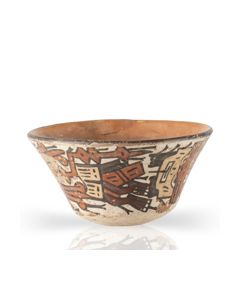 Bowl of the Nazca culture
With polychrome abstract depiction of people and masks, possibly a deity. Nice vessel from the Nazca Golden Age.
Price: on request Pre-Columbian gold earrings from Colombia
Matching pair of gold earrings from the Zenú culture. Dating to the 1st millennium. Impressive gold jewellery, once worn as earrings by the Zenú people.
Price: on request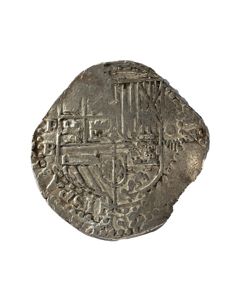 8 Reales, also known as cob coin, piece of eight or pirate money
Potosi, Bolivia. Very fine, rare quality and preservation for a cob coin.
Price: on request 8 Reales, also known as cob coin, piece of eight or pirate money
Potosi, Bolivia. Very fine, nice quality and preservation for a cob coin.
Price: on request Münze zu 8 Reales - "Piece of eight", auch bekannt als "Piratengeld"
Sevilla, Philipp IV, 1621-65 n. Chr. Außergewöhnlich gute Erhaltung. Unsterblich gemacht in Stevensons Meisterwerk "Die Schatzinsel".
Price: on request Münze zu 8 Reales - "Piece of eight", auch bekannt als "Piratengeld"
Mexiko Stadt, Philipp III, um 1610 n. Chr. Außergewöhnlich gute Erhaltung. Unsterblich gemacht in Stevensons Meisterwerk "Die Schatzinsel".
Price: on request Münze zu 8 Reales - "Piece of eight", auch bekannt als "Piratengeld"
Potosi (Bolivien), Philipp III, 1598 - 1621 n. Chr. Erhaltung: sehr schön. Unsterblich gemacht in Stevensons Meisterwerk "Die Schatzinsel".
Price: on request Exceptionally well minted 8 Reales coin
Potosi, Bolivia, ca. 1st half 17th century AD. This type of coins is also known as cob coins, pieces of eight or pirate money
Price: on request 8 Reales, also known as cob coin, piece of eight or pirate money
Potosi, Bolivia. Very fine, nice quality and preservation for a cob coin. This type of coins is also known as pieces of eight or pirate money
Price: on request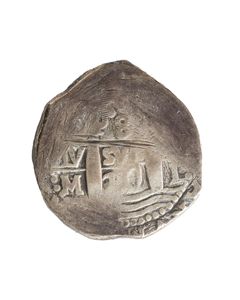 Rare 8 Reales cob coin
Lima, struck 1717 under Philipp V. Very fine, nice quality and preservation for a cob coin. Also known as piece of eight or pirate money.
Price: on request 8 Reales, also known as cob coin, piece of eight or pirate money
Charles II, Potosi (Bolivia) 1687. Very fine, great patina. Nice quality and preservation for a cob coin.
Price: on request