
Search results for: 'bei'
-
 Two Greek leaden sling bullets
Almond shaped lead bullets of a slinger. They were part of the equipment of a Greek army from the late 5th to the 2nd century BC.
Price: on request Two Greek leaden sling bullets
Almond shaped lead bullets of a slinger. They were part of the equipment of a Greek army from the late 5th to the 2nd century BC.
Price: on request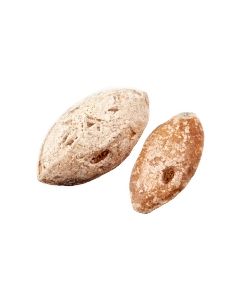 Two Greek leaden sling bullets
Almond shaped lead bullets of a slinger. They were part of the equipment of a Greek army from the late 5th to the 2nd century BC.
Price: on request Large published cypriot jug, ex Christie's
Excellently preserved, rare for such a large object. 1977 on exhibition in the Bielefeld Museum of Fine Arts. From an old German private collection, acquired at Christie's in the late 1960s or early 1970s. Coming with an ArtLoss certificate.
Price: on request Two Greek leaden sling bullets
Almond shaped lead bullets of a slinger. They were part of the equipment of a Greek army from the late 5th to the 2nd century BC.
Price: on request Six Greek leaden sling bullets
Almond shaped lead bullets of a slinger. They were part of the equipment of a Greek army from the late 5th to the 2nd century BC.
Price: on request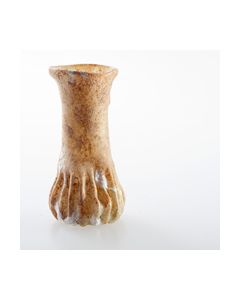 Römisches geripptes Glasfläschchen
Kleines Glasgefäß, typisch für antike Haushalte der Levanteküste. Römisch bis Spätrömisch. Mit elegantem Rippendekor an der Außenseite. 2. bis 5. Jh. n. Chr.
Price: on request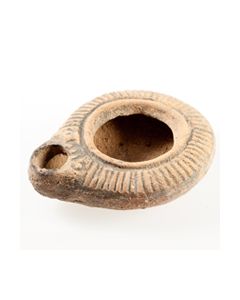 Spätrömische Öllampe vom Mamre-Typ
Das in der Bibel mehrfach erwähnte Mamre war u. a. der Wohnort Abrahams. Offene flache Lampe mit Halbvoluten.
Price: on request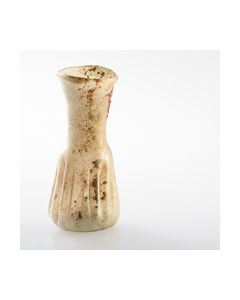 Römisches geripptes Glasfläschchen
Kleines Glasgefäß, typisch für antike Haushalte der Levanteküste. Römisch bis Spätrömisch. Mit elegantem Rippendekor an der Außenseite. 2. bis 5. Jh. n. Chr.
Price: on request Republikanischer Denar des L Calpurnius Piso Frugi
Nach rechts galoppierender Reiter, im Rücken Palmzweig, darüber Dreizack. Aus Generationensammlung, vom Leibarzt des Prinzen Karl von Preußen im 19. Jh. begründet.
Price: on request
Museale kanaanitische Öllampe1500 v.Chr. bis 1200 v.Chr., Übergangstyp aus der späten Bronzezeit zur frühen Eisenzeit, runder Boden, kein Randkranz, sehr schöne Patina.
Price: on request Kanaanitische Öllampe
2000 v.Chr. bis 1600 v.Chr., späte Bronzezeit. Typische Lampe für die Levante, Terra cotta. Vollständig, nicht restauriert. Wunderschöne Sandpatina. Rußspuren an Dochtmulde. 147mm lang, 150mm breit.
Price: on request Juglet from the Urnfield period
Small juglet dating to the transition period between Bronze Age and Iron Age in Central Europe. 1200 to 800 BC. Found in an urnfield in Lower Austria.
Price: on request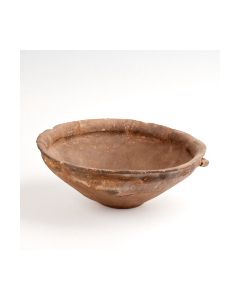 Big bowl from the Urnfield period
Ceramic vessel dating to the transition period between Bronze Age and Iron Age in Central Europe. 1200 to 800 BC. Found in an urnfield in Lower Austria.
Price: on request Egyptian sarcophagus mask
Impressive wood relief of an idealized face. Polychrome paint. The mask was part of a sarcophagus lid from the Late Period of Ancient Egypt.
Price: on request Big Cup of the Urnfield culture
Ceramic vessel dating to the transition period between Bronze Age and Iron Age in Central Europe. 1200 to 800 BC. Found in an urnfield in Austria.
Price: on request Cup of the Urnfield culture
Ceramic vessel dating to the transition period between Bronze Age and Iron Age in Central Europe. 1200 to 800 BC. Found in an urnfield in Austria.
Price: on request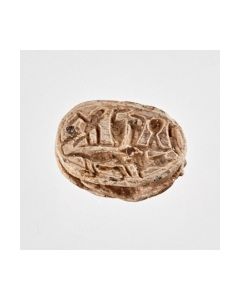 Scarab from the Ramesside period
The bottom side shows Horus, Uraeus and crocodile. The crocodile could be interpreted a the god Sobek.
Price: on request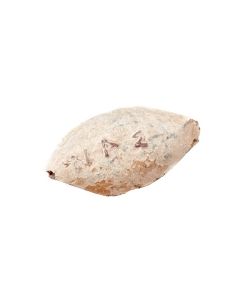 Leaden sling bullet with inscriptions
Almond shaped lead bullet of a slinger. It was part of the equipment of a Greek army from the late 5th to the 2nd century BC.
Price: on request Two Greek leaden sling bullets
Almond shaped lead bullets of a slinger. They were part of the equipment of a Greek army from the late 5th to the 2nd century BC.
Price: on request Egyptian Scarab with sun beetle
The scarab amulet from Ramesside times has a beetle engraved in the lower side, flanked by two symbols.
Price: on request Rare Roman mosaic glass face bead showing Medusa head
Mosaikglasperle aus einer oströmischen Werkstatt des 1. Jh. n. Chr., möglicherweise ägyptisch oder nubischer Import. Das abgebildete Frauengesicht wird gerne als Darstellung der Medusa gedeutet.
Price: on request Bronze Age socketed axe head
In dieser Ausführung seltener Typ eines Tüllenbeils. Schönes Belegexemplar aus einer gut geführten und breit angelegten Sammlung bronzezeitlicher Beile.
Price: on request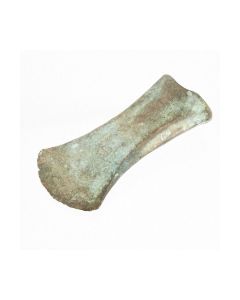 Elegantly shaped socketed axe head
Elegant geformter Beilkopf aus der späten Bronzezeit Europas. Es gehört zu den Tüllenbeilen. Dessen großer Vorzug besteht gegenüber früheren Beiltypen in der einfachen Schäftung mittels der Öffnung am Nacken.
Price: on request Rare massive Bronze Age socketed axe head
Dieses Tüllenbeil ist durch seine Kompaktheit eine seltene Variante, die einen besonders massiven Eindruck macht und damit für den kraftvollen Arbeitseinsatz geeignet sein dürfte. Interessantes Exemplar aus der späten Bronzezeit Europas.
Price: on request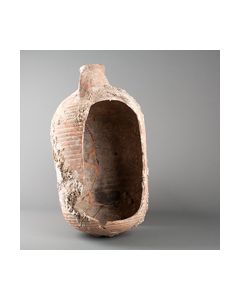 Small wash-bowl amphora from an old German collection - found in the mediterranean
Kleine ovoide Amphore. Gedrungener Körper mit runder Schulter und rundem Bodenstück. Tauchfund aus dem Mittelmeer, mit maritimen Verkrustungen.
Price: on request Roman bronze oil lamp - found in the UK
Fund aus der Ostenglischen Grafschaft Norfolk. Dokumentiert im Rahmen der PAS (Portable Antiques Scheme). Museale Erhaltung mit edler Patina.
Price: on request Ancient coin forger's lead form - found in Nothamptonshire, UK
Gefunden in Pitchley, UK, am 1. Januar 2008. Der Fund ist mit PAS Nummer dokumentiert und wissenschaftlich untersucht. Von außerordentlicher Seltenheit.
Price: on request Rare compact socketed axe head
Seltene Variante, die einen besonders massiven Eindruck macht und damit für den kraftvollen Arbeitseinsatz geeignet sein dürfte. Interessantes Exemplar aus der späten Bronzezeit Europas.
Price: on request Nordafrikanische Öllampe mit rückläufigem Christogramm
Die Buchstaben sind mit Punkten verziert, welche Juwele symbolisieren. Ein fast identisches Stück ist im Kestner-Museum in Hannover ausgestellt.
Price: on request Gruppe von 3 Bronzefibeln
800 v.Chr. bis 300 n.Chr. , Eisenzeit. Diverse Typen einschließlich hellenistischer und römischer Fibeln. Nadeln fehlend oder restauriert.
Price: on request Keltischer Spinnwirtel aus Ton
Großer Tonwirtel, antikes Spinnzubehör, ca. 200 v. Chr., Fund aus Posen, Polen. 30mm Durchmesser.
Price: on request Two Greek leaden sling bullets
Almond shaped lead bullets of a slinger. They were part of the equipment of a Greek army from the late 5th to the 2nd century BC.
Price: on request Two Greek leaden sling bullets
Almond shaped lead bullets of a slinger. They were part of the equipment of a Greek army from the late 5th to the 2nd century BC.
Price: on request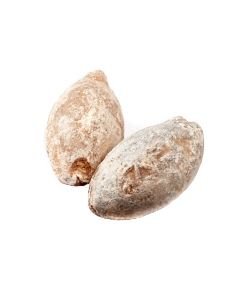 Two Greek leaden sling bullets
Almond shaped lead bullets of a slinger. They were part of the equipment of a Greek army from the late 5th to the 2nd century BC.
Price: on request Two Greek leaden sling bullets
Almond shaped lead bullets of a slinger. They were part of the equipment of a Greek army from the late 5th to the 2nd century BC.
Price: on request