
Search results for: 'mit'
-
 Elegant Roman glass bottle - found in a ship wreck in the Mediterranean
Kleine römische Flasche aus klarem, farblosem Glas. Fund aus einem Schiffswrack im östlichen Mittelmeer. Produktion aus der römischen Kaiserzeit, 1. bis 2. Jh. n. Chr.
Price: on request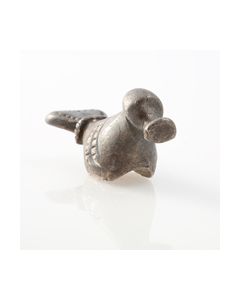 Applike aus Silber, Form eines Vogels
Museales zoomorphes Ornament für Haarschmuck, Pyxis oder Möbelstücke aus spätrömischer bis frühbyzantinsicher Zeit.
Price: on request Römischer Schlossriegel aus Bronze
Teil eines antiken Schließmechanismus, z.B. römisches Schloss für Tür oder Truhe. Länge: 72 mm, 1.-2. Jh.
Price: on request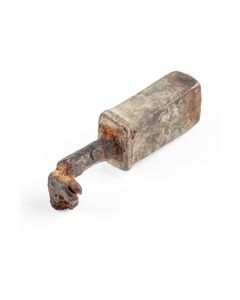 Römischer Schlüssel
Langgestreckte Quaderform, nach vorne Zierrand. Interessantes Werkstück aus Bronze und Eisen. Fund aus der Region Region der Limeskastelle Pförring, Eining, Pfünz, Kösching und Weißenburg.
Price: on request Late Roman glass bottle
Frei geblasenes Glasfläschchen aus dem 3. bis 5. Jh. n. Chr., Spätantike.
Price: on request Scarab with cartouche of Thutmose III.
Amulet from the New Kingdom for one of the most popular rulers in ancient Egyptian history. This scarab is described in the catalogue of Irène Gautier-Vodoz.
Price: on request Scarab with falcon headed god
Interesting scarab amulet from the Second Intermediate Period. The seal shows a falcon headed creature facing an Egyptian cobra. This scarab can be found in the catalogue of Irène Gautier-Vodoz.
Price: on request Uschebti aus bemaltem Ton
Ca. 1200 - 1070 v. Chr., Neues Reich des Alten Ägypten. Vollständig intakt, nicht restauriert. Originale Bemalung weitgehend erhalten.
Price: on request Scarab with pattern of circles
The beetle stone bears a popular motive of the Middle Empire. A nice example of its kind. This scarab is described in the catalogue of Irène Gautier-Vodoz.
Price: on request Large early Etruscan decorated jar
Nicely preserved, from an old German collection, acquired in the late1950s. Found in Latium region (Italy) near Sezze.
Price: on request Luristan ceremonial pick
The elaborate decorations are contrary to the actual use as a pick. The object is from the class of pseudo tools common in Iran at the end of the 2nd millenium BC. It probably served a ritualistic purpose.
Price: on request Scarab with geometric design
Lovely scarab with traces of turquoise fayence. From the Second Intermediate Period of ancient Egypt.
Price: on request Babylonian carnelian cylinder seal
Prime example made of beautiful orange carnelian. Highly detailed engraved scene with king offering to the weather god Hadad. First half of 2nd Millenium BC.
Price: on request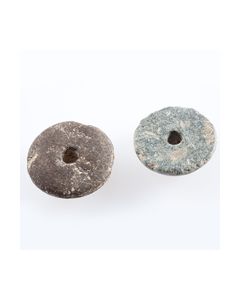 Gruppe von 2 Spinnwirteln aus Stein
Seltene kegelförmige Wirtel. Hellenistische bis römische Zeit, Fund von der Levante, östlicher Mittelmeerraum.
Price: on request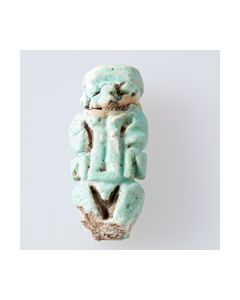 Ägyptische Patäke-Figur aus Fayence
Sehr seltene Patäken-Darstellung. Ein Mensch in Zwerggestalt, der als Gott oder Gottgleicher verehrt wurde. Schutzgott. 26. bis 30. Dynastie. Spätzeit.
Price: on request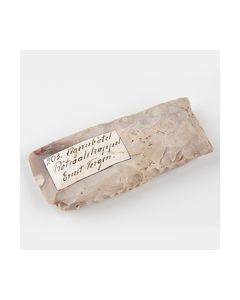 Flaches Rechteckbeil der Trichterbecherkultur
Alle Seiten fein bearbeitet, jedoch nur die Schneide poliert. Flache, dünnnackige Klinge. Gefunden um 1900 in Negernbötel, Schleswig-Holstein.
Price: on request Aureus des Vitellius
Vitellius regierte vom 19. April bis zum 20. Dezember des Jahres 69 n. Chr. Die Münze zeigt Büsten seiner Kinder Vitellius Germanicus und Vitellia.
Price: on request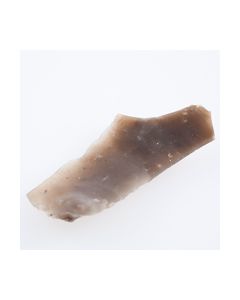 Messerklinge aus Stein, Mesolithikum (beschädigt)
5100 - 4100 v.Chr., Flintwerkzeug der Ertebölle-Ellerbek-Kultur. Die Kultur ist ein wichtiges Bindeglied zwischen Mesolithikum und Neolithikum.
Price: on request North African oil lamp with floral motif
Dark clay with partially preserved dark glaze. Nicely preserved, from an old collection.
Price: on request Faience figurine of Isis and Horus child
Goddess on a throne nursing her child Horus. Dating to the Late Period of ancient Egypt.
Price: on request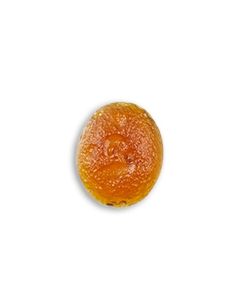 Roman intaglio with crouching woman
The woman is possibly a depiction of Venus. The orange colour of the glass paste is imitating Carnelian.
Price: on request Roman intaglio with helmed warrior
The Roman intaglio shows a standing warrior. Looking down with a helmet on his head. Orange glass.
Price: on request Roman intaglio with young man
Oval shaped ring stone made of lovely yellow glass paste. Quality work from Roman times.
Price: on request Roman intaglio with aphrodite
Ring stone made of lovely orange glass paste. Roman Republican to Imperial.
Price: on request Roman intaglio made of dark glass
The work of art shows a standing young man. Roman Republican to Roman Imperial times.
Price: on request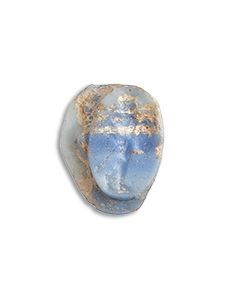 Roman intaglio with warrior
The high quality glass paste shows a naked warrior with speer and shield with emblem. Roman Republican to Roman Imperial times.
Price: on request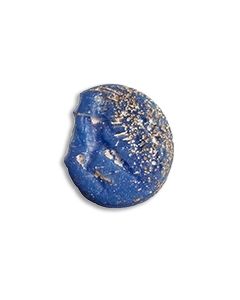 Roman intaglio
Intaglio made of vibrant blue glass paste. Dates to Roman Republic until Roman Imperial times.
Price: on request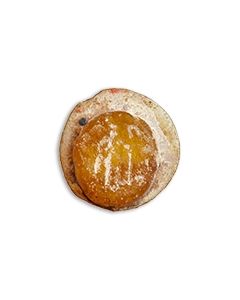 Roman intaglio with Eros child
Slightly oval gemstone made of orange brown glasspaste imitating Carnelian. Dating to Roman times.
Price: on request Polished stone age axe head
The small tool from the younger Stone Age has a nicely polished surface revealing the beautiful black stone it is made of. Approx. 4200 to 2400 BC.
Price: on request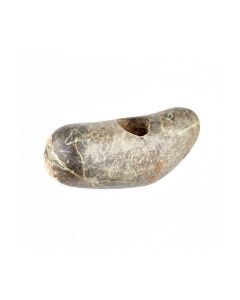 Finely polished hammer axe
The compact axe head is made of beautiful and polished green-black stone with white veins. Late Neolithic to Copper Age.
Price: on request Roman transport amphora found at Cabrera island
Perfectly preserved, large amphora from the Mediterranean sea. From an old German collection.
Price: on request Old Babylonian cuneiform tablet
Very nicely preserved clay tablet with cuneiform legal text from Old Babylonian times.
Price: on request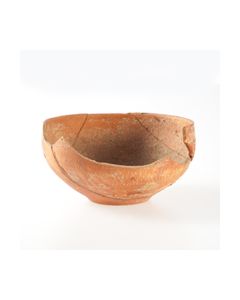 römisches Schälchen
Flachhalbkugeliges Schälchen, Lippe steil durch eine plastische Leiste abgesetzt. Glattwandig, an der Außenseite Kerbdekorverzierung.
Price: on request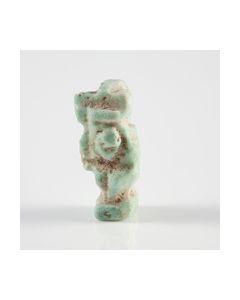 Ägyptisches Amulett der Taweret - Schutzgöttin der Schwangeren
Mintgrüne Fayence. Spätzeit, Altes Ägypten, 26. bis 30. Dynastie. Hervorragender Zustand. Vollständig intakt.
Price: on request Hochgradig seltenes skythisches Protogeld in Pfeilform
7. - 6. Jh. v. Chr., Schwarzmeerregion, sehr guter Zustand
Price: on request Roman oil lamp showing Victoria in biga
A lamp with an identical motive is on exhibition in the NATIONAL WARSAW MUSEUM. Probably found in Trier in 1913
Price: on request