
Search results for: 'bei'
-
 Eisenzeitliche, europäische Fibel
Hervorragend erhaltene, keltische Bronzefibel aus der Eisenzeit, 6. bis 3. Jh. v. Chr. Früher Fibeltyp in schöner Erhaltung.
Price: on request Frühe, europäische Fibel
Hervorragend erhaltene, keltische Bronzefibel aus der Eisenzeit, 6. bis 3. Jh. v. Chr. Großartiges Beispiel für einen der frühesten Fibeltypen.
Price: on request Frühe, europäische Fibel
Vollständig erhaltene, keltische Bronzefibel aus der Eisenzeit, 6. bis 3. Jh. v. Chr. Großartiges Beispiel für einen der frühesten Fibeltypen.
Price: on request Rechteck-Fibel aus dem 2. bis 3. Jh.
Antike römische Brosche. Dekorierte Platte mit Resten von Email. Typ aus dem 2. bis 3. Jh. n. Chr., 20mm x 33mm.
Price: on request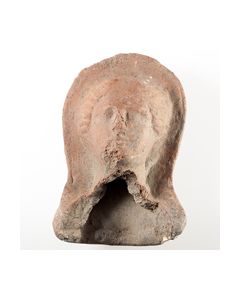 Massiver etruskisch-italischer weiblicher Votivkopf
Kopf einer jungen Frau mit über den Hinterkopf gelegten Mantel. Ton mit dunkelroter Engobe. Hervorragend erhaltenes, massives und eindrucksvolles Stück.
Price: on request Mesolithische Axt
Vermutlich Maglemosekultur, 8000 v. Chr. bis 5000 v.Chr., 74mm lang. Steinzeitliche fein bearbeitete Schneide.
Price: on request Perfectly centered Domitian aureus
Reverse showing cornucopiae, in field COS IIII. Almost extremely fine, Rome 76-77 AD
Price: on request Egyptian scarab with papyrus plants
Scarab amulet made of bright, almost white steatite. 13th to 15th dynasty. This scarab is described in the catalogue of Irène Gautier-Vodoz.
Price: on request Scarab with scarab motive
The stamp side shows a scarab with two uraeus snakes. This scarab is described in the catalogue of Irène Gautier-Vodoz.
Price: on request Small scarab amulet with Isis hieroglyphs
The tiny amulet dates to the New Kingdom. It bears the glyphs for the goddess Isis. This scarab is described in the catalogue of Irène Gautier-Vodoz.
Price: on request Scaraboid with twisted cord
Scaraboid seal amulet with a twisted cord motive. This scarab is described in the catalogue of Irène Gautier-Vodoz.
Price: on request Scaraboid with Red Crowns of Lower Egypt
The hieroglyphs on the lower side symbolize the rule over Lower Egypt. The rising sun is symbolized above. This scaraboid is described in the catalogue of Irène Gautier-Vodoz.
Price: on request Ramesside Scarab
Egyptian scarab from the 19th to 20th dynasty. With horse and hieroglyphs.
Price: on request Scarab with inscription Amun Re
Interesting scarab from the New Kingdom. With hieroglyphs reading Amun Re, main god of Theben, and lotus flower.
Price: on request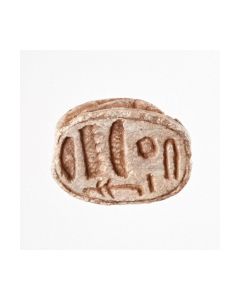 Scarab with inscription
The lower side bears a hieroglyph inscription. Nice piece from the Freemark collection. New Kingdom.
Price: on request Scarab with cross symbol
A piece from the Ramesside Period to the early Third Intermediate Period of ancient Egypt. Great early 20th century provenance.
Price: on request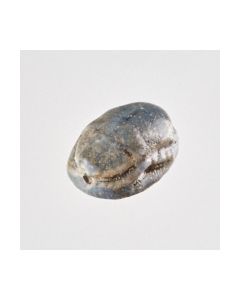 Scarab with blue fayence glaze
The piece is from the Third Intermediate Period or the Late Period of ancient Egypt. The inscription refers to Amun-Re, the main god of Theben. The glaze is shining in vivid blue colour.
Price: on request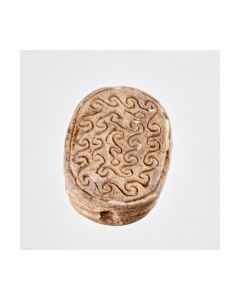 Scarab with spiral design and symbol for good luck
The Egyptian scarab from the Second Intermediate Period is decorated with a geometrical pattern. A nefer hieroglyph stands for good luck.
Price: on request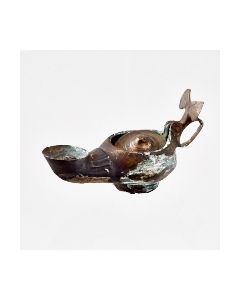 Published byzantine bronze oil lamp
From the famous "Museum für Morgenlandfahrer". An almost identical specimen is on exhibition in the Hanover Kestner Museum.
Price: on request Zoomorphic vessel in the shape of a zebu
The Western Asiatic vessel amazes by its size and state of preservation. Including TL analysis. Around 1000 BC.
Price: on request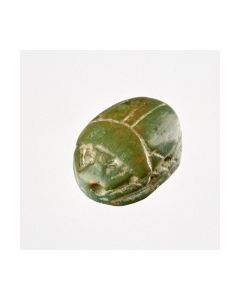 Scarab with Amun inscription
Bearing the hieroglyphs "the god Amun of Theben is lord". From the Late Period of ancient Egypt. Beautiful green stone.
Price: on request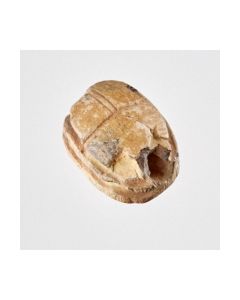 Egyptian Scarab with hieroglyphs
Interesting scarab made of steatit with inscription for Amun. Dating to the 19th to 21st dynasty of ancient Egypt.
Price: on request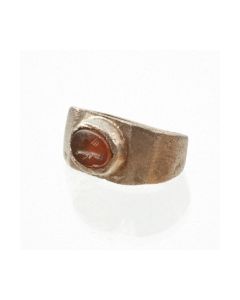 Roman silver wedding ring with intaglio showing dextrarum iunctio
Schönes Intaglio aus durchscheinend-rotem Karneol. Es zeigt die dextrarum iunctio, welche symbolisch für Verlobung oder Hochzeit steht. 16mm x 10mm Innenmaße. 3. Jh. n. Chr.
Price: on request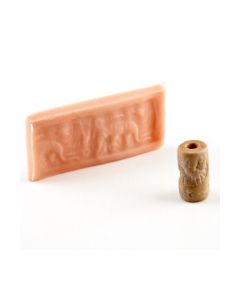 Cylinder seal from early dynastic Mesopotamia
Das frühdynastische Rollsiegel aus Mesopotamien zeigt eine Szene mit zwei Personen im Boot, eine davor stehende mit Stab. Es ist aus schönem karamellfarbenem Stein geschnitten. Mitte 3. Jt. v. Chr.
Price: on request Socketed axe head of the Urnfield period
Bronzebeilkopf mit vierkantigem Querschnitt, seltener Typ. Schön erkennbarer Grat von der Herstellung in einer Gussform. Ringöse an der Seite. Späte Bronzezeit.
Price: on request Clay figurine of Harpokrates from the Fayum
Sehr fein gearbeitetes Stück, auch kleine Details von Mimik und Kopfschmuck sind vollständig herausgearbeitet und exzellent erhalten.
Price: on request Roman gold ring with beautiful intaglio
Hervorragend erhaltener Fingerring aus Gold mit hohler Ringschiene. Schönes Intaglio aus Karneol mit dem Treuesymbol dextrarum iunctio. 10mm x 8mm Innenmaße.
Price: on request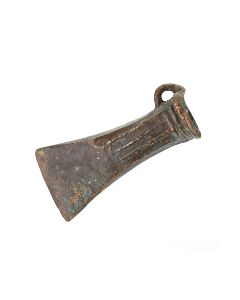 Decorated socketed axe head
Bronzezeitlicher Beilkopf mit ovalem Querschnitt. Schöne Verzierungen an den Seiten. Ringöse zur Befestigung. Späte Bronzezeit.
Price: on request Luristan bronze base of a finial including pin
Flaschenförmiger Sockel inklusive Haltestift für eine Standarte. Luristan, Anfang 1. Jt. v. Chr. Aus der berühmten Sammlung Arthur M. Sackler.
Price: on request Impressive neolithic type II dagger
Rötlich-braun patinierter bifazieller Dolch aus Flint. 18cm lang. Endneolithikum, Fund aus Dänemark.
Price: on request Antike Münzform für Falschgeld - Fund aus Northamptonshire
Gefunden in Pitchley, UK, am 1. Januar 2008. Der Fund ist mit PAS Nummer dokumentiert und wissenschaftlich untersucht. Von außerordentlicher Seltenheit.
Price: on request Gladiatorenlampe aus der römischen Kaiserzeit - Fund aus Deutschland
Museales Stück. Erhabenes Spiegeldekor mit feinen Details, tiefer, gut lesbarer Stempel. Fund aus Region der Limeskastelle Pförring, Eining, Pfünz, Kösching und Weißenburg.
Price: on request Römischer Terra Sigillata Teller aus Sfax (Tunesien)
Flacher fußloser Teller mit glatter schräggestellter Wandung. Aus alter niederländischer Sammlung. Museal erhalten.
Price: on request Großer römischer Terra Sigillata Teller aus Sfax (Tunesien)
Flacher Teller mit hoher konischer Wand. Sehr großes und imposantes Stück. Aus alter niederländischer Sammlung, aufgebaut in den 1950er-90er Jahren.
Price: on request Scarab with geometric motive
The lower side exhibits a symmetrical arrangements of cords, two of which are wrapped around each other. This scarab is described in the catalogue of Irène Gautier-Vodoz.
Price: on request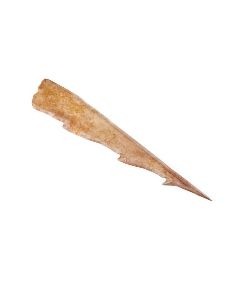 Harpoon of the Maglemosian culture
Fine craftsmanship hunting weapon. Important evidence of the beginnings of fishing in Northern Europe. Mesolithic, 9000 to 6500 BC.
Price: on request