
Search results for: 'bronze'
-
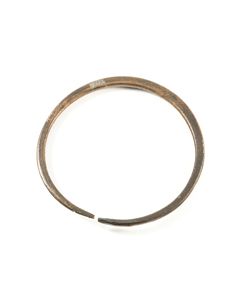 Großer Bronzearmreif
Großer Armreif aus römischer Zeit. 102mm Durchmesser, nicht geschlossen, D-förmiges Profil aus massiver Bronze.
Price: on request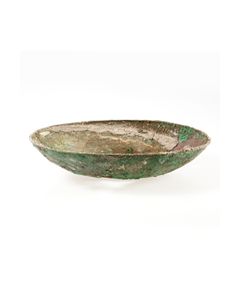 Griechischer Bronzeteller
Teller oder Platte aus Bronze. Haushaltsgeschirr. Flache Form mit gleichmäßiger Wölbung, ohne Standfuß. Griechisch, 8. bis 4. Jh. v. Chr., Durchmesser 155 mm.
Price: on request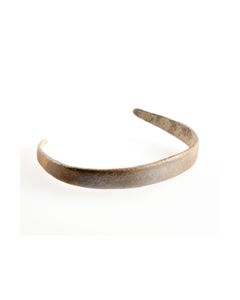 Römischer Bronzearmreif
Hervorragend erhaltener, offener Bronzearmreif. Flaches Band mit spitz zulaufenden Enden. Vermutlich als Armschmuck getragen.
Price: on request Zwei antike Bronzebeschläge
Paar römische Beschläge, möglicherweise für eine Truhe. Beide mit aufwendigem Dekor, Reste einer Kette bzw. kunstvolles Relief. Museal erhaltene Bronzeartefakte.
Price: on request Provinzbronze des M. Aurelius
RV: Pfau steht nach rechts, mit griechischer Legende. Wundervolle, heller melierte dunkle Patina.
Price: on request Antike Bronzefibel mit P-förmigem Profil
Fibelbogen schön verziert. Nadel intakt. 3. Jh. v. Chr. - 4. Jh. n. Chr. Latene-Zeit bis römische Zeit. Fund aus Region der Limeskastelle Pförring, Eining, Pfünz, Kösching und Weißenburg.
Price: on request Antike Bronzeöse
Teil eines Beschlags oder Möbelstücks. Perfekt erhalten. Schöne Patina. Fund aus Region der Limeskastelle Pförring, Eining, Pfünz, Kösching und Weißenburg.
Price: on request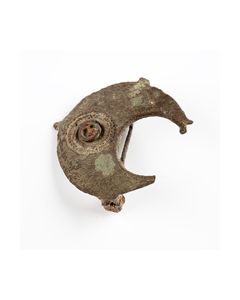 Bronzefibel in Halbmondform, kunstvoll
Vollständig erhalten mit Nadel. Stein aus Fassung fehlt. Etwa 3. Jh. n. Chr. bis 10. Jh. n. Chr.
Price: on request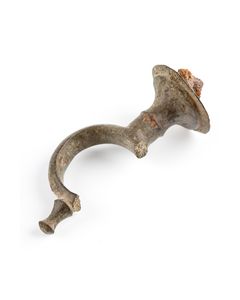 Antikes Bronzeobjekt
Bronze. Massiv, schöne Patina. Halteöse, einst zur Befestigung an Wand oder Möbelstück. Eine Ringhälfte abgebrochen. Verankerung in Ansatz vorhanden.
Price: on request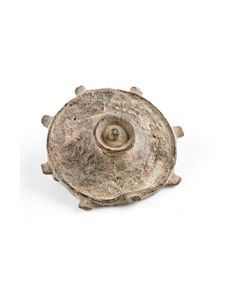 Bronzefibel
Scheibenförmige Brosche. Sehr kunstvolles Stück. Nadel fehlt, ein Ziernoppen leicht nach vorn gebogen. Etwa 3. Jh. n. Chr. bis 10. Jh. n. Chr.
Price: on request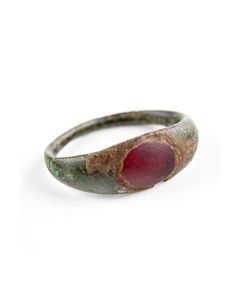 Bronzering mit rotem Stein
Etwa 2. Jh. n. Chr. bis 4. Jh. n. Chr. Perfekt erhalten, theoretisch noch tragbar. Durchmesser innen 19mm x 15,5mm. Stein 9mm x 7mm. 3,46 Gramm.
Price: on request Klinge aus Bronze.
Möglicherweise Dolch oder Lanzenspitze. Am Schaft Reste der Nieten zur einstigen Befestigung am Griff. Vollständig erhalten. Stellenweise leicht korrodiert.
Price: on request Klinge aus Bronze.
174mm x 19mm. 39,82 Gramm. Bronze. Massiv. Etwa 4. Jh. v. Chr. bis 4. Jh. n. Chr., Keltische bis römische Zeit.
Price: on request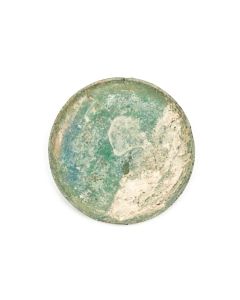 Roman mirror from Baalbek
The bronze disc is the base plate of a bronze mirror, that was once attached to a handle and coated with a reflective metal layer. Typical for upper class Roman households during Imperial times.
Price: on request Roman mirror from Baalbek
The bronze disc is the base plate of a bronze mirror, that was once attached to a handle and coated with a reflective metal layer. Typical for upper class Roman households during Imperial times.
Price: on request Ancient bracelet with snake heads
Massive bronze bracelet with snake shaped terminals. Roman period.
Price: on request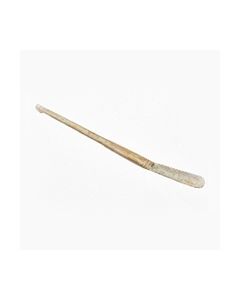 Roman strigilis with workshop mark
Excellently preserved, massive bronze, stable. Workshop mark "N" on the reverse.
Price: on request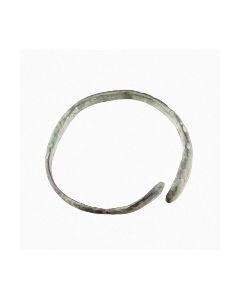 Roman bracelet with snake heads
Massive bronze bracelet dating to the 2nd or 3rd cent. AD. Snake shaped terminals.
Price: on request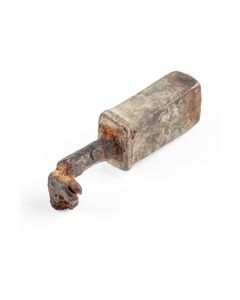 Römischer Schlüssel
Langgestreckte Quaderform, nach vorne Zierrand. Interessantes Werkstück aus Bronze und Eisen. Fund aus der Region Region der Limeskastelle Pförring, Eining, Pfünz, Kösching und Weißenburg.
Price: on request Bracelet with snake heads
Massive bronze bracelet dating to Roman Imperial times, 2nd cent. AD. Snake shaped terminals.
Price: on request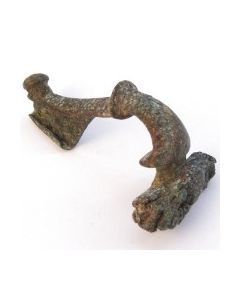 Frührömische kräftig profilierte Fibel
Fibel aus Bronze vom Typ der kräftig profilierten Fibeln, Pannonische Provinzen. 1.Jh. n.Chr., frühe römische Kaiserzeit. 55mm x 24mm x 32mm.
Price: on request Early Etruscan Bucchero cup
Interesting bucchero cup imitating bronze a vessel. Nicely preserved. From an old German collection, acquired in the 1960s.
Price: on request Frührömische kräftig profilierte Fibel
Fibel aus Bronze vom Typ der kräftig profilierten Fibeln. Nadel und Scharnier fehlen. Pannonische Provinzen, 1. Jh. n.Chr., 52mm x 26mm x 20mm.
Price: on request Ancient ladle with bird head terminal
Elegant long bronze ladle, from the Greek or Etruscan culture. 5th to 4th century BC.
Price: on request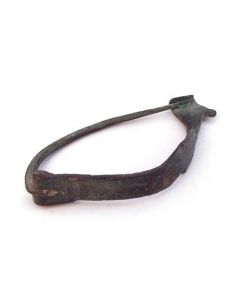 Frührömische Aucissafibel, Provinz Baetica
Fibel aus Bronze mit breitbandigem, fast rundem Bügel. Komplett mit Nadel. Erste Hälfte 1. Jh. n.Chr., frühe römische Kaiserzeit. 60mm x 31mm.
Price: on request Egyptian coffin with snake
The small bronze votive box is modelled on top with a coiled serpent. The artefact was probably made around 400 BC in Naukratis to be devoted to Atum.
Price: on request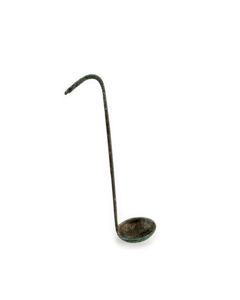 Ancient ladle with donkey head terminal
Elegant long bronze ladle, from the Greek or Etruscan culture. 5th to 4th century BC.
Price: on request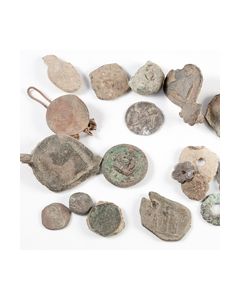 Gruppe antiker Appliken und Anhänger aus dem heiligen Land
Materialien: Silber, Bronze und Blei. Zwei massive Anhänger, Appliken aller Art, davon eine blütenförmige aus Silber. Eine weitere Silberplakette zeigt einen Adler.
Price: on request Händlerlot - 34 antike Gewichte aus Judaea
Interessante Gruppe antiker Gewichte von der Antike bis Spätantike. Jeweils zwischen 0,9 und 19,5 Gramm, aus Bronze oder Blei. Diverse Formen, näher datierbar.
Price: on request Frührömische kräftig profilierte Fibel
Fibel aus Bronze vom Typ der kräftig profilierten Fibeln. Nadel fehlt, Scharnier nur noch zum Teil vorhanden. Pannonische Provinzen, 1. Jh. n.Chr., 51mm x 23mm x 25mm.
Price: on request Early Etruscan fibula
The early Etruscan bronze brooch is characterized by its artistically decorated bow. A find from northern Italy.
€140 Römische Scheibenfibel
Fibel aus Bronze in Form einer Kreisscheibe mit 8 angesetzten Noppen. Insgesamt gute Erhaltung. Fund aus Deutschland aus den 1970er Jahren.
Price: on request Cleopatra VII. hemiobol with nicely preserved portrait
Bronze worth 40 Drachmai, Alexandria mint, 51 - 30 BC: Great portrait of the famous last Ptolemaic queen. After her death Egypt became a province of the Roman Empire.
€2,180 Group of 3 Scythian-Greek arrow heads
Characteristically shaped ancient bronze arrow heads. With three wings and barbed hooks. Perfect condition with lovely patina. Typical for the Scythians from 700 BC to hellenistic times.
Price: on request Side frame of a Roman stool
Piece of a seating furniture with elaborate openwork designs. The fantastic state of preservation is known from other bronze stools found in Pompeii and the area around Mount Vesuvius.
€14,100 Base plate of a Roman mirror
The bronze disc is the base plate of a Roman mirror. A handle and reflective metal coating were once part of the mirror. Typical for upper class Roman households during Imperial times.
Price: on request