
Search results for: 'bei'
-
 Griechisch-römische Goldohrringe
Die griechisch-römischen Ohrringe besitzen kunstvolle Granularien. Das Paar ist mehrfach publiziert.
Price: on request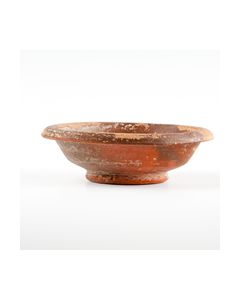 Schälchen aus Ordona (Herdonia), Süditalien
Aus der Sammlung von Captain Byron Farwell. Kunstvoll geformtes Schälchen mit rot-braunem Überzug. 5. - 4. Jh. v. Chr. Publiziert.
Price: on request Römische Silberfibel aus Pannonien
Gewandnadel vom Typ der kräftig profilierten Fibeln bzw. der Trompetenfibeln. Spezifische Variante der Jahre 200 bis 250 n. Chr. aus den pannonischen Provinzen.
Price: on request Canosiner Oinochoe
Filigrane Weinkanne mit kleeblattförmiger Öffnung. Auf dem Fuß und Körper Spuren roter Bemalung. Sepulkralhintergrund, 350 - 300 v. Chr.
Price: on request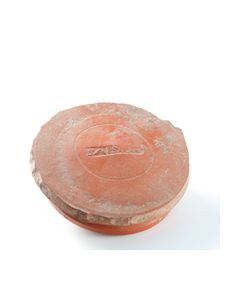 Terra Sigillata Boden mit Stempel MOXSIVS
Aus der Werkstatt des Moxsius aus Trier. Perfektes rund, Standring vollständig erhalten, schöner, tiefer Stempel.
Price: on request Oinochoe aus Etrurien
Oinochoe vom Typ "bocca a cartoccio". 4. - 3. Jh. v. Chr. Aus deutscher Sammlung, mit weit zurückverfolgbarer Provenienz.
Price: on request Früher Fibeltyp mit Zierplatte
Antike Fibel mit emaillierter Zierplatte. Schön patinierter Bronzekörper mit reichem Dekor. 2. Jh. v. Chr. bis 1. Jh. n. Chr.
Price: on request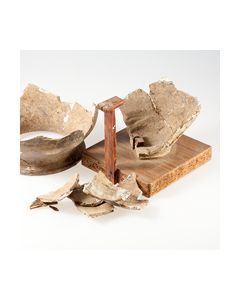 Restaurierte Umritzer-Ware auf Ständer
Römischer Topf mit abegesetztem hals und umgelegtem Rand. Typ Niederbieber 87. Ende 2. bis Anfang 3 Jahrhundert n. Chr.
Price: on request Egyptian pataikos
God or god-like dwarf. The figurine was supposed to have a magical protective function. 26th to 30th dynasty of Ancient Egypt. From a British private museum.
Price: on request Egyptian amulet of a hare
This type of amulet was popular in the Late Dynastic Period of Ancient Egypt. It should endow its wearer with fertility and rapidity of movement. The piece was exhibited in an early 20th century private museum.
Price: on request Egyptian pataikos
God or god-like dwarf. The figurine was supposed to have a magical protective function. 26th to 30th dynasty of Ancient Egypt. From a British private museum.
Price: on request Egyptian faience figurine of the dwarf god pataikos
The figurine was supposed to have a magical protective function. 26th to 30th dynasty of Ancient Egypt. From a British private museum.
Price: on request Campanian bail amphora with parallel pieces in Capua museum
Two stilistically identical pieces from the same hand or workshop are on display in Capua in the Museo Campano. Perfectly preserved piece, very rare in such condition.
Price: on request Isis / Aphrodite from the Fayum
Ovales Gesicht mit archaisierenden Zügen. Hoher Kranz, darauf ein mit Isis-Emblemen geschmückter Kalathos. Interessantes, ungewöhnliches Fragment.
Price: on request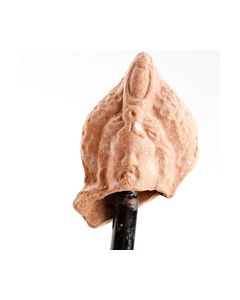 Clay figurine of Harpokrates from the Fayum
Exzellente Erhaltung. Sehr fein gearbeitetes Stück, auch kleine Details von Mimik und Kopfschmuck sind vollständig herausgearbeitet.
Price: on request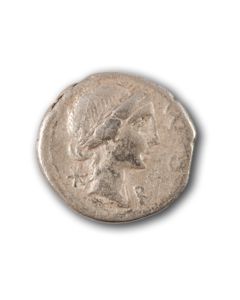 Aemilius Lepidus denarius - equestrian statue
Reiterstatue eines gepanzerten Reiters mit Lanze auf einem aus drei Bögen bestehenden Bau, in den Bögen L E P. Fast vz, schöne helle Patina.
Price: on request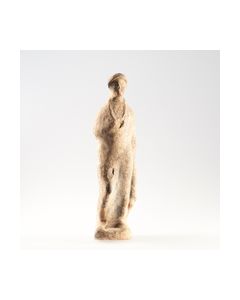 Große hellenistische Terrakottastatuette eines Manteljünglings
Bildnisstatuette mit Sockel. Aufrecht stehende Figur rechtes Knie ist leicht gebeugt, das Haar ist kunstvoll frisiert. Exzellenter Zustand, keine Schäden.
Price: on request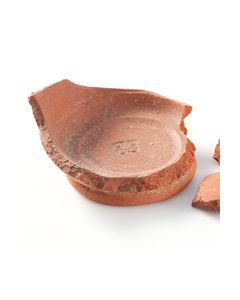 Terra Sigillata Boden mit Symbolstempel
Stempel aus fünf Punkten, quadratisch angeordnet. Vom mittleren Punkt gehen vier Strahlen aus, welche einen stilisierten Stern bilden.
Price: on request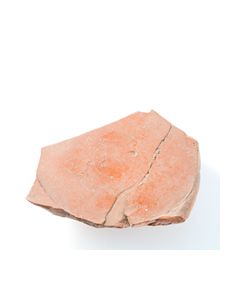 Terra Sigillata Boden mit Stempel COCVSF
Cocus arbeitete in den Argonnen und in Blickweiler, später dann auch in Trier. Restauriert aus 2 Stücken.
Price: on request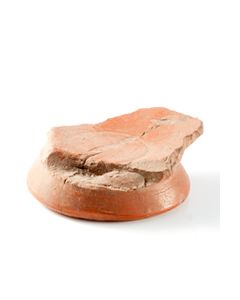 Terra Sigillata Boden mit Stempel CENSORIN
Mehrere Werkstätten, die einen Censorinos-Stempel benutzten, sind bekannt. Datierung damit 2. Hälfte 1. - Ende 2. Jh. n. Chr.
Price: on request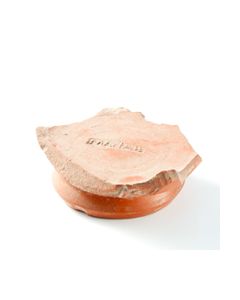 Terra Sigillata Boden mit Stempel MAITAFE
Doppelstempel. Römische Antike, möglicherweise 179 - 180 n. Chr. Sehr gute Erhaltung, Standring vollständig erhalten.
Price: on request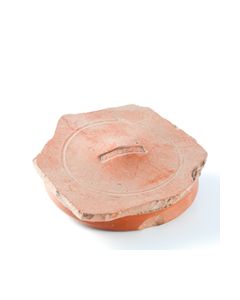 Terra Sigillata Boden mit Stempel MOXSIVSF
Aus der Werkstatt des Moxsius aus Trier. Großes, museumswürdiges Stück, Standring vollständig erhalten, tiefer Stempel.
Price: on request Kunstvoll verzierter Stilus
Römischer Wachstafelstift aus massiver Bronze. Hinten Ansatz für Radierungen. Hervorragender Zustand, originale Kette noch am Körper befestigt. 1. bis 3. Jh. n. Chr.
Price: on request Hellenistischer Fingerring aus Gold mit Intaglio
Ring aus massivem Gold. Intalgio aus türkisfarbenem Stein mit dunkelblauer Ader. Exzellent erhalten. Aus einer alten britischen Sammlung.
Price: on request Bronze statuette of nursing Isis
Isis is shown in a very typical depiction as a mother, the archetype of the later Christian Nursing Madonna. The bronze figurine dates to the 22nd to 31st dynasty of Ancient Egypt.
Price: on request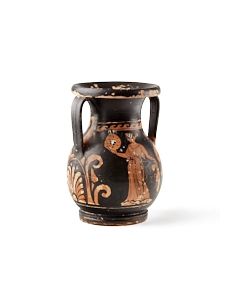 Perfectly preserved Apulian pelike
From the collection of Prof. Dr. Schmid, acquired 1977 at the Aloys Faust Gallery, Cologne. With ArtLoss Certificate.
Price: on request Egyptian ushabti for Ra-mes
The mummiform funerary figurine dates to the Late Period of ancient Egypt, 26th to 31st dynasty. It is remarkable that it probably originates from the burial of two brothers, Ra-mes and Somtus-tefnacht.
Price: on request Ushabti for Ra-mes
The mummiform funerary figurine dates to the Late Period of ancient Egypt, 26th to 31st dynasty. It is remarkable that it probably originates from the burial of two brothers, Ra-mes and Somtus-tefnacht.
Price: on request Egyptian ushabti for Somtus-tefnacht
The mummiform funerary figurine dates to the Late Period of ancient Egypt, 26th to 31st dynasty. It is remarkable that it probably originates from the burial of two brothers, Somtus-tefnacht and Somtus-tefnacht.
Price: on request Egyptian ushabti for Somtus-tefnacht
The mummiform funerary figurine dates to the Late Period of ancient Egypt, 26th to 31st dynasty. It is remarkable that it probably originates from the burial of two brothers, Somtus-tefnacht and Somtus-tefnacht.
Price: on request Egyptian ushabti for Somtus-tefnacht
The mummiform funerary figurine dates to the Late Period of ancient Egypt, 26th to 31st dynasty. It is remarkable that it probably originates from the burial of two brothers, Somtus-tefnacht and Somtus-tefnacht.
Price: on request Ushabti for Somtus-tefnacht
The mummiform funerary figurine dates to the Late Period of ancient Egypt, 26th to 31st dynasty. It is remarkable that it probably originates from the burial of two brothers, Somtus-tefnacht and Somtus-tefnacht.
Price: on request Egyptian ushabti for Somtus-tefnacht
The mummiform funerary figurine dates to the Late Period of ancient Egypt, 26th to 31st dynasty. It is remarkable that it probably originates from the burial of two brothers, Somtus-tefnacht and Somtus-tefnacht.
Price: on request Egyptian ushabti for Somtus-tefnacht
The mummiform funerary figurine dates to the Late Period of ancient Egypt, 26th to 31st dynasty. It is remarkable that it probably originates from the burial of two brothers, Somtus-tefnacht and Somtus-tefnacht.
Price: on request Egyptian ushabti for Somtus-tefnacht
The mummiform funerary figurine dates to the Late Period of ancient Egypt, 26th to 31st dynasty. It is remarkable that it probably originates from the burial of two brothers, Somtus-tefnacht and Somtus-tefnacht.
Price: on request Rechteck-Fibel aus dem 2. bis 3. Jh.
Antike römische Brosche. Dekorierte Platte mit Resten von Email. Typ aus dem 2. bis 3. Jh. n. Chr., 20mm x 33mm.
Price: on request