
Search results for: 'bei'
-
 Applique of the Horus son Duamutef
Bright turquise fayence. Duamutef is one of the four sons of Horus, well-known from the Canopic jars. He had an important protective function for the dead. Egypt, 8th to 4th cent. BC.
Price: on request Scarab with cartouche
Amulet from the Late Period. The stamp is in great condition. This scarab is described in the catalogue of Irène Gautier-Vodoz.
Price: on request Scarab with two cartouches of Thutmose III.
Interesting amulet from the New Kingdom or a later period made in archaic style. This scarab is described in the catalogue of Irène Gautier-Vodoz.
Price: on request Scarab from the Second Intermediate Period
The lower side shows a scarab, flanked by two uraeus snakes. 13th to 15th dynasty of ancient Egpyt. This scarab is described in the catalogue of Irène Gautier-Vodoz.
Price: on request Scarab with hieroglyphs arranged in a pattern
The lower side is skillfully decorated with hieroglyphs forming a geometric pattern. This scarab is described in the catalogue of Irène Gautier-Vodoz.
Price: on request Scarab with the Red Crown of Lower Egypt
The scene can be seen as worship of the Deshret, the symbol of the kings of Lower Egypt during Hyksos times. An interesting piece of evidence of the Hyksos rule over Egypt.
Price: on request Scarab with geometric motive
The lower side exhibits wrapped cords. A nice example of Egyptian art during the Second Intermediate Period. This scarab is described in the catalogue of Irène Gautier-Vodoz.
Price: on request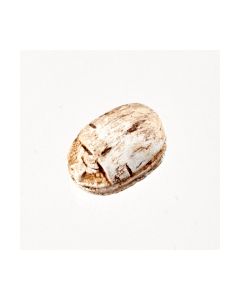 Scarab with lotus motive
Ancient Egyptian amulet seal with beautiful motive. Six lotus flowers are forming volutes. This scarab is described in the catalogue of Irène Gautier-Vodoz.
Price: on request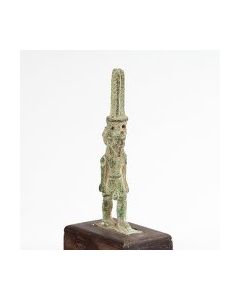 Egyptian bronze figurine of Nefertem
A major cult in Memphis saw the god related to fragrances. He is depicted here as youthful god in human form. Nice piece from the Late Period of ancient Egypt.
Price: on request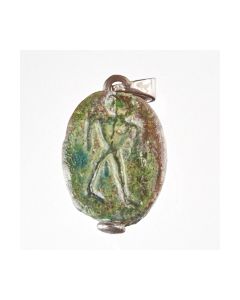 Scarab with standing figure
The scarab amulet dates to the Late Period. The lower side shows a stading figure, possibly the goddess Neith.
Price: on request Scarab with sphinx and Maat
The piece from the Ramesside period shows the goddess of truth and justice. Next to her is a name, probably that of pharao Mencheperre, who is famous as Thutmosis III.
Price: on request Scarab with pharao on throne
The piece dates to the Third Intermediate Period and was probably produced in Tanis. It shows a pharao with a subordinate.
Price: on request Kleine ägyptische Bronzefigur des Nefertem
Wunderbare Erhaltung mit schöner, braun-grün patinierter Oberfläche. Ca. 664 v. Chr. bis 332 v. Chr., Spätzeit des Alten Ägypten.
Price: on request Große ägyptische Bronzefigur des Nefertem
Wunderbare Erhaltung mit schöner, braun-grün patinierter Oberfläche. Ca. 664 v. Chr. bis 332 v. Chr., Spätzeit des Alten Ägypten. Massiv, Gewicht 49,7 Gramm.
Price: on request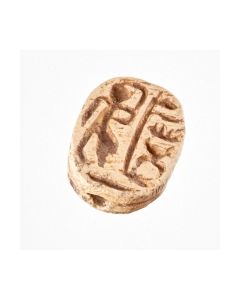 Scarab with cartouche
The scarab from the late Ramesside period shows a standing person. A cartouche in front bears the name of pharao Mencheperre, who was famous as Thutmose III.
Price: on request Scarab with hieroglyphic formula
The piece is from the Second Intermediate Period. It was probably meant as a good fortune or protective amulet.
Price: on request Scarab with magic spell
The hieroglyphs are of the so called anra design, a magic spell in the ancient Egyptian belief. The scarab is from the 13th to 15th dynasty. It is described in the catalogue of Gautier-Vodoz.
Price: on request Scarab with geometric motive
The motive exhibits two symmetry axes and at least six triangles. A wonderful artistic expression of the highly evolved Egyptian maths. This scarab is described in the catalogue of Irène Gautier-Vodoz.
Price: on request Scarab with lion
The scene shows a walking lion. It is framed by an oval cord. This scarab is described in the catalogue of Irène Gautier-Vodoz.
Price: on request Scaraboid from the Middle Kingdom
The stamp shows hieroglyphs with a title for the king of Upper and Lower Egypt. This scaraboid is described in the catalogue of Irène Gautier-Vodoz.
Price: on request Cowroid with Ankh and papyrus
The seal is engraved with the breath of life between two papyrus plants. This scaraboid is described in the catalogue of Irène Gautier-Vodoz.
Price: on request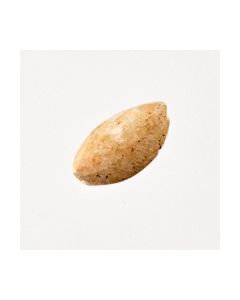 Cowroid with magic spell
The hieroglyphs of the anra type are to be interpreted as magical formula. From the Second Intermediate Period of ancient Egpyt. This scaraboid is described in the catalogue of Gautier-Vodoz.
Price: on request Scarab with magic formula
The stamp shows the anra formula in a cartouche. The amulet should thus serve a magic or ritual purpose for its owner.
Price: on request Egyptian protective amulet and seal with Pataikos
Dwarf god with knifes in his hands and Eye of Horus on his belly. The bottom side is made as a stamp seal with hieroglyphic inscription. Work of highest quality with fine details. Dating to the Third Intermediate Period.
Price: on request Scarab with cartouche of Thutmose III.
Amulet from the New Kingdom for one of the most popular rulers in ancient Egyptian history. This scarab is described in the catalogue of Irène Gautier-Vodoz.
Price: on request Scarab with falcon headed god
Interesting scarab amulet from the Second Intermediate Period. The seal shows a falcon headed creature facing an Egyptian cobra. This scarab can be found in the catalogue of Irène Gautier-Vodoz.
Price: on request Scarab with pattern of circles
The beetle stone bears a popular motive of the Middle Empire. A nice example of its kind. This scarab is described in the catalogue of Irène Gautier-Vodoz.
Price: on request Cowroid with decorated body
The cowroid has an interesting decoration across the upper surface. The lower surface is inscribed with hieroglyphs. This cowroid is discussed in the catalogue of Gautier-Vodoz.
Price: on request Scarab with breath of life
The Ankh on the bottom side of this ancient egyptian scarab symbolized life or afterlife. The symbol is framed by volutes.
Price: on request Egyptian Scarab
The Egyptian scarab has a central cross on the stamp side. The piece dates to the 21st dynasty of Ancient Egypt. It is described in the catalogue of Gautier-Vodoz.
Price: on request Bronze statuette of Osiris
The figurine is in exceptional condition with a nice patina. Late Dynastic period of Ancient Egypt, 664 to 332 BC.
Price: on request Große Statuette des Ptah-Sokar-Osiris
Gott der Erde und des Pflanzenwachstums, dargestellt in Mumienhaltung. 45cm hohe Holzfigur mit Resten vom Bemalung. Spätzeit bis ptolemäische Zeit, 664 bis 30 v. Chr.
Price: on request