
Search results for: 'mit'
-
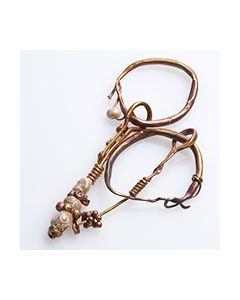 Paar römischer Perlenohrringe aus Gold
Filigraner Ohrschmuck aus der römischen Kaiserzeit. Fein gearbeitet, antikes Zeugnis hoher römischer Handwerkskunst. Museale Erhaltung, nicht restauriert.
Price: on request Roman silver Eros medaillon
Perfectly preserved and nicely centered piece with impressive patina. Beautiful work of art, fine details.
Price: on request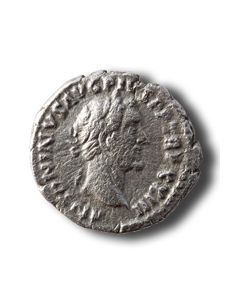 Antoninus Pius - Denar
Rom, 159 - 160 n. Chr. Revers: Salus. Referenzen: RIC 304, RSC 735, Zustand: ss-
Price: on request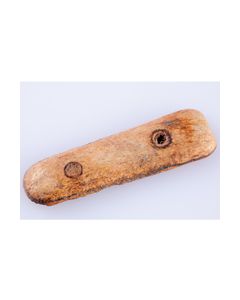 Römischer Messergriff aus Bein
Museale Erhaltung. Fundort: Raum Xanten.
Price: on request Mesopotamian cylinder seal
White cylinder seal dating to the Akkadian period. A mythological scene is engraved into the cylindrical body.
Price: on request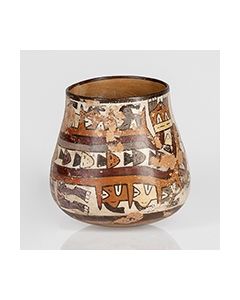 Beaker of the Nazca culture
Elegant vessel made by the precolumbian Nazca culture. The outside is decorated by a polychrome szene of geometric patterns and abstractions of animals and faces.
Price: on request Amphora with beautiful marina patina
Table amphora, or vessel for transport of particularly precious goods. The beautiful dense marine patina makes this vase a true eye-catcher. From the Austrian collection of Prof. Ritschel, carrier of the Large Cross of Honor of the Austrian Republic and many other prizes and honors.
Price: on request Scarab with cartouche
Amulet from the Late Period. The stamp is in great condition. This scarab is described in the catalogue of Irène Gautier-Vodoz.
Price: on request Cypriot bowl from the famous Severis collection
Perfectly preserved piece with very vivid bichrome decoration. Ex Christie's.
Price: on request Pair of pins with chain
The pair of pins dates to the early Iron Age of Luristan. It is made from Bronze and Iron. This state of preservation is extremely rare for composite objects.
Price: on request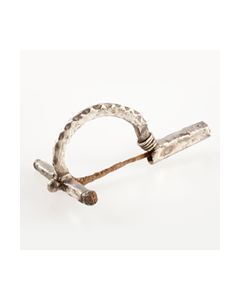 Silberne Armbrust-Fibel um 300 n. Chr.
Römische Fibel vom Typ der Armbrust-Fibeln. Massives Silber, 14,6g, 280 bis 320 n. Chr. Hervorragender Zustand.
Price: on request Porzellanteller der Qing-Dynastie, Wrackfund
Chinesische Jingdezhen-Manufaktur der Yongzheng-Epoche, um 1725. Archäologisch dokumentierter Fund aus dem vietnamesischen Meer.
Price: on request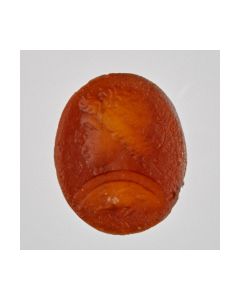 Intaglio with a Greek hero and Pegasos emblem
Magnificent miniature work of art from the height of italic glass intaglio production. It shows a Greek young man. His shield has a winged horse as an emblem.
Price: on request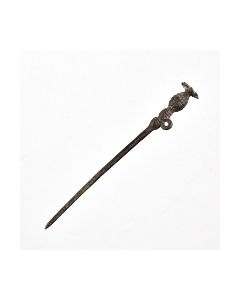 Luristan pin with floral decoration
Well preserved piece that impressively demonstrates the high quality of Luristan metal works.
Price: on request Roman bronze strainer from "Museum fuer Morgenlandfahrer"
Large piece in very good condition with nice patina. On display in "Ex Oriente Lux" exhibition, published in the corresponding catalogue.
Price: on request Münze zu 8 Reales - "Piece of eight", auch bekannt als "Piratengeld"
Sevilla, Philipp IV, 1621-65 n. Chr. Außergewöhnlich gute Erhaltung. Unsterblich gemacht in Stevensons Meisterwerk "Die Schatzinsel".
Price: on request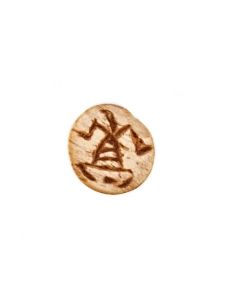 Western Asiatic button seal with scorpion
Interesting button shaped seal from the time of the ancient Assyrian trade settlements in Syria and Anatolia. 19th to 18th cent. BC. From the Dr. Langenkamp collection, with a scientific note from Prof. Mayer-Opificius.
Price: on request Neo-Assyrian cylinder seal
Wonderful seal with winged hybrid beasts. It was made in the Neo-Assyrian Empire, the first real empire in history.
Price: on request Ägyptische Totenfigur aus der 30. Dynastie
Uschebti aus mintgrüner Fayence. Typischer Bart und dreigeteilte Perrücke. Die Totenfigur datiert in ihrer einfachen Form aus der Spätzeit des Alten Ägyptens.
Price: on request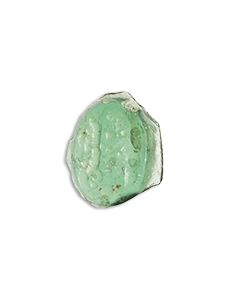 Roman intaglio with Faustulus
The intaglio shows a bearded man resting on his cane. It might be a depiction of Faustulus. According to Roman mythology the foster father of Romulus and Remus.
Price: on request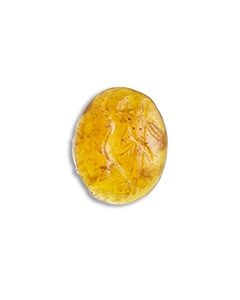 Roman intaglio with dancing Maenad
The high quality work shows a dancing Maenad with her head thrown back in ecstasy. Beautiful yellow glass.
Price: on request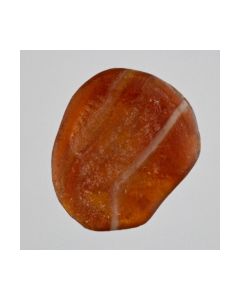 Roman intaglio with greek style bust
Full beard and curly hair held by a taenia or diadem. The portrait resembles posthumous representations of Philipp II. made by his son Alexander the Great.
Price: on request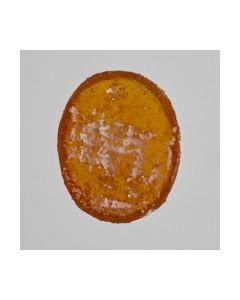 Roman intaglio with Poseidon
The naked god of the see from Greek mythology is standing on a bow symbolizing his power over seafaring. The scene is framed by ascending air bubbles.
Price: on request Large decorated bowl
Found in Southern Germany. From the well documented Hugo Rehorik collection.
Price: on request Roman factory lamp
Found in Southern Germany. From the well documented Hugo Rehorik collection.
Price: on request Roman Terra Sigillata bowl
Found in Southern Germany. From the well documented Hugo Rehorik collection.
Price: on request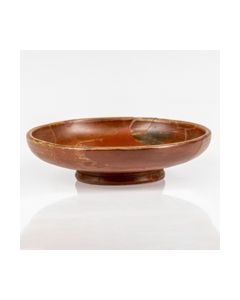 Roman Terra Sigillata bowl
Found in Southern Germany. From the well documented Hugo Rehorik collection.
Price: on request Ägyptischer Uschepti, intensive Türkisfarbe
Ägyptische Totenfigur aus der Spätzeit. Besonders intensive, türkisschimmernde Fayence. 113 mm hoch.
Price: on request Clay rattle shaped as a bird from the Lusatian culture
Rassel in Form eines Hauses. Aus dem Übergang der Späten Bronzezeit zur Frühen Eisenzeit Nordmittel-Europas. 1300 bis 500 v. Chr.
Price: on request Old Babylonian cuneiform tablet
Clay tablet with cuneiform administrative or legal text. Dating to the reign of Ammi-Ditana, a king of the first dynasty of Babylon.
Price: on request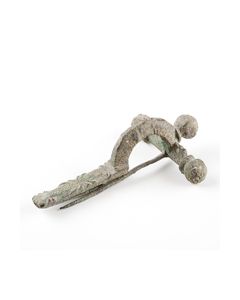 Römische Armbrustfibel
Prominente kugelförmige Knöpfe. Direkter Vorläufer der Zwiebelknopffibeln. Soldatenfibel aus der 1. Hälfte des 4. Jh. n. Chr. 76mm lang.
Price: on request Double spiral pendant from Bronze Age Central Europe
Typical decorative element of a wealthy woman's dress in the European Middle Bronze Age. Several of these spiral pendants were worn around the waist. Similar to belt mounts or charms. 1500 to 1200 BC.
Price: on request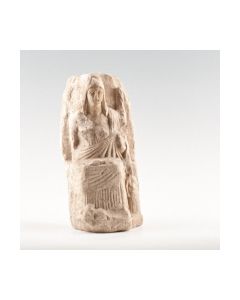 Stone statue of a seated Isis
Very fine condition, from an important London collection
Price: on request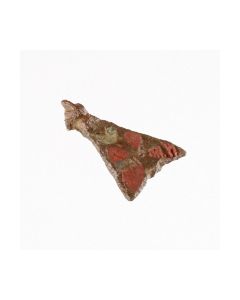 Roman cicada brooch
Brooch in the shape of an insect. Popular type in the northern Roman provinces during the 2nd century.
Price: on request Bronze socketed axe head from large collection
Sehr schönes Exemplar eines Bronzebeils vom Typ der sogenannten Tüllenbeile. Es stammt aus einer gut geführten Sammlung, die einen breiten Querschnitt europäischer Tüllenbeile abbildet.
Price: on request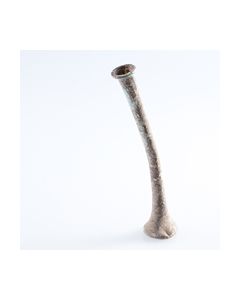 Römisches Unguentarium, Provinz Judäa
1. bis 3. Jh. n.Chr., Levante, Zeit römischer Herrschaft. Fein gearbeitetes, Fläschchen, ungewöhnliche Form. Höhe 130 mm, Durchmesser am Standkegel 25 mm.
Price: on request