
Search results for: 'mit'
-
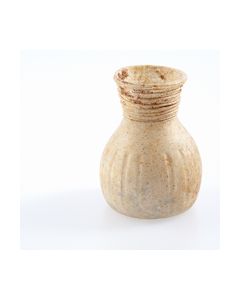 Verziertes römisches Glasfläschchen
Kunstvolles antikes Glas. Um den Hals spiralförmige Verzierung aus aufgeschmlozenem Glasfaden. Vertikale Zierrippen um den Körper umlaufend. Levante.
Price: on request Wasserkrug oder Weinkrug, Eisenzeit IIC
Gefäß aus einer historisch interessanten Epoche der Levante. Vermutlich als Haushaltsgefäß für Wasser oder Wein verwendet.
Price: on request Workpiece of a Roman intaglio
This ancient intaglio from Roman times shows a standing figure. The glass paste has a beautiful blue colour.
Price: on request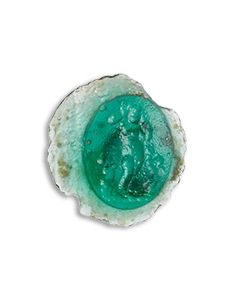 Roman intaglio in beautiful turquoise
The scene shows a standing Aphrodite surrounded by Erotes. Quality glass paste dating to Roman Imperial times.
Price: on request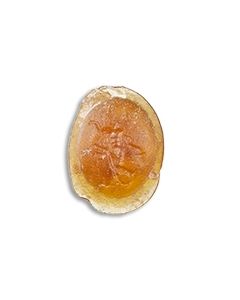 Roman intaglio with Dionysos
The glass paste shows the god of wine and ritual madness with his staff leaning against a column. Roman Imperial times.
Price: on request Roman intaglio with interesting scene
The scene is moulded in great detail into the orange brown glass paste. It shows a young man holding a so-called aplustre.
Price: on request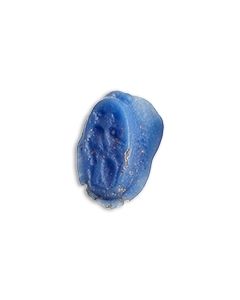 Roman intaglio with two warriors
Extremely nice sparkling blue glass paste. The scene is similar to a Roman interpretation of the Homeric epics.
Price: on request Bohrer aus dem Mesolithikum
Bohrer aus Feuerstein, Kongemose Kultur. Fundort Hindsholm, Fünen, Dänemark.
Price: on request Scarab with sphinx
The stamp depicts a human headed sphinx walking towards the Ankh symbol of life. The amulet should exert a protective function on the one carrying or owning it.
Price: on request Rare plate brooch with millefiori enamel
Brooch from Roman Imperial time, found in Roman Britain. It is an extremely rare and interesting type. The brooch is published in Richard Hattatt's standard work "Ancient Brooches and Other Artefacts" and discussed in detail.
Price: on request Egyptian ushabti for Ra-mes
The mummiform funerary figurine dates to the Late Period of ancient Egypt, 26th to 31st dynasty. It is remarkable that it probably originates from the burial of two brothers, Ra-mes and Somtus-tefnacht.
Price: on request Ushabti for Ra-mes
The mummiform funerary figurine dates to the Late Period of ancient Egypt, 26th to 31st dynasty. It is remarkable that it probably originates from the burial of two brothers, Ra-mes and Somtus-tefnacht.
Price: on request Egyptian ushabti for Somtus-tefnacht
The mummiform funerary figurine dates to the Late Period of ancient Egypt, 26th to 31st dynasty. It is remarkable that it probably originates from the burial of two brothers, Somtus-tefnacht and Somtus-tefnacht.
Price: on request Egyptian ushabti for Somtus-tefnacht
The mummiform funerary figurine dates to the Late Period of ancient Egypt, 26th to 31st dynasty. It is remarkable that it probably originates from the burial of two brothers, Somtus-tefnacht and Somtus-tefnacht.
Price: on request Egyptian ushabti for Somtus-tefnacht
The mummiform funerary figurine dates to the Late Period of ancient Egypt, 26th to 31st dynasty. It is remarkable that it probably originates from the burial of two brothers, Somtus-tefnacht and Somtus-tefnacht.
Price: on request Ushabti for Somtus-tefnacht
The mummiform funerary figurine dates to the Late Period of ancient Egypt, 26th to 31st dynasty. It is remarkable that it probably originates from the burial of two brothers, Somtus-tefnacht and Somtus-tefnacht.
Price: on request Egyptian ushabti for Somtus-tefnacht
The mummiform funerary figurine dates to the Late Period of ancient Egypt, 26th to 31st dynasty. It is remarkable that it probably originates from the burial of two brothers, Somtus-tefnacht and Somtus-tefnacht.
Price: on request Egyptian ushabti for Somtus-tefnacht
The mummiform funerary figurine dates to the Late Period of ancient Egypt, 26th to 31st dynasty. It is remarkable that it probably originates from the burial of two brothers, Somtus-tefnacht and Somtus-tefnacht.
Price: on request Egyptian ushabti for Somtus-tefnacht
The mummiform funerary figurine dates to the Late Period of ancient Egypt, 26th to 31st dynasty. It is remarkable that it probably originates from the burial of two brothers, Somtus-tefnacht and Somtus-tefnacht.
Price: on request Six Greek leaden sling bullets
Almond shaped lead bullets of a slinger. They were part of the equipment of a Greek army from the late 5th to the 2nd century BC.
Price: on request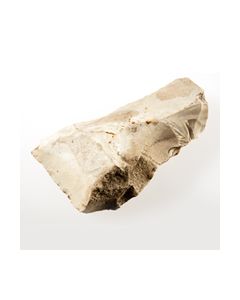 Flachgeschlagenes Scheibenbeil aus Dänemark
Früher Beiltyp der nordeuropäischen Steinzeit. Ertebølle-Kultur. 5400 v. Chr. bis 4100 v. Chr. Spätmesolithikum. Fund von der Insel Seeland, Dänemark.
Price: on request Republikanischer Denar des L Calpurnius Piso Frugi
Nach rechts galoppierender Reiter, im Rücken Palmzweig, darüber Dreizack. Aus Generationensammlung, vom Leibarzt des Prinzen Karl von Preußen im 19. Jh. begründet.
Price: on request Großes kanaanitisches Skarabäus Siegel
Siegel und Amulett aus Steatit, mittlere Bronzezeit, 1800 bis 1500 v.Chr., Levante. Restaurierte, aber vollständig erhaltene Hieroglyphen unterseitig. Länge 19mm, Breite 16mm.
Price: on request Egyptian scarab with papyrus plants
Scarab amulet made of bright, almost white steatite. 13th to 15th dynasty. This scarab is described in the catalogue of Irène Gautier-Vodoz.
Price: on request Scarab with scarab motive
The stamp side shows a scarab with two uraeus snakes. This scarab is described in the catalogue of Irène Gautier-Vodoz.
Price: on request Scaraboid with twisted cord
Scaraboid seal amulet with a twisted cord motive. This scarab is described in the catalogue of Irène Gautier-Vodoz.
Price: on request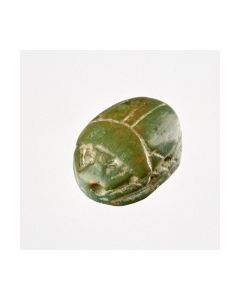 Scarab with Amun inscription
Bearing the hieroglyphs "the god Amun of Theben is lord". From the Late Period of ancient Egypt. Beautiful green stone.
Price: on request Clay figurine of Harpokrates from the Fayum
Sehr fein gearbeitetes Stück, auch kleine Details von Mimik und Kopfschmuck sind vollständig herausgearbeitet und exzellent erhalten.
Price: on request Neolithic thin butted axe head
Dünnnackige Beilklinge der Trichterbecherkultur, Dolmenzeit bis Ganggrabzeit. Präzise aus schönen, grauen Flint gearbeitet.
Price: on request Rectangular axe head
Dünnnackiger Beilkopf der Trichterbecherkultur, Dolmenzeit bis Ganggrabzeit. Sehr schön bearbeiteter grauer Flint.
Price: on request Spitznackiges Beil der Älteren Trichterbecherkultur
Spitzovales Längsprofil, grob bearbeitete Seiten, teilweise poliert. Typische für die Ältere Trichterbecherkultur, 4200 bis 3300 v. Chr.
Price: on request Gruppe von 3 Bronzefibeln
800 v.Chr. bis 300 n.Chr. , Eisenzeit. Diverse Typen einschließlich hellenistischer und römischer Fibeln. Nadeln fehlend oder restauriert.
Price: on request Scarab with geometric motive
The lower side exhibits a symmetrical arrangements of cords, two of which are wrapped around each other. This scarab is described in the catalogue of Irène Gautier-Vodoz.
Price: on request Egyptian ushabti for Ra-mes
The mummiform funerary figurine dates to the Late Period of ancient Egypt, 26th to 31st dynasty. It is remarkable that it probably originates from the burial of two brothers, Ra-mes and Somtus-tefnacht.
Price: on request Denar, Marcus Ulpius Traianus , 98 - 117 n. Chr.
Av: IMP CAES NER TRAIANO OPTIMO AVG GER DAC. Drapierte Panzerbüste mit Lorbeerkranz nach rechts. Rv: P M TR P COS VI P P SPQR/ FORT RED. Fortuna nach links thronend, hält Füllhorn und Ruder. RIC 319 var. (Aureus). 3,4g, 17mm. Äußerst selten.
Price: on request
Große Gruppe römischer Tonziegel, meist gestempelt2012 aus dem Privatbesitz T. Bak erworben, an welchen in dritter Familiengeneration die Sammlung von Professor Josef Lambinet übergegangen ist. Nach Angaben und Dokumenten von Prof. Lambinet wurden die Objekte um 1920 in Mainz gefunden, unmittelbar an der römischen Wasserleitung Mainz-Zahlbach.
Price: on request