
Search results for: 'bronze bei'
-
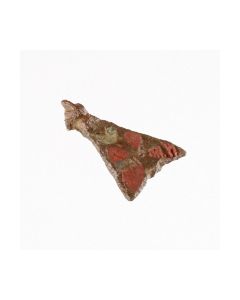 Roman cicada brooch
Brooch in the shape of an insect. Popular type in the northern Roman provinces during the 2nd century.
Price: on request Roman surgical probe made of silver
The so-called specillum was standard issue for roman doctors. Similar probes are still in use today. Ancient surgical instruments made of silver are extremely rare.
Price: on request Interessanter Beilkopf aus dem späten Neolithikum
Bemerkenswert ist die grobe Bearbeitung ohne Politur, möglicherweise handelt es sich um ein unfertiges Werkstück. Etwa 2800 bis 2300 v. Chr.
Price: on request Beilkopf aus der Jungsteinzeit
Klinge eines dünnblattigen Dicknackenbeils. Trapezförmiger Körper mit grob bearbeiteten Seiten. Ganggrabzeit bis Dolchzeit.
Price: on request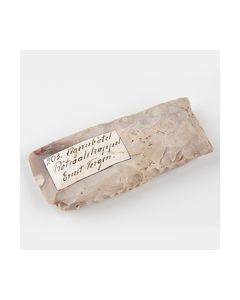 Flaches Rechteckbeil der Trichterbecherkultur
Alle Seiten fein bearbeitet, jedoch nur die Schneide poliert. Flache, dünnnackige Klinge. Gefunden um 1900 in Negernbötel, Schleswig-Holstein.
Price: on request Impressive Roman imperial bronze oil lamp
Beautiful patina, very well preserved. With large leaf-shaped handle. Dating to 1st - 2nd century AD.
Price: on request Schmales Dicknackenbeil der Trichterbecherkultur
Der kleine und elegante Beilkopf beeindruckt durch seine gute Erhaltung und ausgewogenen Proportionen. In diesem Zustand absolut museumswürdig! Ganggrabzeit bis Dolchzeit.
Price: on request Kleines Trapezbeil der Trichterbecherkultur
Klinge eines kleinen Beils mit dünnem Nacken aus schönem grauen Flint. Vermutlich für feine Arbeiten eingesetzt, z.B. zum Häuten. Dolmenzeit bis Ganggrabzeit.
Price: on request Dicknackenbeil aus dem Neolithikum
Klinge eines dünnblattigen Dicknackenbeils. Trapezförmiger Körper mit schön polierten Breitseiten. Ganggrabzeit bis Dolchzeit.
Price: on request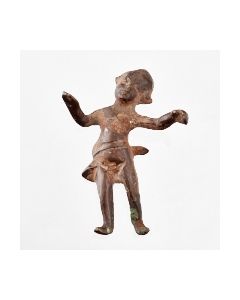 Roman bronze from famous "Museum fuer Morgenlandfahrer"
Massive bronze figurine of a dancing boy, beautiful dark patina, 1st-2nd century AD
Price: on request Römische Scheibenfibel in Millefiori-Technik
Kunstvolle Fibel aus der Kaiserzeit. Großartiges Beispiel für die antike Millefiori-Technik, die erst wieder in der Neuzeit aufgegriffen und von venezianischen Glaskünstlern zu einer neuen Blüte geführt wurde.
Price: on request Roman fibula with beautiful enamel
Elaborate work dating to the 2nd century AD. The well preserved enamel is a testimony to the colourful world of ancient art.
Price: on request Gorgeous Roman Imperial fibula
The large bow is dominated by colourful enamel. It is a brooch type that developed during the 1st cent. AD in Central Europe.
Price: on request Neolithic thick butted axe head
Klinge eines dünnblattigen Dicknackenbeils. Trapezförmiger Körper aus schönem grauen Flint mit kleinen Einschlüssen. Ganggrabzeit bis Dolchzeit.
Price: on request Spitznackiges Beil der Älteren Trichterbecherkultur
Spitzovales Längsprofil, grob bearbeitete Seiten, teilweise poliert. Typische für die Ältere Trichterbecherkultur, 4200 bis 3300 v. Chr.
Price: on request Trapezförmiger Beilkopf der Trichterbecherkultur
Fein polierte Breitseiten, unpolierte Schmalseiten. Schöner Flint mit heller Steinader an der Schneide. Gefunden um 1900 in Schackendorf, Schleswig-Holstein.
Price: on request Pair of earrings from Luristan
The earrings date to the early Iron Age of Luristan. The type of jewellery is rare for this region.
Price: on request Roman fibula in the shape of a rabbit
Nice zoomorphic roman fibula made of bronze with enamel inlays depicting the young of the rabbit. Found near the Limes fortifications Pfoerring and Eining in Germany.
Price: on request Roman sandal sole type fibula
Die Form wird in der Literatur als Schuh- oder Sandalensohle bezeichnet. Der sehr dekorative Fibeltyp war extrem beliebt und im zweiten Jahrhundert weit verbreitet. Er stammt aus den nördlichen römischen Provinzen.
Price: on request Rare frog fibula
Zoomorphic fibula dating to the Roman Principate. Very nice enameled work. Rare variant of this popular fibula type from Roman Gaul.
Price: on request Lapis lazuli head of a pharao
Extremely rare finely carved royal head made of blue stone with bronze beard. Late Period to Ptolemaic period of ancient Egypt.
€3,450 Cup of the Urnfield culture
Ceramic vessel dating to the transition period between Bronze Age and Iron Age in Central Europe. 1200 to 800 BC. Found in an urnfield in Austria.
Price: on request Gallo-Roman animal fibula
Zoomorphe Fibel mit Wildtier als Motiv. Schmuckstück mit religiöser Symbolik, vergleichbar einem Kreuzanhänger bei heutigen Christen. Gefertigt im 1. bis 3. Jh. n. Chr. in Gallien.
Price: on request Roman discus fibula with color glass paste
Spannende Fibel mit Sterndekor und Glaspaste. Eine Weiterentwicklung keltischen Kunsthandwerks in der Zeit römischer Herrschaft. Gut dokumentierter Typ aus dem 2. Jh. v. Chr. mit Verbreitung in weiten Teilen Europas.
Price: on request Juglet from the Urnfield period
Small juglet dating to the transition period between Bronze Age and Iron Age in Central Europe. 1200 to 800 BC. Found in an urnfield in Lower Austria.
Price: on request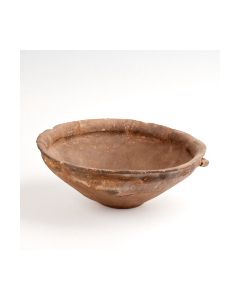 Big bowl from the Urnfield period
Ceramic vessel dating to the transition period between Bronze Age and Iron Age in Central Europe. 1200 to 800 BC. Found in an urnfield in Lower Austria.
Price: on request Big Cup of the Urnfield culture
Ceramic vessel dating to the transition period between Bronze Age and Iron Age in Central Europe. 1200 to 800 BC. Found in an urnfield in Austria.
Price: on request Cup of the Urnfield culture
Ceramic vessel dating to the transition period between Bronze Age and Iron Age in Central Europe. 1200 to 800 BC. Found in an urnfield in Austria.
Price: on request Cult vessel of the Yortan culture
Wonderful double vessel with incised decoration. From the Early Bronze Age of Western Anatolia.
Price: on request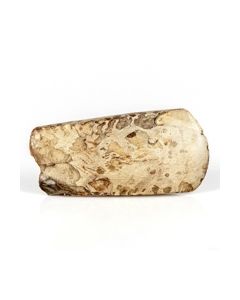 Neolithic thin butted axe head
Axe from the Early Neolithic is made of beautiful reddish brown flint with inclusions. Found in Northern Germany.
Price: on request Bronze Age axe head
Very well preserved axe head. Late Bronze Age, 10th to 9th cent. BC.
Price: on request Rare plate brooch with millefiori enamel
Brooch from Roman Imperial time, found in Roman Britain. It is an extremely rare and interesting type. The brooch is published in Richard Hattatt's standard work "Ancient Brooches and Other Artefacts" and discussed in detail.
Price: on request