
Search results for: 'bei'
-
 Kleine ägyptische Bronzefigur des Nefertem
Wunderbare Erhaltung mit schöner, braun-grün patinierter Oberfläche. Ca. 664 v. Chr. bis 332 v. Chr., Spätzeit des Alten Ägypten.
Price: on request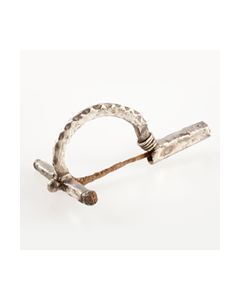 Silberne Armbrust-Fibel um 300 n. Chr.
Römische Fibel vom Typ der Armbrust-Fibeln. Massives Silber, 14,6g, 280 bis 320 n. Chr. Hervorragender Zustand.
Price: on request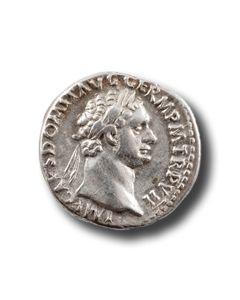 Vorzüglicher Denar des Domitian
Minerva n. l. stehend, hält Lanze und Blitzbündel, im Hintergrund zu ihren Füßen Schild. RIC 590; RSC 234; Absolut vorzüglich.
Price: on request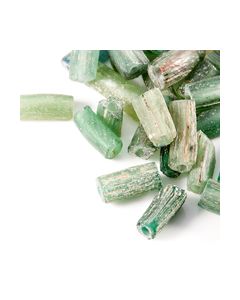 Römische Perlen aus grünem Glas
längliche Perlen aus grünem Glas in vielen Farbabstufungen. Einzelverkauf, Preis pro Stück, noch 3 Stk verfügbar.
Price: on request Große ägyptische Bronzefigur des Nefertem
Wunderbare Erhaltung mit schöner, braun-grün patinierter Oberfläche. Ca. 664 v. Chr. bis 332 v. Chr., Spätzeit des Alten Ägypten. Massiv, Gewicht 49,7 Gramm.
Price: on request Imposanter neolithischer Dolch Typ II A
Orange-gelber bifazieller Flintdolch mit Seepatina. 18cm lang. Endneolithikum, Fund aus Bredeshave, Dänemark.
Price: on request Tafel mit assyrischem Gesetzestext in Keilschrift aus alter deutscher Sammlung
Fragment einer Tontafel mit altassyrischem Verwaltungs- oder Gesetzestext. Mitte bis Ende des 2. Jt. v. Chr.
Price: on request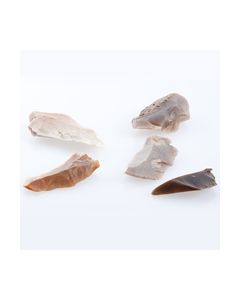 Steinwerkzeuge, Trichterbecher-Kultur
Gruppe von 5 deutlich bearbeiteten Steinwerkzeugen. Um 3400 v. Chr., von einem Wohnplatz der Älteren Trichterbecher-Kultur, Frühneolithikum (Fuchsbergstufe).
Price: on request Steinwerkzeuge, Trichterbecher-Kultur
Gruppe von 5 deutlich bearbeiteten Steinwerkzeugen. Um 3400 v. Chr., von einem Wohnplatz der Älteren Trichterbecher-Kultur, Frühneolithikum (Fuchsbergstufe).
Price: on request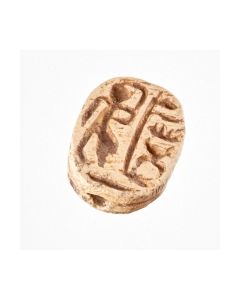 Scarab with cartouche
The scarab from the late Ramesside period shows a standing person. A cartouche in front bears the name of pharao Mencheperre, who was famous as Thutmose III.
Price: on request Scarab with hieroglyphic formula
The piece is from the Second Intermediate Period. It was probably meant as a good fortune or protective amulet.
Price: on request Scarab with magic spell
The hieroglyphs are of the so called anra design, a magic spell in the ancient Egyptian belief. The scarab is from the 13th to 15th dynasty. It is described in the catalogue of Gautier-Vodoz.
Price: on request Scarab with geometric motive
The motive exhibits two symmetry axes and at least six triangles. A wonderful artistic expression of the highly evolved Egyptian maths. This scarab is described in the catalogue of Irène Gautier-Vodoz.
Price: on request Scarab with lion
The scene shows a walking lion. It is framed by an oval cord. This scarab is described in the catalogue of Irène Gautier-Vodoz.
Price: on request Scaraboid from the Middle Kingdom
The stamp shows hieroglyphs with a title for the king of Upper and Lower Egypt. This scaraboid is described in the catalogue of Irène Gautier-Vodoz.
Price: on request Cowroid with Ankh and papyrus
The seal is engraved with the breath of life between two papyrus plants. This scaraboid is described in the catalogue of Irène Gautier-Vodoz.
Price: on request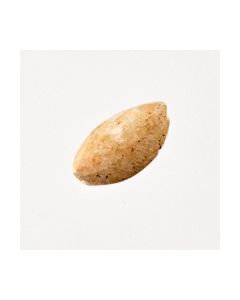 Cowroid with magic spell
The hieroglyphs of the anra type are to be interpreted as magical formula. From the Second Intermediate Period of ancient Egpyt. This scaraboid is described in the catalogue of Gautier-Vodoz.
Price: on request Roman intaglio with interesting scene
The scene is moulded in great detail into the orange brown glass paste. It shows a young man holding a so-called aplustre.
Price: on request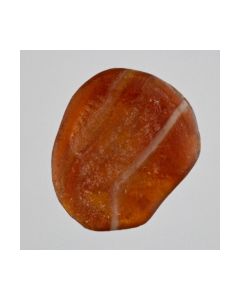 Roman intaglio with greek style bust
Full beard and curly hair held by a taenia or diadem. The portrait resembles posthumous representations of Philipp II. made by his son Alexander the Great.
Price: on request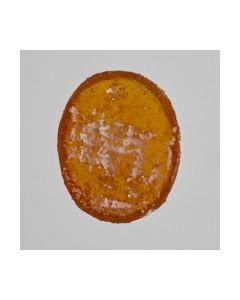 Roman intaglio with Poseidon
The naked god of the see from Greek mythology is standing on a bow symbolizing his power over seafaring. The scene is framed by ascending air bubbles.
Price: on request Cylinder Seal from the late Uruk period
Small seal made of appealing igneous rock. The engraved wave pattern is typical for the late Uruk period of Mesopotamia.
Price: on request Scarab with magic formula
The stamp shows the anra formula in a cartouche. The amulet should thus serve a magic or ritual purpose for its owner.
Price: on request Blaue römische Mosaikperlen
1 bis 2 Jh. n. Chr., längliche Perlen aus blauem Glas mit polychromen Auflagen. Einzelverkauf, Preis pro Stück.
Price: on request Sasanidisches Stempelsiegel mit Lotusblume
Weißer Chalcedon. Der Stempel zeigt eine stilisierte Lotusblume. 224 n.Chr. bis 651 n. Chr. Zeit des Sasanidenreiches.
Price: on request Sasanidisches Stempelsiegel mit Stern
Weißer Chalcedon. Der Stempel zeigt einen Stern im Kreis. 224 n.Chr. bis 651 n. Chr. Zeit des Sasanidenreiches.
Price: on request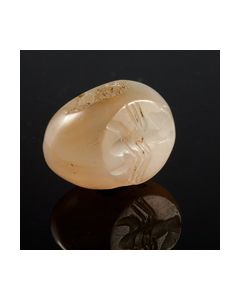 Sasanidisches Stempelsiegel mit Skorpion
Weißer Chalcedon. Der Stempel zeigt einen stilisierter Skorpion. 224 n.Chr. bis 651 n. Chr. Zeit des Sasanidenreiches.
Price: on request Sassanidisches Stempelsiegel mit männlicher Büste
Orangefarbener Karneol mit großer Öse. Der Stempel zeigt eine männliche Büste. 224 - 651 n. Chr. Aus Sammlung der Fortuna Fine Arts Gallery, NY City.
Price: on request Sassanidisches Stempelsiegel mit Lotusblume
Orangefarbener Karneol, der Stempel zeigt eine stilisierte Lotusblume. Musealer Zustand. Aus Sammlung der Fortuna Fine Arts Gallery, NY City.
Price: on request Egyptian protective amulet and seal with Pataikos
Dwarf god with knifes in his hands and Eye of Horus on his belly. The bottom side is made as a stamp seal with hieroglyphic inscription. Work of highest quality with fine details. Dating to the Third Intermediate Period.
Price: on request Scarab with cartouche of Thutmose III.
Amulet from the New Kingdom for one of the most popular rulers in ancient Egyptian history. This scarab is described in the catalogue of Irène Gautier-Vodoz.
Price: on request Scarab with falcon headed god
Interesting scarab amulet from the Second Intermediate Period. The seal shows a falcon headed creature facing an Egyptian cobra. This scarab can be found in the catalogue of Irène Gautier-Vodoz.
Price: on request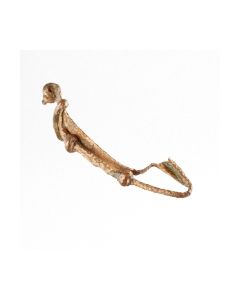 Celtic fibula from the famous Hattatt collection
Fibula from the La Tène II period. Found in Celtic Carnuntum. The piece is published in the standard work "Iron Age and Roman Brooches".
Price: on request Römische Zwiebelknopffibel
Massive Zwiebelknopffibel aus Bronze. 23,2 Gramm, aus dem 4 Jh. n. Chr. Ungewöhnliche, kantige Zwiebelknopfverzierung.
Price: on request Fragment eines sassanidischen Siegels mit Löwendarstellung
Stempelsiegel aus orangefarbenem Karneol. Löwe, darüber zwei abstrakte Motive. Hervorragender Zustand. Inklusive Stempelabdruck.
Price: on request Scarab with pattern of circles
The beetle stone bears a popular motive of the Middle Empire. A nice example of its kind. This scarab is described in the catalogue of Irène Gautier-Vodoz.
Price: on request Cowroid with decorated body
The cowroid has an interesting decoration across the upper surface. The lower surface is inscribed with hieroglyphs. This cowroid is discussed in the catalogue of Gautier-Vodoz.
Price: on request