
Search results for: 'bronze'
-
 Western Asiatic female figure
Interesting clay figurine from Western Asia during Bronze Age. Nice overall impression.
Price: on request Clay tablet with cuneiform script
Small tablet with well preserved cuneiform engravings. Interesting Bronze Age document from Mesopotamia.
Price: on request Bow fibula of the Urnfield culture
Excessively rare brooch type from Late Bronze Age in Bavaria. It is known from the Urnfield period hoard of Reisen near Munich in Germany. This piece has been found near Regensburg, Germany.
Price: on request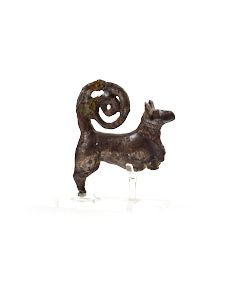 Elamite dog figurine from Susa
Wonderful little metal figure from Elam, made during Bronze Age. With a characteristic curly tail.
Price: on request Clay idol from Syria
Female figurine from Bronze Age Syria, 3rd to beginning of 2nd millenium BC. With characteristic bird shaped head.
Price: on request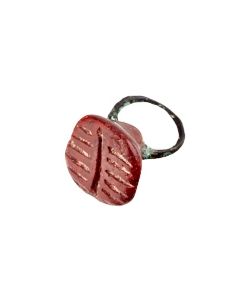 Anatolian porphyry stamp seal
Basic shape of a four sided pyramid. Made of wonderful intensely red stone. Middle Bronze Age of Anatolia.
Price: on request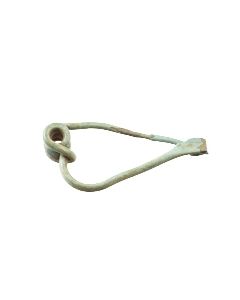 Early bow brooch of the Urnfield period
Simple fibula shape dating to the Late Bronze Age. Interesting mix of two-sided spiral spring and simple pin holder.
Price: on request Elamite ceramic vessel with geometric frieze
Ceramic vessel in perfect condition with original painted frieze. Magnificent attest to the Middle Elamite civilization of Bronze Age Iran.
Price: on request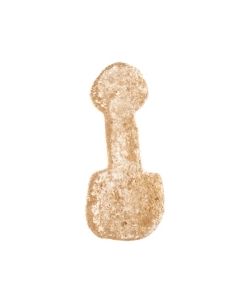 Big Kusura type idol
Unusually big shield idol of the Kusura type dating to the Anatolian Bronze Age, 3rd millenium BC. Made of beautiful white marble.
€2,300 Cuneiform tablet from Umma
Record of beer and bread rations for laborers. Probably from the Bronze Age city of Umma. The cuneiform tablet was studied and conserved at Yale University.
Price: on request Elamitische Speerspitze aus Lorestan
Spitze einer Lanze / eines Speers aus der Eisenzeit, 1200 bis 650 v. Chr., Hochzeit der elamitischen Kultur. Aufwändig und meisterhaft gearbeitet. 115mm lang, Gewicht 27,52g.
Price: on request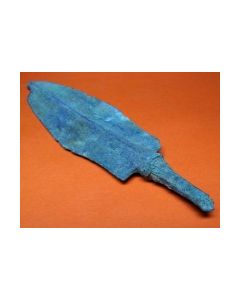 Elamitische Speerspitze aus Lorestan
Spitze einer Lanze / eines Speers aus der Eisenzeit, 1200 bis 650 v. Chr., Hochzeit der elamitischen Kultur. Aufwändig und meisterhaft gearbeitet. 95mm lang, Gewicht 22,49g.
Price: on request Elegant Akkadian axehead
The zoomorphic axehead from Mesopotamia is an exceedingly rare variety of the Naram-Sin type. Akkadian Empire, around 2300 BC.
Price: on request Mycenaean stirrup jar
Nicely preserved specimen of this characteristic type of vessel from the Mycenaeans. From the peak of Mycenaean pottery production in the 14th century BC.
Price: on request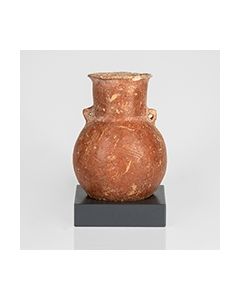 Published cypriot amphora, ex Sotheby's
Fully preserved, early vase from the Bronze Age. 1977 on exhibition in the Bielefeld Museum of Fine Arts. From an old German private collection, acquired 1970 at Sotheby's. Coming with an ArtLoss certificate.
Price: on request Mycenaean stirrup jar with decorative band
Nicely decorated specimen of this characteristic type of vessel from the Mycenaeans. From the peak of Mycenaean pottery production in the 14th century BC.
Price: on request Kusura-type idol from 3rd millenium BC Anatolia examined by Prof. Lambert
Idol aus weißem, feinkristallinem Marmor vom sogenannten Kusura-Typus. Aus der Bronzezeit Anatoliens, 3. Jt. v. Chr. Begutachtet durch Professor W. G. Lambert. Museumswürdig.
Price: on request Cylinder seal from the Uruk period
Seal of beautiful white marble. It shows a frieze of highly stylized water creatures.
Price: on request Mesopotamian cylinder seal with animals
The unusually long seal shows two horned animals with grain and eye symbols. A wonderful artefact from ancient Mesopotamia.
Price: on request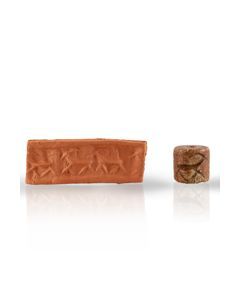 Mesopotamian cylinder seal with gazelles
The seal made of nice red stone shows three gazelles walking in line. A wonderful artefact from the Jemdet Nasr period.
Price: on request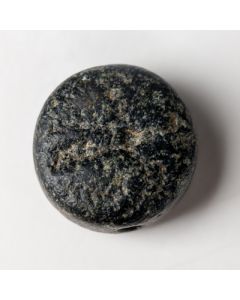 Minoan seal with goat
The Late Minoan piece has two stamped surfaces depicting animals. The piece has been studied and published in the canonical Corpus of Minoan and Mycenaean seals in 1988, as well as in the database of the German archaeological institute (DAI).
€1,800 Speerspitze aus Lorestan
Große luristanische Speerspitze mit Spuren von Kampfeinsatz. 2500 bis 1000 v. Chr., 185mm lang. Zeugnis der eigenständigen Kultur in der persischen Provinz Luristan.
Price: on request Old Assyrian cylinder seal
The seal shows several gods in front of the god of the heaven. The piece comes from Anatolia or northern Syria, quite possibly from Cappadocia.
€1,150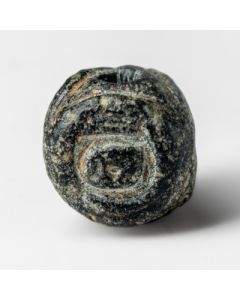 Minoan seal from the Palace Period
A beautiful serpentine seal with three engraved surfaces, worn like a bead. It dates from the Old Palace Period of Crete, around 1800 BC. The piece has been studied and published in the canonical Corpus of Minoan and Mycenaean seals in 1988.
Price: on request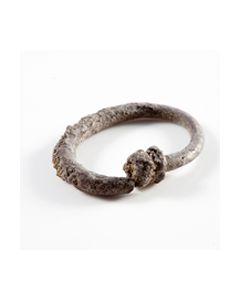 Ohrring aus Belutschistan, Indus-Kultur - Silber
Schlichter Ohrring, Verschluss als Hohlzylinder mit Einschnürung in der Mitte gestaltet. 15 mm x 17 mm, Gewicht 1.05 Gramm.
Price: on request Old Babylonian cylinder seal with gods and inscription
Scene with sun god Shamash and the Amorite god Amurru. The cuneiform writing names the owner of the seal, a faithful servant of these deities.
Price: on request Cylinder seal with seated god
Interesting seal from Mesopotamia during the Akkad III period. It shows worshippers with cups standing before the sky god.
Price: on request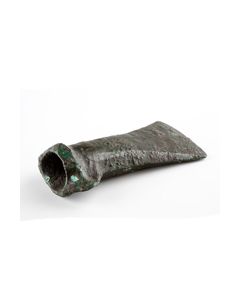 Tüllenbeil - Fundort Orvieto, Italien
Italisches Tüllenbeil mit breiter Schneide. Späte Bronzezeit Italiens. Vollständig intakt mit wunderschöner dunkler Patina.
Price: on request Near Eastern cylinder seal
The seal of black stone bears a scene with four noblemen or gods. Late Syrian, around 1500 BC.
Price: on request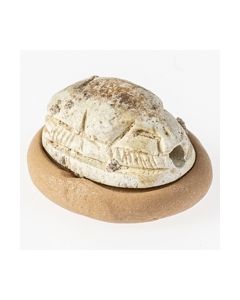 Canaanite scarab with pseudo hieroglyphs
The scarab amulet was made during the Second Intermediate Period of Egypt or slightly later in Canaan. It has pseudo hieroglyphs on the bottom side.
Price: on request Cylinder seal from the Jemdet Nasr period
The Mesopotamian seal shows a geometrical arrangement of schematic turtles or tadpoles. Around 3000 BC.
€660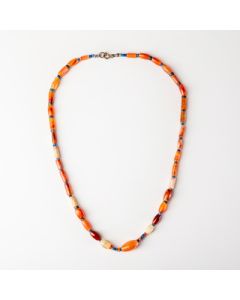 Necklace of Sumerian beads
Beautiful beads of orange-patterned carnelian, beige-banded agate, and pleasantly contrasting blue lapis lazuli. Similar to the jewelry of the Sumerian queen Puabi. Early Dynastic Period of Mesopotamia, around 2500 BC.
€5,500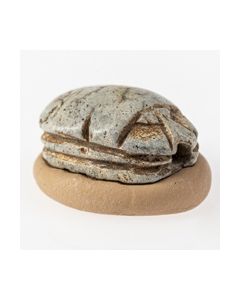 Canaanite scarab
Local levantine production during the 13th to 15th dynasty of Egypt. With an export permit from the Israel Antiquities Authority.
Price: on request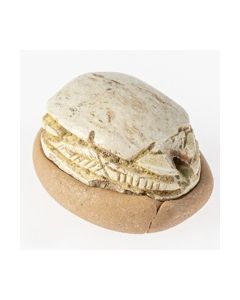 Canaanite scarab
Local levantine production during the 13th to 15th dynasty of Egypt. With an export permit from the Israel Antiquities Authority.
Price: on request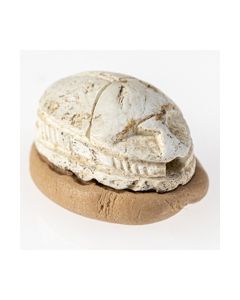 Canaanite scarab with pseudo hieroglyphs
The scarab amulet was made during the Second Intermediate Period of Egypt or slightly later in Canaan. It has pseudo hieroglyphs on the bottom side.
Price: on request Old Babylonian cylinder seal
This Old Babylonian seal with a worship scene is made from lapis lazuli, a very rare choice for this period.
Price: on request