
Search results for: 'bei'
-
 Egyptian funerary figurine for Nefer-hotep
Interesting ushabti from Memphis dating to the late 19th Dynasty, New Kingdom. The owner was an official from the Temple of Ptah.
Price: on request Egyptian ushabti from the Third Intermediate Period
Funerary statuette of faience with black paint. The opposed hands might indicate Tanis as origin. Third Intermediate Period of Ancient Egypt.
Price: on request Egyptian shabti
Funerary statuette of faience. The opposed hands might indicate Tanis as origin. Third Intermediate Period of Ancient Egypt.
Price: on request Uschebti der Herrin des Hauses
Ägyptischer Uschebti für seine Besitzerin mit dem Titel Herrin des Hauses. Aus der Dritten Zwischenzeit des Alten Ägyptens. Kopf mit dreigeteilter Perücke und dem für die Zeit typischen Haarband (sheshed).
Price: on request Ägyptische Totenfigur aus der 30. Dynastie
Uschebti aus mintgrüner Fayence. Typischer Bart und dreigeteilte Perrücke. Die Totenfigur datiert in ihrer einfachen Form aus der Spätzeit des Alten Ägyptens.
Price: on request Pre-Dynastic pottery of Ancient Egypt
The simple vessel is made of coarse clay. It dates to the end of the 4th millenium BC and hence witnessed the beginning of the Ancient Egyptian civilization.
Price: on request Ägyptischer Uschebti mit rückseitigen Hieroglyphen
Ägyptische Totenfigur. Rückseitige Hieroglyphen. Mintgrüne Fayence. Spätzeit bis Beginn ptolemäische Zeit, 664 v. Chr. bis 300 v. Chr.
Price: on request Ägyptischer Uschepti mit rückseitigen Hieroglyphen
Ägyptische Totenfigur. Rückseitige Hieroglyphen. Mintgrüne Fayence. Spätzeit bis Beginn ptolemäische Zeit, 664 v. Chr. - 300 v. Chr.
Price: on request Egyptian frog lamp from very old German collection
The frog lamps developed in Egypt close to Abydos. For the Egyptians, the frog symbolized birth and resurrection, this symbolism was also adapted by the early Christians. From the German collection Becker, in this for 3 generations.
Price: on request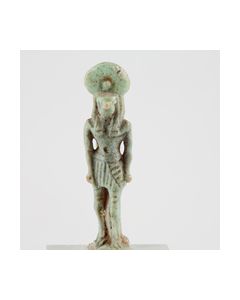 Ägyptisches Amulett des Sonnengottes Ra
Männlichem Körper mit Lendenschurz, darauf Falkenkopf mit Sonnenscheibe. Spätzeit des Alten Ägyptens. Aus der Sammlung des Ägyptologen Dr. Müller-Feldmann.
Price: on request Egyptian heart scarab
Big beetle stone from the Late Period of Ancient Egypt. Scarabs of this kind have been placed next to the heart on mummies. Nice mint green fayence.
Price: on request Egyptian ushepti of Pasinebu
Totenfigur für Pasinebu, geboren der Setjet, mit T-förmiger hieroglyphischer Inschrift. 26. bis 30. Dynastie, Spätzeit des Alten Ägyptens. Sehr gute Erhaltung mit klar erkennbaren Hieroglyphen.
Price: on request Ägyptischer Uschebti des Pasinebu
Totenfigur für Pasinebu, geboren der Setjet, mit T-förmiger hieroglyphischer Inschrift. 26. bis 30. Dynastie, Spätzeit des Alten Ägyptens. Perfekte Erhaltung mit klar erkennbaren Hieroglyphen.
Price: on request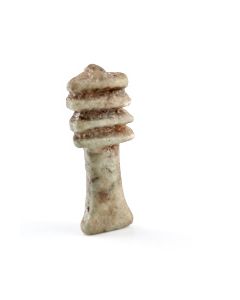 Djed-Pfeiler als Amulett
Ägyptische Spätzeit, 26. bis 30. Dynastie. Mintgrüne Fayence. Der Djed-Pfeiler steht für Dauer und Beständigkeit und war im Alten Ägypten als Amulett sehr beliebt.
Price: on request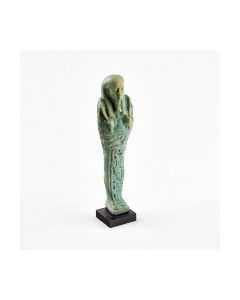 Egyptian funerary figurine of General Semataui
Very well preserved ushebti from the Late Period of ancient Egypt. An expertise from 2015 comes with this object. From an old British collection.
Price: on request Egyptian amulet of Anubis
The amulet from the Late Period of Ancient Egypt was supposed to protect the dead on their way to the afterlife. From a British private museum.
Price: on request Egyptian amulet of Anubis
The amulet from the Late Period of Ancient Egypt was supposed to protect the dead on their way to the afterlife. From a British private museum.
Price: on request Djed-Pfeiler als Amulett
Ägyptische Spätzeit, 26. bis 30. Dynastie. Mintgrüne Fayence. Der Djed-Pfeiler steht für Dauer und Beständigkeit und war im Alten Ägypten als Amulett sehr beliebt.
Price: on request Ägyptischer Skarabäus mit Knotenmuster
12. bis 18. Dynastie des Alten Ägypten, ca. 2000 v. Chr. bis 1300 v. Chr. Die Stempelfläche trägt ein Knotenmuster mit ästhetischer oder mutmaßlich magischer Funktion.
Price: on request Faience tile of the Djoser pyramid type
Egyptian wall tile from the Old Kingdom, 2nd to 3rd dynasty. The tile type is known from the famous step pyramid of king Djoser.
Price: on request Egyptian sarcophagus mask
Impressive wood relief of an idealized face. Polychrome paint. The mask was part of a sarcophagus lid from the Late Period of Ancient Egypt.
Price: on request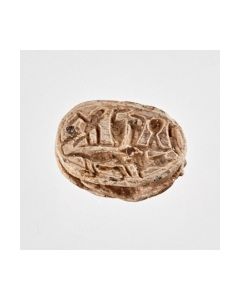 Scarab from the Ramesside period
The bottom side shows Horus, Uraeus and crocodile. The crocodile could be interpreted a the god Sobek.
Price: on request Egyptian Scarab with sun beetle
The scarab amulet from Ramesside times has a beetle engraved in the lower side, flanked by two symbols.
Price: on request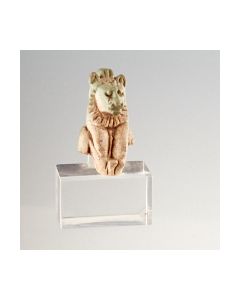 Egyptian amulet of a lion headed goddess
Attributed to Sekhmet, goddess of war and protection from illness. Very nice and detailed fayence work. Dating to the Third Intermediate Period to Late Period of Ancient Egypt.
Price: on request Uschebti aus bemaltem Ton
Ca. 1200 - 1070 v. Chr., Neues Reich des Alten Ägypten. Vollständig intakt, nicht restauriert. Originale Bemalung weitgehend erhalten.
Price: on request Egyptian fingerring from the Amarna period
Made of colourful turquoise fayence. Two fully modelled crocodiles adorn the plate. Perfect preservation including original black paint.
Price: on request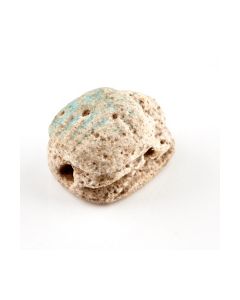 Ägyptischer Skarabäus
Stilisierte Form eines Skarabäuskäfers. Die Stempelfläche trägt Hieroglyphen. 1. Jt. v. Chr.
Price: on request Egyptian New Year flask with ornamentation
Hieroglyphic inscription expressing New Year wishes for Ptah at the beginning of the nile floodings. Important 26th dynasty piece associated with the Egyptian New Year rituals. The object is a fantastic example of the skilled workmanship and artistic quality of faience in ancient Egypt.
Price: on request Ägyptisches Papyrusamulett
Papyrusamulett aus mintgrüner Fayence, symbolisch für Jugend und Gedeien. Spätzeit des Alten Ägyptens, 664 bis 332 v. Chr.
Price: on request Scarab with sphinx
The stamp depicts a sphinx with pharaoh headcloth walking towards the Ankh symbol of life. The amulet should exert a protective function on the one carrying or owning it.
Price: on request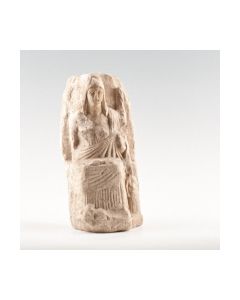 Stone statue of a seated Isis
Very fine condition, from an important London collection
Price: on request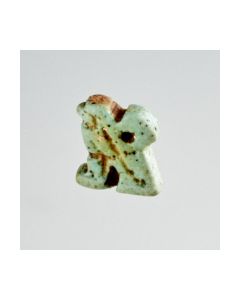 Egyptian amulet of a falcon
The falcon in Egyptian art can be a depiction of the god Horus or symbolize the soul of the pharao. Falcon amulets are known from the earliest times in Egyptian history. However this speicmen dates to the Late Dynastic Period of Ancient Egypt.
Price: on request Großes Skarabäussiegel aus der Zeit des Amenophis III.
14. Jh. v. Chr. Heute noch erhaltene Überreste der Bautätigkeit Amenophis III. sind die Memnonkolosse, sowie der Hauptteil des Luxor-Tempels.
Price: on request Ägyptisches Skarabäusamulett aus der 18. Dynastie
Ägyptisches Stempelsiegel-Amulett in der stilisierten Form eines Skarabäuskäfers. Die Stempelfläche trägt Hieroglyphen. Das Amulett datiert in die 18. Dynastie des Alten Ägyptens.
Price: on request Ägyptisches Skarabäusamulett
Skarabäussiegel aus dem 2. Jt. v. Chr. mit ansprechender türkisfarbener Fayenceoberfläche. Die Stempelfläche trägt eine hieroglyphische Inschrift.
Price: on request Egyptian amulet of Taweret
It shows the goddess of childbirth in the form of a pregnant hippopotamus. The amulet from the Late Period of Ancient Egypt should exert a protective function. From a British private museum.
Price: on request