
Search results for: 'mit'
-
 Ägyptischer Skarabäus mit Knotenmuster
12. bis 18. Dynastie des Alten Ägypten, ca. 2000 v. Chr. bis 1300 v. Chr. Die Stempelfläche trägt ein Knotenmuster mit ästhetischer oder mutmaßlich magischer Funktion.
Price: on request Skarabäussiegel mit abstaktem Stempelmotiv
Die Stempelfläche trägt ein dekoratives Muster mit ästhetischer oder magischer Funktion. Sehr schöner und anschaulicher Skarabäus, in etwa aus der Zweiten Zwischenzeit des Alten Ägyptens. 2000 bis 1300 v. Chr.
Price: on request Skarabäus mit Kartusche des Chaneferre
Skarabäus mit Namens-Kartusche des Königs Chaneferre (Sobekhotep IV.). 13. Dynastie des Alten Ägyptens, ca. 1700-1680 v. Chr.
Price: on request Ägyptischer Uschebti mit rückseitigen Hieroglyphen
Ägyptische Totenfigur. Rückseitige Hieroglyphen. Mintgrüne Fayence. Spätzeit bis Beginn ptolemäische Zeit, 664 v. Chr. bis 300 v. Chr.
Price: on request Ägyptischer Uschepti mit rückseitigen Hieroglyphen
Ägyptische Totenfigur. Rückseitige Hieroglyphen. Mintgrüne Fayence. Spätzeit bis Beginn ptolemäische Zeit, 664 v. Chr. - 300 v. Chr.
Price: on request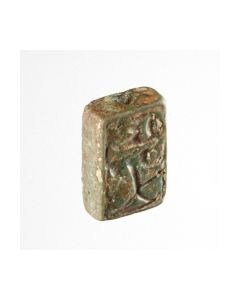 Ägyptisches Plättchen mit Kartusche des Sethos I.
Doppelseitige Platte aus grüner Fayence aus dem Neuen Reich, ramessidisch, um 1290 v. Chr. Sphinx und Kartusche (Men-Maat-Re) und Namens-Kartusche mit dem Eigennamen Meri-en-Ptah.
Price: on request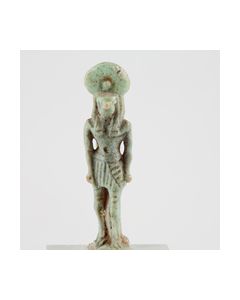 Ägyptisches Amulett des Sonnengottes Ra
Männlichem Körper mit Lendenschurz, darauf Falkenkopf mit Sonnenscheibe. Spätzeit des Alten Ägyptens. Aus der Sammlung des Ägyptologen Dr. Müller-Feldmann.
Price: on request Ägyptischer Uschebti des Pasinebu
Totenfigur für Pasinebu, geboren der Setjet, mit T-förmiger hieroglyphischer Inschrift. 26. bis 30. Dynastie, Spätzeit des Alten Ägyptens. Perfekte Erhaltung mit klar erkennbaren Hieroglyphen.
Price: on request Egyptian ushepti of Pasinebu
Totenfigur für Pasinebu, geboren der Setjet, mit T-förmiger hieroglyphischer Inschrift. 26. bis 30. Dynastie, Spätzeit des Alten Ägyptens. Sehr gute Erhaltung mit klar erkennbaren Hieroglyphen.
Price: on request Uschebti der Herrin des Hauses
Ägyptischer Uschebti für seine Besitzerin mit dem Titel Herrin des Hauses. Aus der Dritten Zwischenzeit des Alten Ägyptens. Kopf mit dreigeteilter Perücke und dem für die Zeit typischen Haarband (sheshed).
Price: on request Große ägyptische Bronzefigur der Sachmet
Eine wundervoll dunkel-patinierte Bronze der “Göttin des Zitterns ”, Sachmet, in beeindruckender Erhaltung. Vollständig erhalten mit erkennbaren feinen Details.
Price: on request Ägyptisches Skarabäusamulett
Skarabäussiegel aus dem 2. Jt. v. Chr. mit ansprechender türkisfarbener Fayenceoberfläche. Die Stempelfläche trägt eine hieroglyphische Inschrift.
Price: on request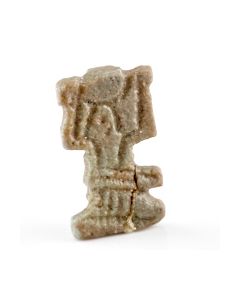 Amulett des Gottes Schu
Der ägyptische Gott Schu wurde u.a. mit der Hitze des Sonnenlichts assoziiert. Das Amulett zeigt ihn kniend, mit der Sonnenscheibe zwischen den erhobenen Armen. Aus der Spätzeit des Alten Ägyptens.
Price: on request Ägyptisches Amulett der Isis
Amulett aus Fayence mit Darstellung der Isis. Die Göttin trägt ein Gewand und eine dreigeteilte Perrücke, auf dem Kopf den Thronsitz. Spätzeit des Alten Ägyptens.
Price: on request Skarabäusamulett aus der Hyksoszeit
Ägyptisches Skarabäusamulett mit typischen Symbolen für die Herrschaftszeit der Hyksos. Aus der Zeit der Fremdherrschaft, ca. 1650 bis 1550 v. Chr.
Price: on request Ägyptisches Amulett in Form des Udjatauges
Voll dekoriertes Udjatauge (Auge des Horus) mit schwarz aufgetragener Pupille und geritzten Details. Aus der 22. bis 25. Dynastie des Alten Ägyptens.
Price: on request Bronze statuette of nursing Isis
Isis is shown in a very typical depiction as a mother, the archetype of the later Christian Nursing Madonna. The bronze figurine dates to the 22nd to 31st dynasty of Ancient Egypt.
Price: on request Applique of the Horus son Duamutef
Bright turquise fayence. Duamutef is one of the four sons of Horus, well-known from the Canopic jars. He had an important protective function for the dead. Egypt, 8th to 4th cent. BC.
Price: on request Egyptian amulet of Taweret
It shows the goddess of childbirth in the form of a pregnant hippopotamus. The amulet from the Late Period of Ancient Egypt should exert a protective function. From a British private museum.
Price: on request Perfectly preserved ampulla of Saint Menas
Frühchristliche Pilgerflasche mit Darstellung des Heiligen Menas. Aus der sehr alter US-Amerikanischer Sammlung des Pharmakologen Prof. Dilling, erworben in den frühen 1900er Jahren. Als Kauf- oder Fundort ist Alexandria überliefert.
Price: on request Ägyptisches Papyrusamulett
Papyrusamulett aus mintgrüner Fayence, symbolisch für Jugend und Gedeien. Spätzeit des Alten Ägyptens, 664 bis 332 v. Chr.
Price: on request Egyptian funerary figurine for Nefer-hotep
Interesting ushabti from Memphis dating to the late 19th Dynasty, New Kingdom. The owner was an official from the Temple of Ptah.
Price: on request Amulett des Bes aus der 18. Dynastie
Plastisches Relief des stehenden Gottes für Musik und Tanz. Bes war darüber hinaus auch Beschützer der Kinder und Schwangeren. Dieser Funktion diente vermutlich auch das Amulett.
Price: on request Egyptian New Year flask with ornamentation
Hieroglyphic inscription expressing New Year wishes for Ptah at the beginning of the nile floodings. Important 26th dynasty piece associated with the Egyptian New Year rituals. The object is a fantastic example of the skilled workmanship and artistic quality of faience in ancient Egypt.
Price: on request Bronze statuette of Osiris
The figurine is in exceptional condition with a nice patina. Late Dynastic period of Ancient Egypt, 664 to 332 BC.
Price: on request Pre-Dynastic pottery of Ancient Egypt
The simple vessel is made of coarse clay. It dates to the end of the 4th millenium BC and hence witnessed the beginning of the Ancient Egyptian civilization.
Price: on request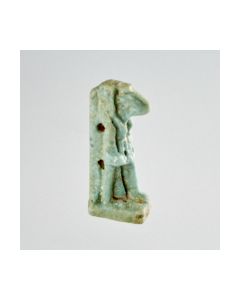 Egyptian amulet of Thoth
Ibis headed god of knowledge and writing. 26th to 30th dynasty of Ancient Egypt. From a British private museum.
Price: on request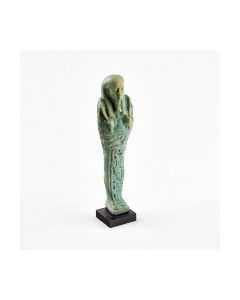 Egyptian funerary figurine of General Semataui
Very well preserved ushebti from the Late Period of ancient Egypt. An expertise from 2015 comes with this object. From an old British collection.
Price: on request Egyptian ushabti from the Third Intermediate Period
Funerary statuette of faience with black paint. The opposed hands might indicate Tanis as origin. Third Intermediate Period of Ancient Egypt.
Price: on request Egyptian shabti
Funerary statuette of faience. The opposed hands might indicate Tanis as origin. Third Intermediate Period of Ancient Egypt.
Price: on request Ägyptische Totenfigur aus der 30. Dynastie
Uschebti aus mintgrüner Fayence. Typischer Bart und dreigeteilte Perrücke. Die Totenfigur datiert in ihrer einfachen Form aus der Spätzeit des Alten Ägyptens.
Price: on request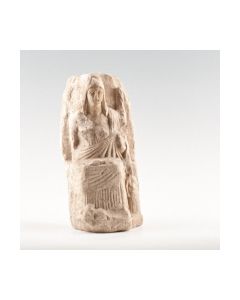 Stone statue of a seated Isis
Very fine condition, from an important London collection
Price: on request Scarab with magic formula
The stamp shows the anra formula in a cartouche. The amulet should thus serve a magic or ritual purpose for its owner.
Price: on request Cowroid with decorated body
The cowroid has an interesting decoration across the upper surface. The lower surface is inscribed with hieroglyphs. This cowroid is discussed in the catalogue of Gautier-Vodoz.
Price: on request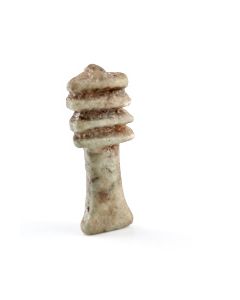 Djed-Pfeiler als Amulett
Ägyptische Spätzeit, 26. bis 30. Dynastie. Mintgrüne Fayence. Der Djed-Pfeiler steht für Dauer und Beständigkeit und war im Alten Ägypten als Amulett sehr beliebt.
Price: on request Egyptian sarcophagus mask
Impressive wood relief of an idealized face. Polychrome paint. The mask was part of a sarcophagus lid from the Late Period of Ancient Egypt.
Price: on request